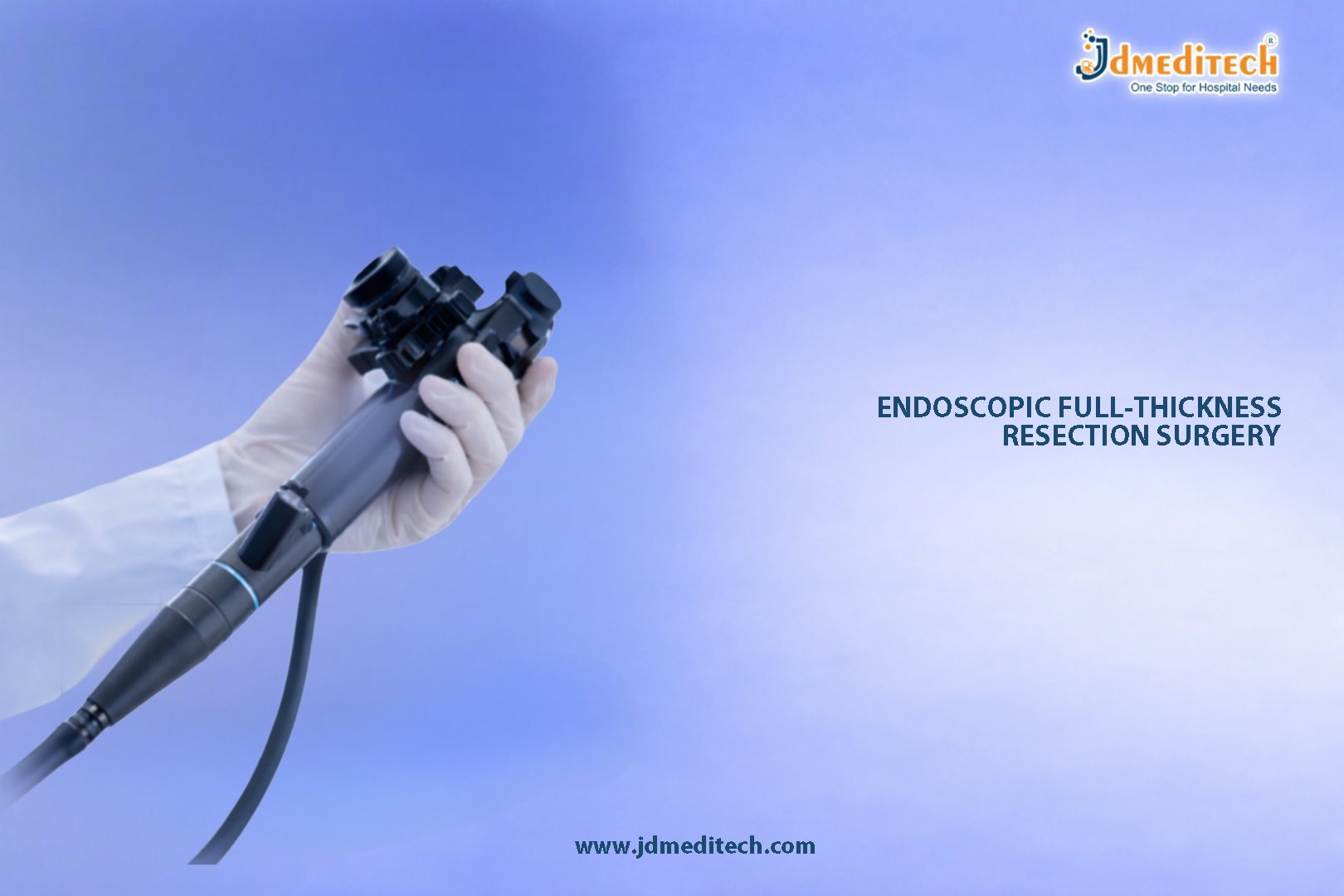
Endoscopic Full-Thickness Resection (EFTR) is an advanced, minimally invasive technique used to remove gastrointestinal (GI) lesions that extend beyond the superficial layers of the digestive tract. Unlike traditional endoscopic methods, EFTR enables complete removal of lesions involving all layers of the GI wall, including the mucosa, submucosa, and muscularis propria.
As a result, Endoscopic Full-Thickness Resection (EFTR) has become a preferred solution for complex GI tumors that are difficult to treat with conventional procedures.
What is Endoscopic Full-Thickness Resection (EFTR)?
Endoscopic Full-Thickness Resection (EFTR) is a specialized endoscopic procedure designed to excise lesions from the gastrointestinal tract while ensuring complete removal of the affected tissue.
Moreover, EFTR allows physicians to achieve R0 resection (complete tumor removal with clear margins), which is critical in preventing recurrence. This technique is widely used in the stomach, colon, and rectum for both benign and selected malignant lesions.
Why EFTR is a Modern Approach
EFTR represents a significant advancement in endoscopic surgery. Traditionally, deep or complex lesions required open or laparoscopic surgery. However, EFTR eliminates the need for invasive procedures.
Key Advantages:
- Minimally invasive with no external incisions
- Reduced hospital stay and faster recovery
- Lower risk of complications compared to open surgery
- Precise and targeted lesion removal
- Preservation of organ structure and function
Therefore, Endoscopic Full-Thickness Resection (EFTR) offers a safer and more efficient alternative for patients and clinicians alike.
Indications for EFTR
Endoscopic Full-Thickness Resection (EFTR) is typically recommended for:
- Subepithelial tumors (e.g., GISTs, leiomyomas)
- Non-lifting adenomas
- Recurrent or residual lesions after EMR/ESD
- Early-stage GI cancers (selected cases)
- Lesions involving deeper layers of the GI wall
In addition, EFTR is particularly useful when standard techniques like EMR (Endoscopic Mucosal Resection) or ESD (Endoscopic Submucosal Dissection) are not effective.
EFTR Procedure: Step-by-Step Overview
The EFTR procedure is performed using specialized endoscopic devices and accessories.
1. Lesion Identification
Initially, the lesion is carefully examined using high-definition endoscopy.
2. Marking the Area
Next, the margins of the lesion are marked to ensure precise resection.
3. Full-Thickness Resection
The lesion is then resected along with all layers of the GI wall using advanced tools.
4. Defect Closure
Finally, the resulting defect is securely closed using clips or suturing devices to prevent complications.
Consequently, EFTR ensures both effective removal and safe healing.
Devices Used in EFTR
Several advanced instruments are used during Endoscopic Full-Thickness Resection (EFTR), including:
- EFTR device systems (FTRD – Full-Thickness Resection Device)
- Over-the-scope clips (OTSC)
- Endoscopic snares
- Electrosurgical units (ESU)
- Endoscopic visualization systems
Benefits of Endoscopic Full-Thickness Resection (EFTR)
EFTR provides numerous clinical and patient benefits.
Clinical Benefits:
- Complete removal of difficult lesions
- High success rate with clear margins
- Reduced need for repeat procedures
Patient Benefits:
- Minimal pain and discomfort
- Shorter recovery time
- Reduced healthcare costs
Furthermore, EFTR improves overall treatment outcomes and patient satisfaction.
Risks and Considerations
Although EFTR is considered safe, some risks may occur:
- Perforation (managed during the procedure)
- Bleeding
- Infection
- Technical challenges in complex cases
However, with experienced professionals and proper equipment, these risks are significantly minimized.
EFTR vs EMR and ESD
Understanding the difference between EFTR and other techniques is important.
| Technique | Depth of Resection | Best For |
| EMR | Superficial | Small mucosal lesions |
| ESD | Deeper mucosal/submucosal | Larger lesions |
| EFTR | Full thickness | Deep or complex lesions |
Thus, Endoscopic Full-Thickness Resection (EFTR) is the most advanced option for deep-seated GI lesions.
Future of EFTR in Gastroenterology
The future of Endoscopic Full-Thickness Resection (EFTR) looks promising. With continuous advancements in endoscopic technology, EFTR is becoming more accessible and efficient.
In addition, integration with robotic systems and AI-assisted imaging may further enhance precision and safety.
Conclusion
Endoscopic Full-Thickness Resection (EFTR) is a revolutionary technique that has transformed the management of complex gastrointestinal lesions. By combining precision, safety, and minimally invasive technology, EFTR offers an effective alternative to traditional surgical methods.
As a result, it continues to gain popularity among gastroenterologists worldwide.
Get Connected:
+91 79909 93062 | +91 63513 72032 | exports@jdmeditech.com