ACDF (Anterior Cervical Discectomy and Fusion) is a widely performed spine surgery used to treat nerve compression in the neck caused by conditions like herniated discs, degenerative disc disease, or spinal stenosis. It helps relieve neck pain, arm pain, numbness, and weakness and restores normal movement.
What is ACDF?
Anterior Cervical Discectomy and Fusion (ACDF) is a surgical procedure used to treat conditions in the neck—particularly those where a disk in the cervical spine is herniated or degenerative, causing pressure on nerves or the spinal cord.
During ACDF:
• The surgeon approaches the spine from the front (through the throat/neck area) and removes the diseased or herniated disk (and often bone spurs), thereby relieving pressure on nerves or the spinal cord.
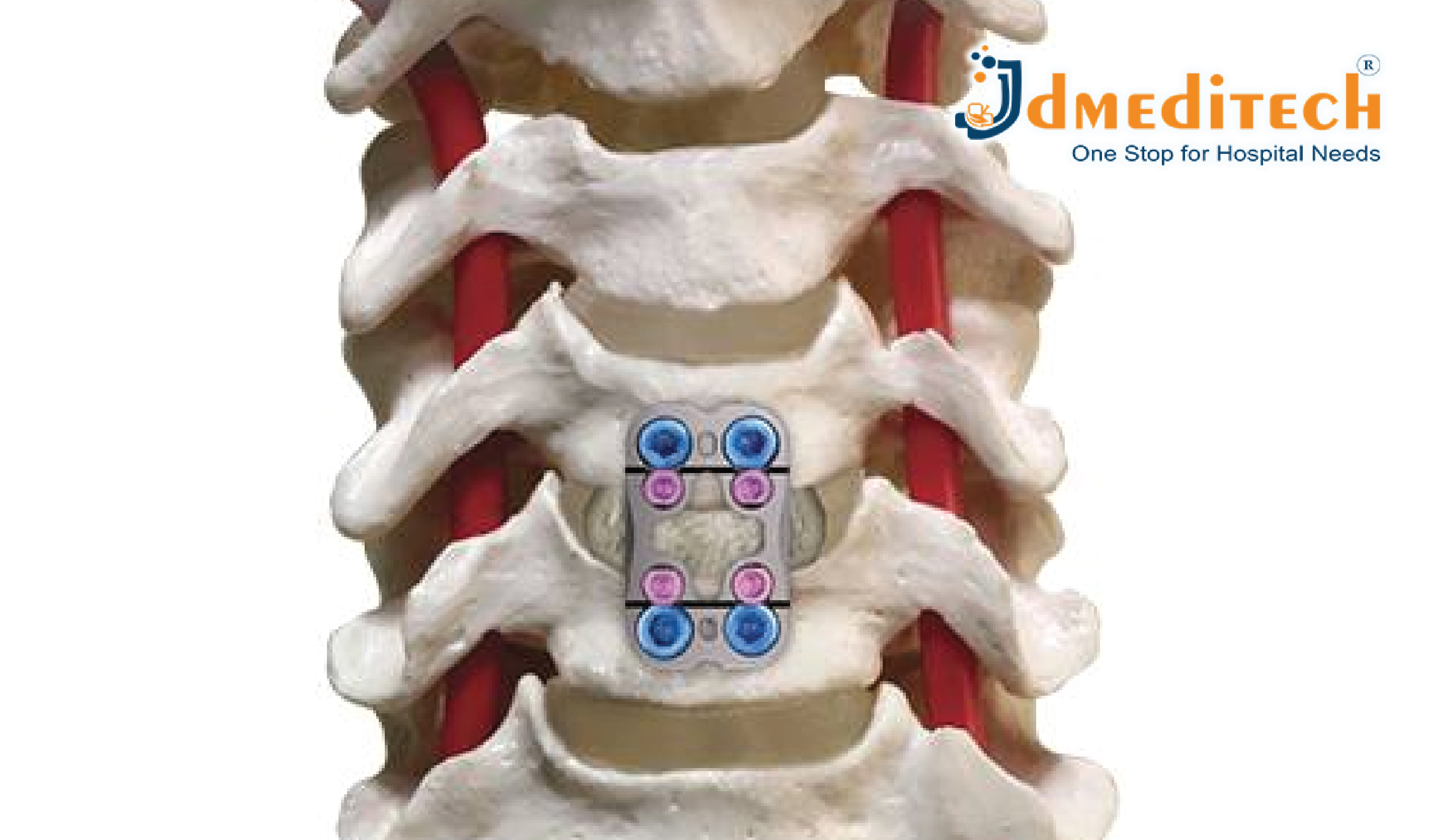
• Then, a “fusion” is done: adjacent vertebrae are stabilized using a bone graft or spacer (sometimes a cage), and plates/screws are often fixed to hold them in place while the bone fuses over time.
How Is ACDF Surgery Performed?
ACDF is usually performed under general anesthesia and takes about 1–2 hours, depending on the number of levels treated. Incision on the front of the neck
A small cut is made to access the cervical spine.
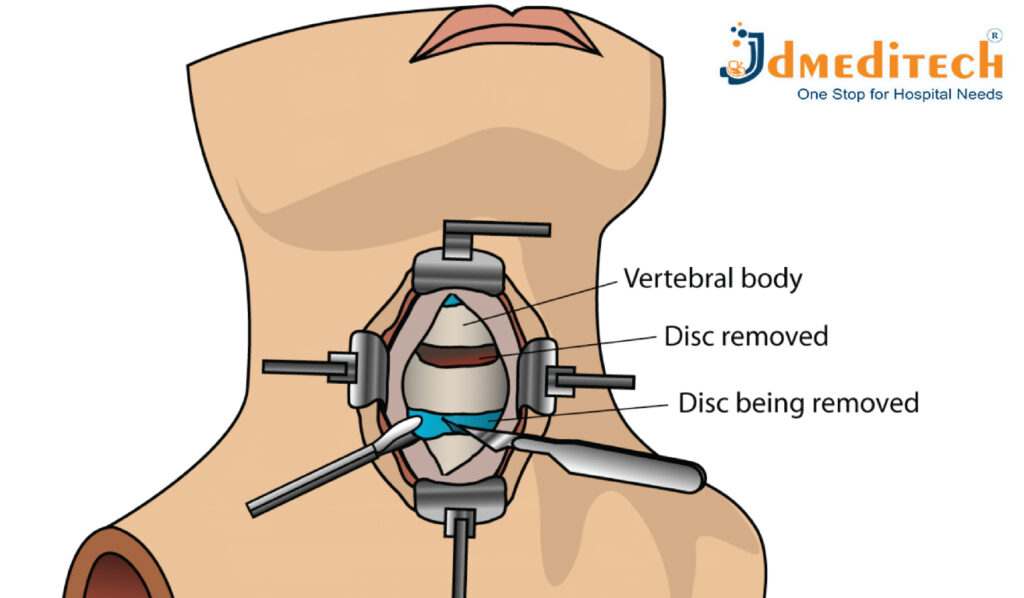
1. Disc removal
The damaged or herniated disc is carefully removed.
2. Nerve decompression
Bone spurs or tissue pressing on nerves are cleared.
3. Placement of bone graft or cage
An implant is inserted to maintain disc height.
4. Fusion with plate and screws
Metal hardware stabilizes the spine and helps fusion.
5. Closure
The incision is stitched and covered.
Benefits of ACDF Surgery
• Relieves neck and arm pain
• Restores nerve function
• Improves mobility and strength
• Stabilizes the spine
• Corrects compression of spinal cord or nerves
• Prevents worsening neurological symptoms
What Happens During ACDF Surgery?
ACDF (Anterior Cervical Discectomy and Fusion) is a structured spine procedure done to relieve pressure on the spinal cord or nerves in the neck. The surgery typically takes 1–2 hours, depending on the number of levels involved. Here is a step-by-step explanation of what happens:
1. Anesthesia and Positioning
• The patient is given general anesthesia, ensuring they remain fully asleep and pain-free.
• They are positioned on their back with the neck slightly extended to allow the surgeon clear access to the cervical spine.
2. Small Incision on the Front of the Neck
• The surgeon makes a small incision (3–4 cm) on one side of the front of the neck, usually near a natural skin crease.
• This approach avoids major muscles and allows a gentle, safe path to the spine.
3. Accessing the Cervical Spine
• Soft tissues like the esophagus, trachea, and neck muscles are carefully moved aside—not cut.
• Specialized instruments are used to expose the problematic disc between the cervical vertebrae.
4. Removing the Damaged/Herniated Disc (Discectomy)
• The surgeon removes the entire damaged or herniated disc causing pressure on nerves or the spinal cord.
• Any bone spurs (osteophytes) or fragments pressing on nerves are also removed.
• This step creates space and relieves compression.
5. Preparing the Disc Space
• After removing the disc, the empty disc space is cleaned and prepared.
• This helps promote proper fusion and alignment.
6. Inserting a Bone Graft or Cage
• A bone graft or interbody cage is placed into the disc space.
• This material helps the two vertebrae grow together (fuse) over time.
• The graft is usually:
o Patient’s own bone (rare)
o Donor bone
o Synthetic material
7. Stabilizing With a Plate and Screws (Fusion)
• A small titanium plate is fixed to the front of the vertebrae using screws.
• This keeps the spine stable and holds the graft securely until fusion occurs naturally.
8. Closing the Incision
• Once stability is confirmed:
o Muscles and soft tissues are placed back gently.
o The skin is closed with sutures.
• A small bandage is applied.
9. Recovery in the Hospital
• After surgery, the patient is moved to the recovery room.
• Most patients:
o Are awake within minutes
o Can walk the same day
o Stay 1 day in the hospital
• A neck collar may be recommended to support healing.
10. Healing & Fusion Process
• Although recovery begins immediately, the fusion process takes 3–6 months.
• Follow-up X-rays monitor how well the bones are fusing.
Conclusion
ACDF is a well-established, commonly performed spinal surgery that—for the right patient—can greatly improve quality of life by relieving nerve compression, pain, and weakness and restoring function. At the same time, as with any major surgery, it carries risks and requires careful patient selection, meticulous surgical technique, and disciplined postoperative care.
Get Connected:
+91 79909 93062 | +91 63513 72032 | exports@jdmeditech.com