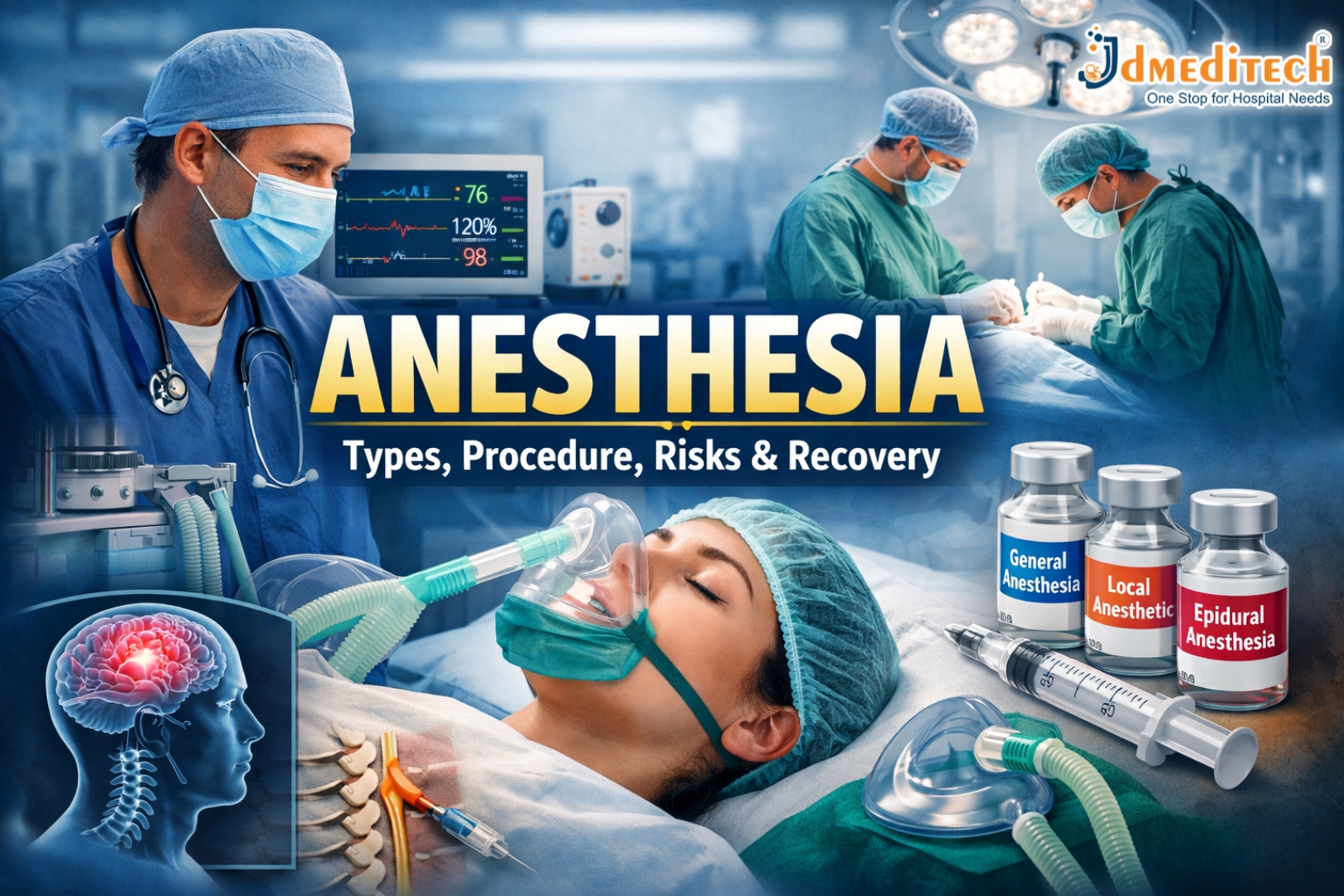
Anaesthesia is a medical treatment that prevents pain during surgery or medical procedures. It works by blocking nerve signals in the body or inducing a temporary loss of sensation or consciousness.
A trained specialist called an anaesthesiologist administers anaesthesia and monitors the patient throughout the procedure.
Types of Anaesthesia
Different types of anaesthesia are used depending on the procedure, patient condition, and duration of surgery.
1. General Anaesthesia
General anaesthesia makes the patient completely unconscious.
Used for:
- Major surgeries (heart surgery, brain surgery)
- Long-duration procedures
Effects:
- No awareness
- No pain sensation
- Temporary loss of reflexes
2. Regional Anaesthesia
Regional anaesthesia blocks pain in a specific part of the body.
Examples:
- Spinal anaesthesia
- Epidural anaesthesia
Used for:
- Childbirth (C-section)
- Orthopedic surgeries
3. Local Anaesthesia
Local anaesthesia numbs a small area of the body.
Used for:
- Dental procedures
- Minor surgeries
Benefits:
- Patient remains awake
- Quick recovery
4. Sedation (Conscious Sedation)
Sedation helps patients relax while remaining partially awake.
Used for:
- Endoscopy
- Minor procedures
How Does Anaesthesia Work?
Anaesthesia works by interrupting nerve signals in the brain and body. As a result, the patient does not feel pain during the procedure.
There are three main mechanisms:
- Blocking pain signals
- Inducing unconsciousness
- Relaxing muscles
Anaesthesia Procedure: Step-by-Step
1. Pre-Anaesthesia Evaluation
Before surgery, the anaesthesiologist:
- Reviews medical history
- Checks allergies
- Evaluates vital signs
2. Administration of Anaesthesia
Anaesthesia is given through:
- Injection
- Inhalation (gas)
- Intravenous (IV)
3. Monitoring During Surgery
Doctors continuously monitor:
- Heart rate
- Blood pressure
- Oxygen levels
4. Recovery Phase
After surgery, the patient is moved to a recovery room where medical staff monitor vital signs until the effects wear off.
Benefits of Anaesthesia
Anaesthesia offers several advantages:
- Pain-free procedures
- Improved surgical precision
- Reduced anxiety
- Controlled muscle relaxation
- Safer complex surgeries
Risks and Side Effects of Anaesthesia
Although anaesthesia is generally safe, some risks may occur.
Common Side Effects
- Nausea and vomiting
- Drowsiness
- Sore throat
- Dizziness
Rare Risks
- Allergic reactions
- Breathing problems
- Nerve damage (very rare)
However, modern techniques and monitoring systems significantly reduce these risks.
Recovery After Anaesthesia
Recovery depends on the type of anaesthesia used.
General Recovery Tips:
- Follow doctor’s instructions
- Avoid driving for 24 hours
- Stay hydrated
- Rest properly
Most patients recover quickly, especially after local or regional anesthesia.
Who Administers Anaesthesia?
Anaesthesia is administered by trained professionals such as:
- Anaesthesiologists
- Nurse anaesthetists
- Anaesthesia assistants
They ensure patient safety before, during, and after the procedure.
When is Anaesthesia Required?
Anaesthesia is used in various medical procedures, including:
- Surgical operations
- Dental treatments
- Diagnostic procedures
- Cosmetic surgeries
Conclusion
Anaesthesia is a cornerstone of modern healthcare, making surgeries safe, painless, and effective. With advancements in medical technology, anaesthesia has become more precise and safer than ever before.
If you are scheduled for a procedure, understanding anaesthesia can help reduce anxiety and prepare you for a smooth experience.
Get Connected:
+91 79909 93062 | +91 63513 72032 | exports@jdmeditech.com