Angiography Diagnostic Catheter: Complete Guide for Accurate Vascular Imaging
Introduction
The Angiography Diagnostic Catheter is an essential tool in modern medical imaging. It helps doctors examine blood vessels with high precision. In fact, this device plays a key role in diagnosing cardiovascular and vascular diseases.
Today, healthcare professionals prefer the Angiography Diagnostic Catheter because it offers accurate results and supports minimally invasive procedures. Therefore, it has become a standard instrument in hospitals and diagnostic centers.
What is an Angiography Diagnostic Catheter?
An Angiography Diagnostic Catheter is a thin, flexible medical tube used to inject contrast dye into blood vessels. As a result, doctors can clearly view arteries and veins using imaging techniques like fluoroscopy.
Moreover, the Angiography Diagnostic Catheter is designed to move smoothly through blood vessels. This ensures both safety and efficiency during diagnostic procedures.
Key Features of Angiography Diagnostic Catheter
Flexible and Smooth Design
The Angiography Diagnostic Catheter offers excellent flexibility. Therefore, it easily navigates complex vascular pathways.
Radiopaque Visibility
Additionally, it contains radiopaque markers. These markers help doctors track the Angiography Diagnostic Catheter during imaging.
Multiple Shapes and Sizes
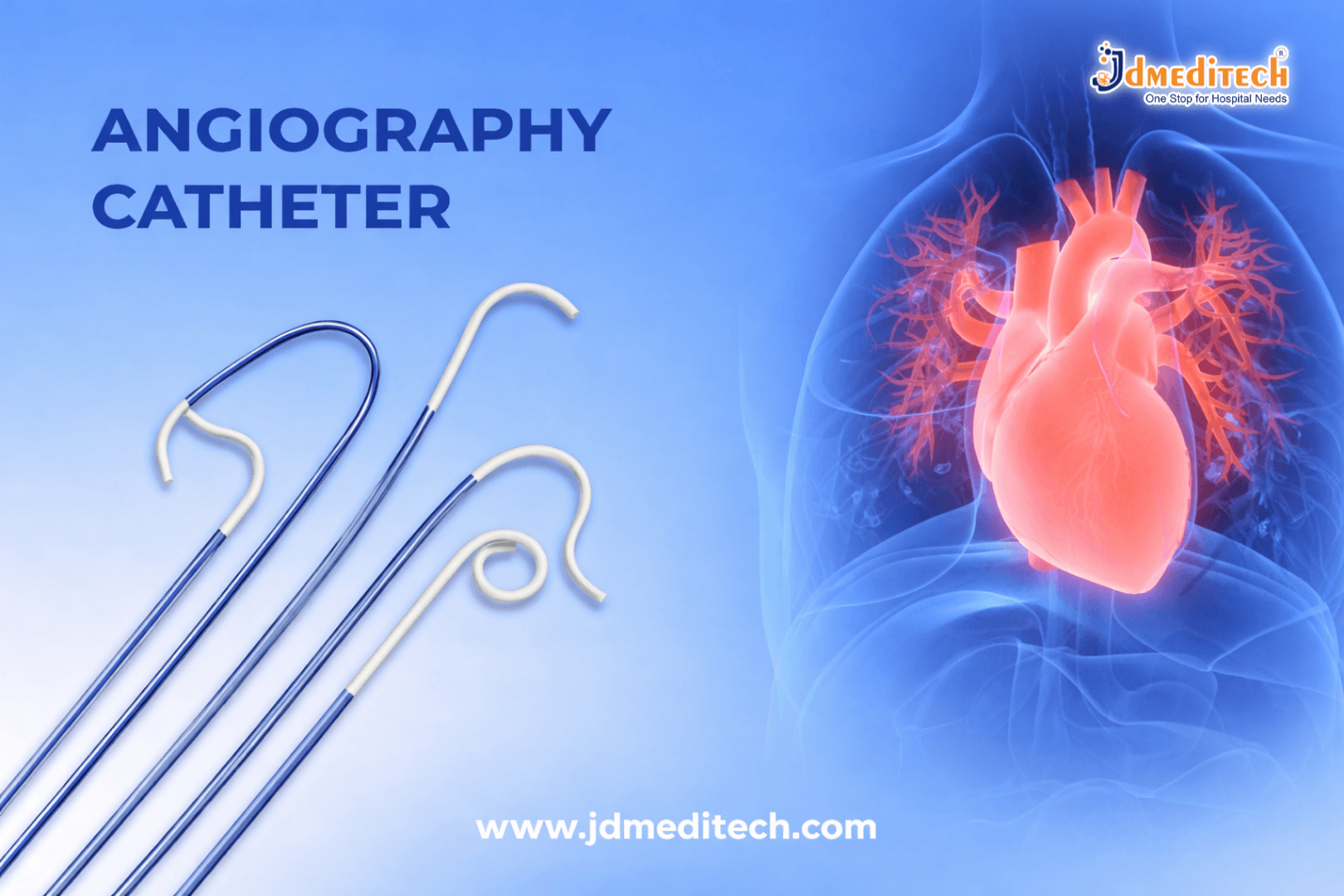
The Angiography Diagnostic Catheter is available in various shapes like Judkins, Amplatz, and Pigtail. Each type serves a specific diagnostic purpose.
Biocompatible Material
Furthermore, the materials used in the Angiography Diagnostic Catheter reduce the risk of infection and complications.
Types of Angiography Diagnostic Catheter
Coronary Angiography Catheter
This Angiography Diagnostic Catheter is used to examine coronary arteries.
Peripheral Angiography Catheter
It helps diagnose vascular issues in limbs and other body parts.
Neuro Angiography Catheter
Doctors use this Angiography Diagnostic Catheter for brain-related vascular imaging.
Pigtail Catheter
This type of Angiography Diagnostic Catheter ensures uniform dye distribution in large vessels.
Selective Catheter
It allows precise access to targeted blood vessels.
Procedure Using Angiography Diagnostic Catheter
Step 1: Patient Preparation
First, the patient is prepared, and local anesthesia is given.
Step 2: Catheter Insertion
Next, the Angiography Diagnostic Catheter is inserted into an artery, usually in the wrist or groin.
Step 3: Navigation
Then, doctors guide the Angiography Diagnostic Catheter to the target area using imaging.
Step 4: Contrast Injection
After that, contrast dye is injected through the Angiography Diagnostic Catheter.
Step 5: Imaging
Finally, images are captured for diagnosis.
Benefits of Angiography Diagnostic Catheter
- Provides accurate diagnosis
- Supports minimally invasive procedures
- Ensures faster recovery
- Offers real-time imaging
- Improves treatment planning
Because of these advantages, the Angiography Diagnostic Catheter is widely used in modern healthcare.
Applications of Angiography Diagnostic Catheter
The Angiography Diagnostic Catheter is used in several medical fields:
- Cardiology
- Neurology
- Vascular surgery
- Interventional radiology
Thus, it plays a crucial role in diagnosing serious conditions like blockages and aneurysms.
Safety and Precautions
Although the Angiography Diagnostic Catheter is safe, some precautions are necessary:
- Monitor for dye allergies
- Maintain sterile conditions
- Choose the correct catheter type
- Observe the patient during the procedure
Conclusion
The Angiography Diagnostic Catheter is a vital device for accurate vascular diagnosis. It improves imaging quality while ensuring patient safety. In addition, its advanced design supports efficient and reliable procedures.
Therefore, healthcare providers trust the Angiography Diagnostic Catheter for precise and effective diagnostics.
Get Connected:
+91 79909 93062 | +91 63513 72032 | exports@jdmeditech.com