
Appendicitis is an inflammation of the appendix, a finger-shaped pouch that projects from your colon on the lower right side of your abdomen.
Appendicitis causes pain in your lower right abdomen. However, in most people, pain begins around the navel and then moves. As inflammation worsens, appendicitis pain typically increases and eventually becomes severe.
Although anyone can develop appendicitis, most often it occurs in people between the ages of 10 and 30. Standard treatment is surgical removal of the appendix.
What Is an Appendectomy?
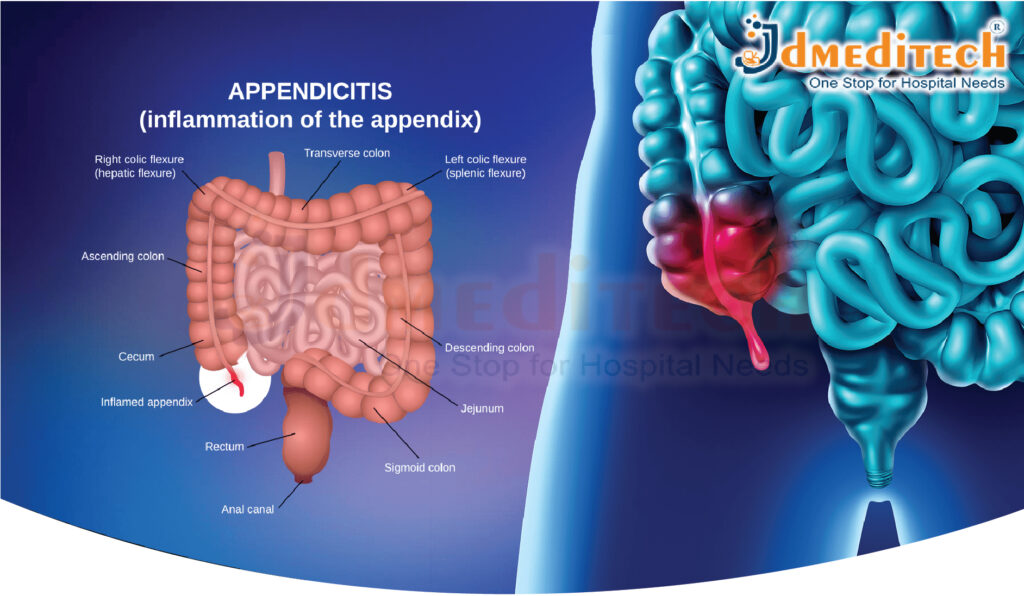
An appendectomy is a surgical procedure to remove the appendix—a small, finger-shaped organ located in the lower right side of the abdomen. It is most commonly performed to treat appendicitis, a condition where the appendix becomes inflamed, swollen, and infected. Since a burst appendix can cause serious complications, an appendectomy is usually considered an emergency surgery.
Why Is Appendectomy Needed?
Doctors recommend appendectomy when:
- The appendix is inflamed (acute appendicitis)
- There is a risk of appendix rupture
- The patient experiences severe abdominal pain
- Infection or pus is detected in the abdomen
- Other treatments cannot control the condition
Types of Appendectomy Surgery
-
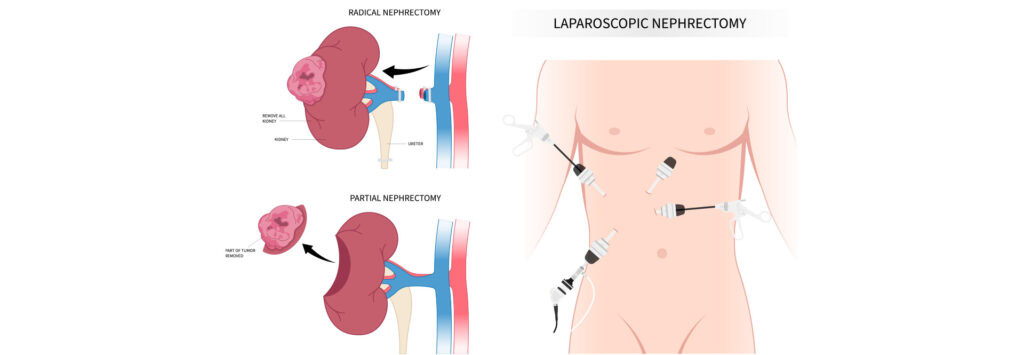
Laparoscopic Appendectomy
- Performed using small keyhole incisions
- A camera (laparoscope) guides the surgeon
- Less pain, faster recovery, and minimal scarring
-
Open Appendectomy
- A single, larger incision is made in the abdomen
- Typically done in complicated cases (ruptured appendix, severe infection)
- Allows better access to the abdominal cavity
How Is an Appendectomy Performed?
Laparoscopic Procedure:
- The patient receives anesthesia
- 2–3 small incisions made
- Laparoscope and surgical tools inserted
- Appendix located and removed
- Incisions closed with sutures
Open Surgery Procedure:
- A larger incision made on the lower right abdomen
- Appendix removed directly
- Abdominal cavity cleaned (if infected)
- The wound was closed with stitches
Is appendectomy safe?
In most cases, appendectomy is the safest treatment for appendicitis in children and adults. There are a few exceptions — for example, some people might not qualify for surgery. Some might only need antibiotics if they have mild appendicitis or if they catch it early enough. Even so, these people have a higher risk of recurrent (returning) infection. Ultimately, the risk of rupture is much greater than the low risk of surgery. It’s safest to remove your inflamed appendix if it’s at risk of rupturing.
What happens before appendix removal?
Most appendectomies occur within 24 hours of your appendicitis diagnosis. Prior to your surgery, your healthcare team will place an IV line into a vein so they can give you antibiotics as soon as possible. They’ll continue antibiotic therapy until sometime after the surgery—usually one to seven days—depending on the severity of the infection. Your provider will check your response to the antibiotics to make sure you need surgery before proceeding.
Your healthcare provider may also need to run additional tests before your surgery, like a blood test or imaging scans. These tests can give them more information about the nature of your appendicitis. They’ll also need to review your medical history, including any current medications, allergies or conditions. Based on these and other factors, they’ll explain the type of surgery they want to perform and ask for your consent.
Conclusion
Appendectomy is a safe and life-saving procedure that treats appendicitis effectively. With modern laparoscopic techniques, patients experience faster healing, minimal pain, and a quick return to daily life. If symptoms of appendicitis appear, immediate medical care is essential to avoid complications.