




A Cesarean delivery, commonly known as a C-section, is a surgical procedure used to deliver a baby safely when vaginal birth is not possible or poses risks to the mother or child. Thanks to advanced medical equipment and modern surgical standards, C-sections today are highly safe and widely practiced around the world.
Why a C-Section Is Performed
Doctors may recommend a C-section for several medical reasons:
1. Complications During Labor
• Labor not progressing as expected
• Signs of fetal distress
• Issues with the umbilical cord
2. Maternal Health Concerns
• High blood pressure or pre-eclampsia
• Certain active infections
• Placenta previa (placenta covering or blocking the birth canal)
3. Baby’s Position
• Breech position (baby coming feet first)
• Transverse position (lying sideways)
4. Multiple Pregnancy
• Twins, triplets, or higher-order multiples
• Complications affecting one or more babies
5. Previous C-Sections
• Some women may require a repeat C-section depending on uterine healing and pregnancy conditions.
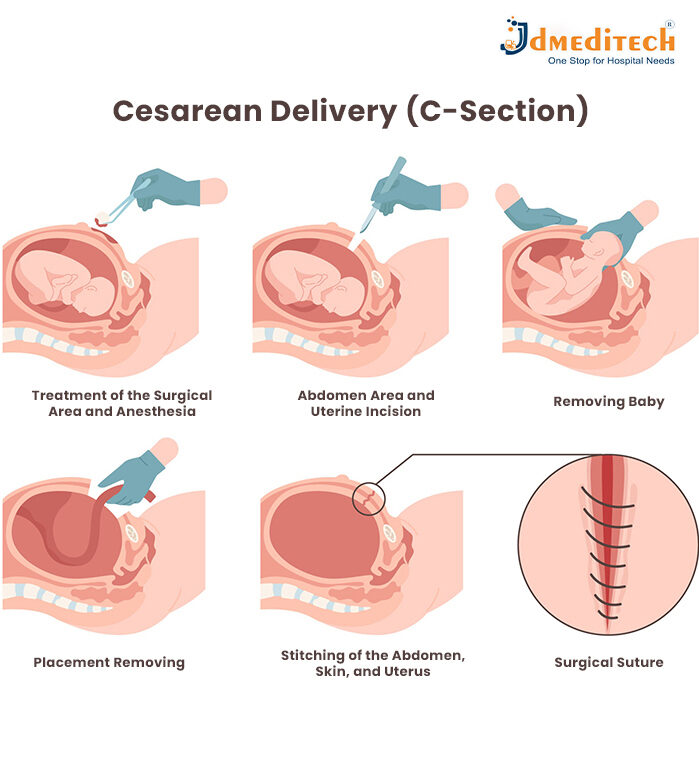
How C-Section Surgery Is Performed
1. Preparation
• The mother receives spinal or epidural anesthesia.
• Vital signs are monitored, and the abdominal area is sterilized.
2. Making the Incision
• A horizontal (bikini line) incision is made on the lower abdomen.
• A second incision is created in the uterus to reach the baby.
3. Delivery of the Baby
• The baby is gently lifted out of the uterus.
• The umbilical cord is cut, and a pediatric team assesses the newborn.
4. Closing the Incisions
• The uterus and abdominal layers are carefully sutured.
• The entire operation typically takes about 40–60 minutes.
Recovery After a C-Section
Recovery from a C-section takes longer than a vaginal birth because it involves major abdominal surgery. Typical recovery steps include:
• Staying in the hospital for 2–4 days
• Pain management and adequate rest
• Avoiding lifting heavy objects
• Gentle walking to improve circulation
• Scheduling follow-up visits to monitor incision healing
Most mothers recover fully within 4–6 weeks.
Benefits of a C-Section
• A safer option in emergency situations
• Protects the health of both mother and baby in high-risk pregnancies
• Planned C-Sections allow scheduling convenience for families
Risks and Considerations
As with any surgical procedure, a C-section carries some risks, such as:
• Infection or excessive bleeding
• Blood clots
• Longer healing period
• Increased risk of breathing problems in babies delivered before 39 weeks (when not medically necessary)
Healthcare professionals evaluate each case carefully before recommending cesarean delivery.
Conclusion
A C-section is a highly effective and reliable method of childbirth when normal delivery isn’t possible or safe. With advanced surgical techniques, professional medical care, and high-quality equipment—such as those supported by JD Meditech—mothers and babies can expect safe outcomes and a smooth recovery.
Understanding the procedure empowers parents, reduces anxiety, and prepares families for a confident birthing experience.
Get Connected:
+91 79909 93062 | +91 63513 72032 | exports@jdmeditech.com




