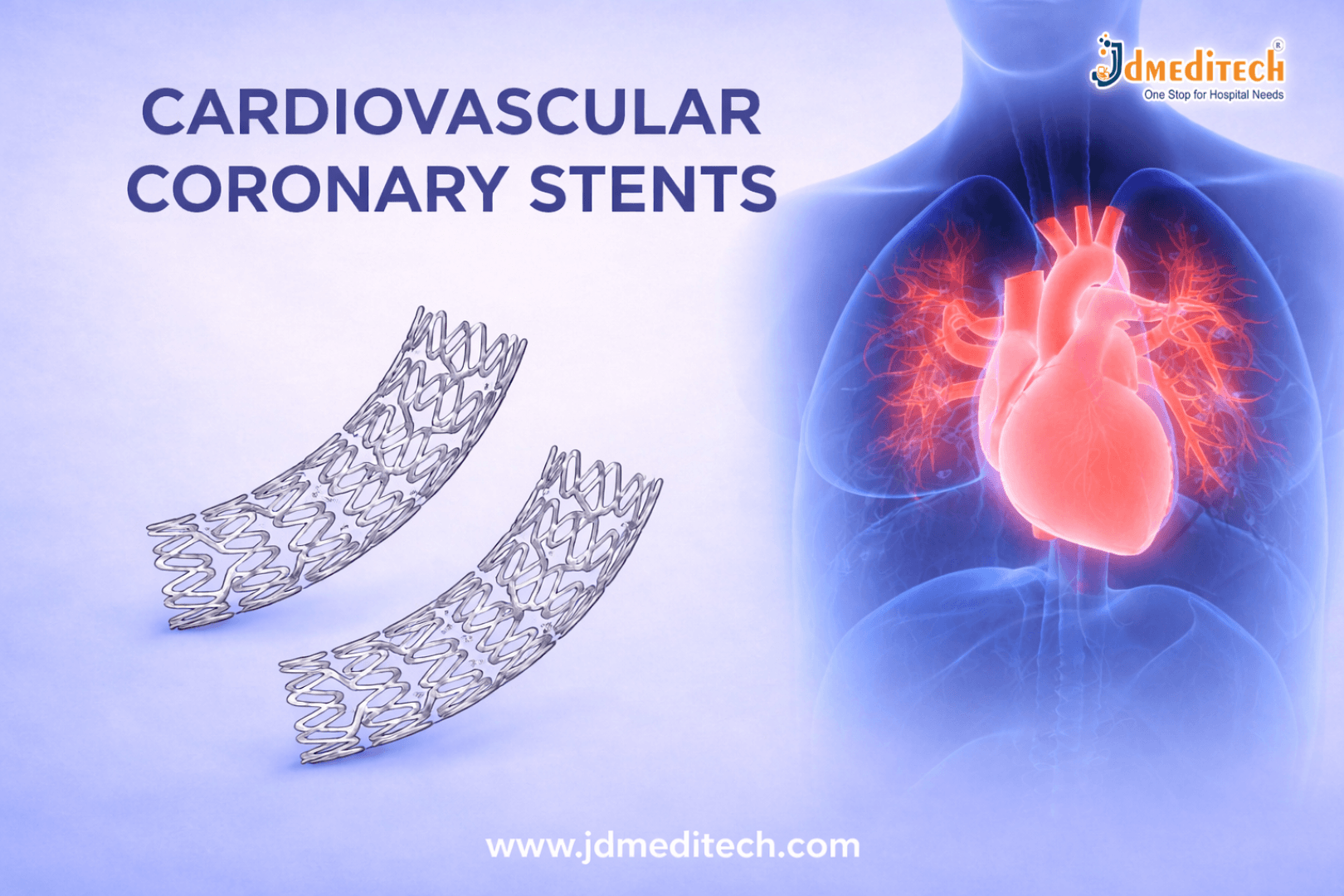
What is a Cardiovascular Coronary Stent?
A cardiovascular coronary stent is a small mesh tube placed inside a narrowed artery. It keeps the artery open and allows blood to flow normally.
Doctors insert the cardiovascular coronary stent during a minimally invasive procedure. In most cases, the stent stays in the artery permanently.
Why is a Cardiovascular Coronary Stent Used?
Doctors recommend a cardiovascular coronary stent to treat:
- Blocked coronary arteries
- Coronary artery disease
- Chest pain (angina)
- Heart attack
When plaque builds up, blood flow decreases. Therefore, a cardiovascular coronary stent helps restore circulation and improves heart function.
Types of Cardiovascular Coronary Stent
1. Bare-Metal Stent
A bare-metal cardiovascular coronary stent provides basic support to the artery. However, it may have a higher risk of re-narrowing.
2. Drug-Eluting Stent
A drug-eluting cardiovascular coronary stent releases medication. As a result, it prevents blockage from returning. This type is commonly used today.
3. Bioabsorbable Stent
A bioabsorbable cardiovascular coronary stent dissolves over time. Therefore, it reduces long-term complications.
Cardiovascular Coronary Stent Procedure
The cardiovascular coronary stent is placed using angioplasty.
Steps of the Procedure:
- First, a catheter is inserted into the artery
- Next, it reaches the blocked area
- Then, a balloon expands to open the artery
-
After that, the cardiovascular coronary stentis placed
- Finally, the catheter is removed
This procedure is quick and safe. In most cases, it takes less than two hours.
Benefits of Cardiovascular Coronary Stent
A cardiovascular coronary stent offers several benefits:
- Improves blood flow
- Reduces chest pain
- Prevents heart attacks
- Requires minimal surgery
- Ensures faster recovery
Moreover, the cardiovascular coronary stent improves overall quality of life.
Risks of Cardiovascular Coronary Stent
Although safe, a cardiovascular coronary stent may involve risks:
- Blood clot formation
- Re-blockage of artery
- Minor bleeding
- Rare infection
However, proper medication reduces these risks significantly.
Recovery After Cardiovascular Coronary Stent
Recovery Tips:
- Take prescribed medicines regularly
- Avoid heavy activity for a few days
- Follow a healthy diet
- Visit your doctor regularly
Most patients recover within a week after receiving a cardiovascular coronary stent.
Lifestyle Changes After Cardiovascular Coronary Stent
To maintain results of a cardiovascular coronary stent, follow these habits:
- Eat heart-friendly food
- Exercise daily
- Quit smoking
- Control cholesterol
- Manage stress
As a result, the cardiovascular coronary stent works effectively for a long time.
Conclusion
A cardiovascular coronary stent plays a vital role in treating heart disease. It improves blood flow, reduces symptoms, and prevents serious complications.
Therefore, choosing the right treatment and following a healthy lifestyle ensures long-term success with a cardiovascular coronary stent.
Get Connected:
+91 79909 93062 | +91 63513 72032 | exports@jdmeditech.com