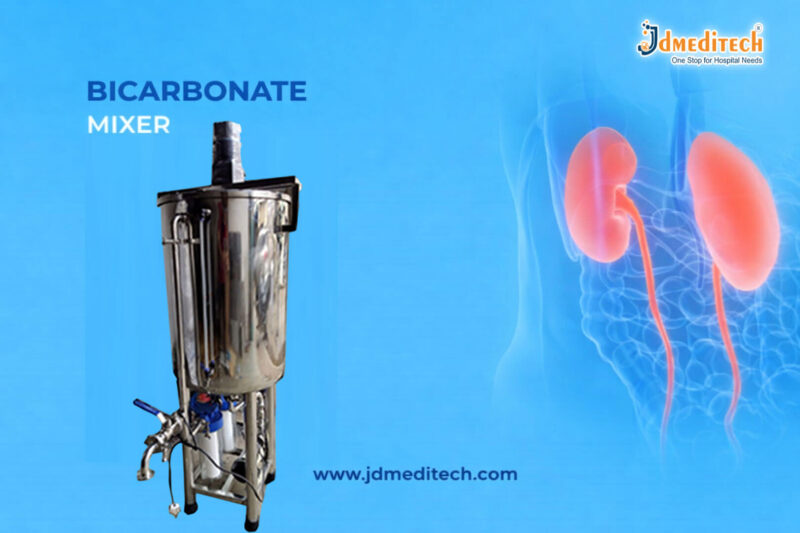
Bicarbonate Mixer: Accurate Dialysis Solution Preparation Equipment

What is a Bicarbonate Mixer?

A bicarbonate mixer is a medical device used to prepare bicarbonate concentrate solutions by mixing bicarbonate powder with purified water. These solutions are then used in dialysis machines to help maintain the patient’s acid-base balance during treatment.

It ensures:

  • Precise concentration levels
  • Safe and hygienic mixing
  • Consistent dialysis outcomes

How Does a Bicarbonate Mixer Work?

The working of a bicarbonate mixer is simple yet highly efficient:

  1. Water Input– Purified water is fed into the mixing chamber
  2. Powder Addition– Measured bicarbonate powder is added
  3. Automated Mixing– The system mixes the solution uniformly
  4. Solution Output– Ready-to-use bicarbonate solution is delivered

Because of automation, the process reduces manual effort and improves accuracy.

Key Features of a Bicarbonate Mixer
1. Automatic Mixing System

The device ensures uniform mixing without manual intervention, which improves efficiency.

2. High Accuracy

It maintains precise concentration levels required for safe dialysis.

3. User-Friendly Interface

Modern bicarbonate mixers come with simple controls and digital displays.

4. Hygienic Design

Made with medical-grade materials, ensuring contamination-free operation.

5. Compact and Durable

Designed for long-term use in busy dialysis centers.

Benefits of Using a Bicarbonate Mixer
Improved Patient Safety

Accurate solution preparation minimizes risks during dialysis treatment.

Time Efficiency

Automation reduces preparation time significantly.

Reduced Human Error

Eliminates manual mixing inconsistencies.

Cost-Effective

Minimizes wastage of bicarbonate powder and water.

Consistent Performance

Delivers reliable results for every dialysis session.

Applications of Bicarbonate Mixer

A bicarbonate mixer is widely used in:

  • Dialysis centers
  • Hospitals
  • Nephrology clinics
  • Medical research facilities

It is especially essential for hemodialysis procedures, where maintaining the correct chemical balance is crucial.

Why is a Bicarbonate Mixer Important in Dialysis?

During dialysis, maintaining the patient’s acid-base balance is vital. The bicarbonate solution acts as a buffer that neutralizes excess acid in the blood.

Without a reliable bicarbonate mixer:

  • Solution inconsistencies may occur
  • Patient safety could be compromised
  • Treatment efficiency may decrease

Therefore, investing in a high-quality bicarbonate mixer is essential for healthcare providers.

Choosing the Right Bicarbonate Mixer

When selecting a bicarbonate mixer, consider:

  • Mixing capacity
  • Accuracy and consistency
  • Ease of operation
  • Cleaning and maintenance
  • Compliance with medical standards

A good mixer improves both workflow and patient outcomes.

Maintenance
Tips for Bicarbonate Mixer

Proper maintenance ensures long-lasting performance:

  • Clean the mixing chamber regularly
  • Use only recommended bicarbonate powder
  • Check for leaks or blockages
  • Follow manufacturer guidelines
  • Schedule periodic servicing
Conclusion

A bicarbonate mixer is an indispensable device in dialysis treatment. It ensures accurate solution preparation, enhances patient safety, and improves overall efficiency in healthcare settings.

By investing in a reliable bicarbonate mixer, hospitals and dialysis centers can deliver safe, effective, and consistent dialysis care.


Explore More Product >>

Get Connected:

+91 79909 93062 | +91 63513 72032 | exports@jdmeditech.com



Artificial Intelligence in Healthcare: Benefits, Uses & Future Trends

Artificial Intelligence (AI) in healthcare is changing the way medical professionals diagnose, treat, and manage diseases. Today, hospitals and clinics use AI-powered tools to improve patient care and reduce errors. As a result, healthcare systems are becoming faster, smarter, and more efficient.

Moreover, AI helps doctors make better decisions by analyzing large amounts of medical data in seconds. Because of this, patients receive accurate diagnoses and personalized treatments. In this blog, you will learn how AI works in healthcare, its benefits, real-world applications, and future trends.

What is Artificial Intelligence in Healthcare?

Artificial Intelligence in healthcare refers to the use of advanced algorithms and machine learning to perform tasks that usually require human intelligence. For example, AI can analyze medical images, predict diseases, and assist in surgeries.

In addition, AI systems learn from past data and continuously improve their performance. Therefore, they become more accurate over time. This makes AI a powerful tool in modern medicine.

Benefits of AI in Healthcare

AI offers several advantages that improve both patient care and hospital efficiency.

1. Improved Diagnosis Accuracy

AI can analyze medical images such as X-rays, MRIs, and CT scans quickly. As a result, doctors can detect diseases like cancer at an early stage.

2. Faster Treatment Decisions

AI processes large datasets within seconds. Therefore, doctors can make quick and informed decisions, especially in emergencies.

3. Personalized Treatment Plans

AI helps create customized treatment plans based on patient history. In addition, it considers genetic information and lifestyle factors.

4. Reduced Human Errors

Medical errors can be dangerous. However, AI reduces these risks by providing accurate data analysis and recommendations.

5. Cost Efficiency

AI reduces unnecessary tests and hospital stays. Consequently, it lowers overall healthcare costs.

Applications of AI in Healthcare

AI is widely used across different areas of healthcare. Let’s explore some key applications.

1. Medical Imaging

AI tools analyze medical images with high precision. For instance, they detect tumors, fractures, and internal bleeding quickly.

2. Virtual Health Assistants

AI-powered chatbots and virtual assistants provide basic medical advice. Moreover, they help patients schedule appointments and manage medications.

3. Drug Discovery

Developing new drugs takes years. However, AI speeds up this process by analyzing chemical data and predicting drug effectiveness.

4. Robotic Surgery

AI-assisted robots help surgeons perform complex procedures. As a result, surgeries become more precise and less invasive.

5. Predictive Analytics

AI predicts disease outbreaks and patient risks. Therefore, healthcare providers can take preventive measures early.

Challenges of AI in Healthcare

Although AI offers many benefits, it also comes with challenges.

1. Data Privacy Concerns

Healthcare data is sensitive. Therefore, protecting patient information is crucial.

2. High Implementation Costs

AI technology requires significant investment. As a result, smaller hospitals may face difficulties adopting it.

3. Lack of Skilled Professionals

AI systems need trained experts to operate and maintain them. However, there is a shortage of such professionals.

4. Ethical Issues

AI decisions must be transparent. Otherwise, it may lead to trust issues among patients.

Future of AI in Healthcare

The future of AI in healthcare looks promising. In the coming years, AI will become more advanced and accessible.

For example, AI may help in early disease prediction even before symptoms appear. In addition, wearable devices will continuously monitor health and alert doctors in real time.

Furthermore, AI will improve telemedicine services, making healthcare accessible to remote areas. As technology evolves, AI will play a key role in transforming global healthcare systems.

Conclusion

Artificial Intelligence in healthcare is revolutionizing the medical industry. It improves diagnosis, enhances treatment, and reduces costs. Moreover, it supports doctors in delivering better patient care.

However, challenges such as data privacy and high costs must be addressed. Despite these issues, AI continues to grow rapidly. Therefore, adopting AI in healthcare is essential for a smarter and healthier future.


Explore More Product >>


Get Connected:

+91 79909 93062 | +91 63513 72032 | exports@jdmeditech.com

 

Diabetes Treatment: Causes, Symptoms, Types & Prevention Guide

Diabetes is a chronic medical condition that affects how your body uses blood sugar (glucose). Glucose is essential for energy, but too much sugar in the blood can lead to serious health problems. With the rising number of diabetes cases worldwide, understanding its causes, symptoms, and diabetes treatment options is more important than ever.

What is Diabetes?

Diabetes occurs when your body either does not produce enough insulin or cannot use insulin properly. Insulin is a hormone that helps glucose enter your cells for energy. When this process fails, blood sugar levels rise.

Types of Diabetes
1. Type 1 Diabetes

Type 1 diabetes is an autoimmune condition where the body attacks insulin-producing cells. It usually develops in children or young adults.

2. Type 2 Diabetes

Type 2 diabetes is the most common form. It occurs when the body becomes resistant to insulin or does not produce enough.

3. Gestational Diabetes

This type develops during pregnancy and usually disappears after childbirth, but it increases the risk of Type 2 diabetes later.

Causes of Diabetes

Several factors contribute to diabetes, including:

  • Genetic factors
  • Obesity
  • Poor diet
  • Lack of physical activity
  • Hormonal imbalances
  • Pancreatic disorders

Understanding these causes helps in early diagnosis and effective diabetes treatment.

Symptoms of Diabetes

Recognizing early symptoms is crucial for timely diabetes treatment:

  • Frequent urination
  • Excessive thirst
  • Unexplained weight loss
  • Fatigue
  • Blurred vision
  • Slow healing wounds

If you experience these symptoms, consult a healthcare professional immediately.

Diagnosis of Diabetes

Doctors use several tests to diagnose diabetes:

  • Fasting Blood Sugar Test
  • HbA1c Test
  • Oral Glucose Tolerance Test
  • Random Blood Sugar Test

Early diagnosis plays a key role in successful diabetes treatment and management.

Diabetes Treatment Options

Effective diabetes treatment focuses on controlling blood sugar levels and preventing complications.

1. Medications

Doctors may prescribe insulin or oral medications depending on the type of diabetes.

2. Healthy Diet

A balanced diet rich in fiber, vegetables, and whole grains helps control blood sugar.

3. Regular Exercise

Physical activity improves insulin sensitivity and supports diabetes treatment.

4. Blood Sugar Monitoring

Regular monitoring helps manage glucose levels effectively.

5. Lifestyle Changes

Maintaining a healthy weight and avoiding smoking are essential parts of diabetes treatment.

Complications of Diabetes

If left untreated, diabetes can lead to serious complications:

  • Heart disease
  • Kidney damage
  • Nerve damage
  • Eye problems
  • Foot complications

Proper diabetes treatment reduces the risk of these complications.

Prevention of Diabetes

While Type 1 diabetes cannot be prevented, Type 2 diabetes can often be delayed or prevented:

  • Maintain a healthy weight
  • Eat a balanced diet
  • Exercise regularly
  • Avoid sugary foods and drinks
  • Get regular health checkups
When to See a Doctor

Seek medical advice if you notice symptoms of diabetes or have a family history of the condition. Early diagnosis ensures better diabetes treatment outcomes.

Conclusion

Diabetes is a manageable condition if detected early and treated properly. With the right diabetes treatment plan, healthy lifestyle choices, and regular monitoring, individuals can live a normal and healthy life. Awareness and prevention play a key role in controlling this growing health concern.

Explore More Product >>

Get Connected:

+91 79909 93062 | +91 63513 72032 | exports@jdmeditech.com
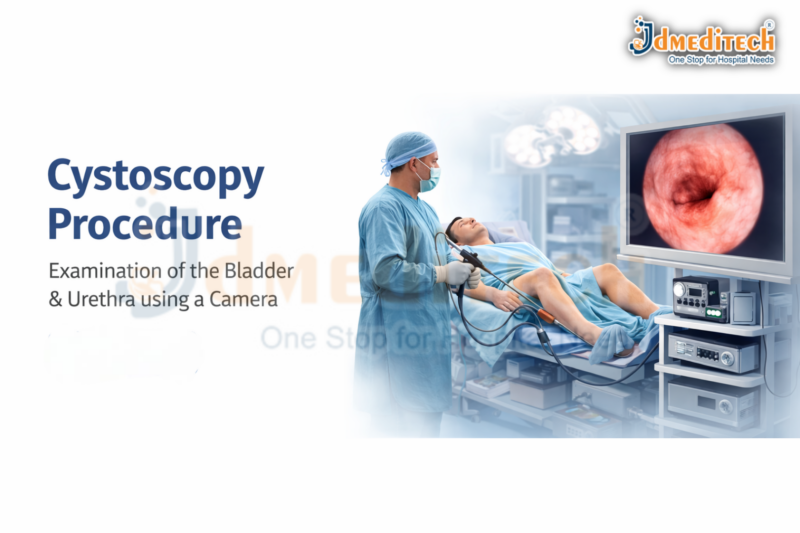
 

Cystoscopy

Cystoscopy: A Complete Guide to Procedure, Uses, and Recovery

Introduction

Cystoscopy is a common medical procedure used to examine the inside of the bladder and urethra. It helps doctors diagnose, monitor, and treat various urinary tract conditions. With advancements in medical technology, cystoscopy has become safer, quicker, and more comfortable for patients.

In this blog, we will explain everything you need to know about cystoscopy, including why it is performed, how the procedure works, preparation, risks, and recovery.

What is Cystoscopy?

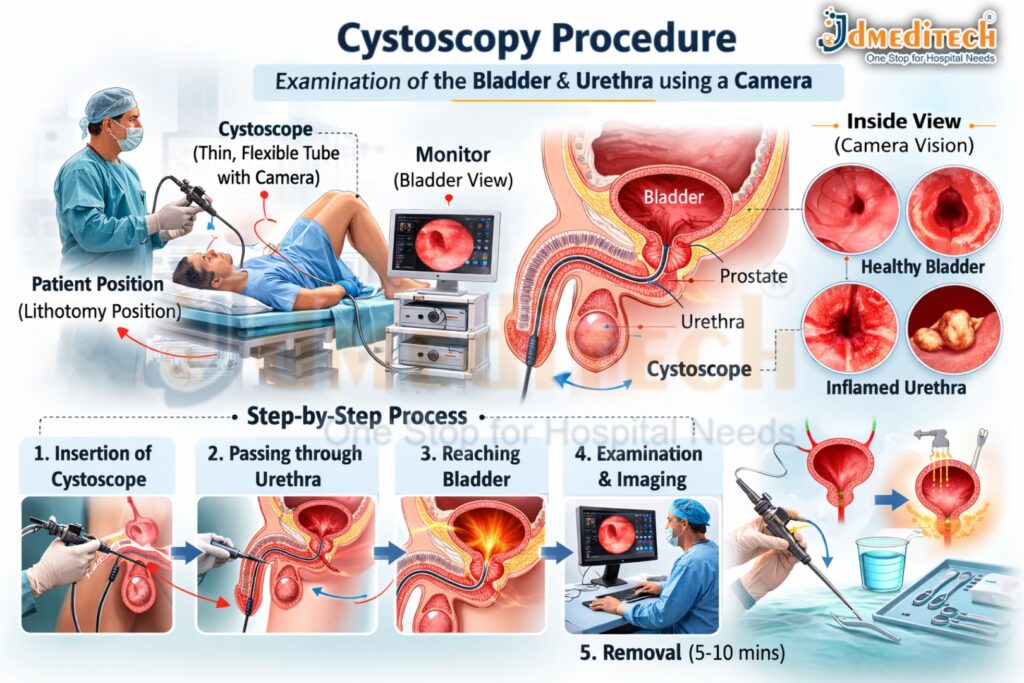
Cystoscopy is a diagnostic and sometimes therapeutic procedure in which a doctor uses a thin tube with a camera and light, called a cystoscope, to view the inside of the urethra and bladder.

There are two types of cystoscopes:

  • Flexible cystoscope – Thin and bendable, usually used for diagnostic purposes.
  • Rigid cystoscope – Slightly thicker and straight, often used for surgical procedures.
Why is Cystoscopy Done?

Cystoscopy is recommended for several urinary tract conditions, including:

1. Diagnosing Problems
  • Blood in urine (hematuria)
  • Frequent urinary tract infections (UTIs)
  • Painful urination
  • Difficulty in passing urine
  • Overactive bladder symptoms
2. Detecting Diseases
  • Bladder cancer
  • Bladder stones
  • Urethral strictures
  • Enlarged prostate (in men)
3. Treatment Purposes
  • Removing small bladder tumors
  • Taking biopsy samples
  • Removing stones
  • Placing stents in ureters
How is Cystoscopy Performed?

The procedure is usually done in a clinic or hospital and typically takes 5–20 minutes for diagnostic purposes.

Step-by-Step Procedure:

  1. The patient lies on the examination table.
  2. The genital area is cleaned and sterilized.
  3. A local anesthetic gel is applied to the urethra.
  4. The cystoscope is gently inserted into the urethra and advanced into the bladder.
  5. Sterile water or saline is used to fill the bladder for better visibility.
  6. The doctor examines the bladder lining and may take samples if needed.

In some cases, spinal or general anesthesia may be used, especially for rigid cystoscopy.

Preparation for Cystoscopy

Proper preparation helps ensure a smooth procedure.

  • You may be asked to give a urine sample before the test.
  • Inform your doctor about medications you are taking.
  • Antibiotics may be prescribed to prevent infection.
  • In most cases, fasting is not required (unless general anesthesia is planned).


What to Expect After the Procedure

After cystoscopy, patients can usually go home the same day.

Common Symptoms:
  • Mild burning sensation while urinating
  • Slight blood in urine
  • Increased frequency of urination

These symptoms usually resolve within 24–48 hours.

Recovery Tips:
  • Drink plenty of water
  • Avoid strenuous activity for 24 hours
  • Take prescribed medications if advised
Risks and Complications
  • Urinary tract infection (UTI)
  • Bleeding
  • Bladder irritation
  • Rarely, injury to the urethra or bladder

Contact your doctor if you experience:

  • Persistent heavy bleeding
  • Fever or chills
  • Severe pain
  • Difficulty urinating
Benefits of Cystoscopy
  • Accurate diagnosis of urinary problems
  • Minimally invasive procedure
  • Quick recovery time
  • Can be used for both diagnosis and treatment
Conclusion

Cystoscopy is a valuable and widely used procedure in urology that allows doctors to directly examine the urinary tract. Whether for diagnosis or treatment, it plays a crucial role in managing bladder and urethral conditions effectively.

If you are experiencing urinary symptoms, consult a urologist to determine whether cystoscopy is the right option for you.


Explore More Product >>


Get Connected:

+91 79909 93062 | +91 63513 72032 | exports@jdmeditech.com
 

Uroflowmetry


Uroflowmetry: A Simple and Effective Test for Urinary Flow Analysis

Uroflowmetry is a non-invasive diagnostic test used to measure the flow rate of urine. It is commonly used to evaluate urinary tract function and detect problems related to bladder or urethra. This simple yet important test plays a key role in diagnosing various urological conditions.

What is Uroflowmetry?

Uroflowmetry is a test that records the speed and volume of urine flow during urination. The patient urinates into a special device called a uroflowmeter, which measures how quickly urine is released and how much is passed.

This test helps doctors understand how well the bladder and urinary tract are functioning.

How the Test Works

The procedure is simple and painless:

  • The patient is asked to urinate into a uroflowmetry machine
  • The device records urine flow rate and total volume
  • Data is displayed in the form of a graph
  • Doctors analyze the results to identify abnormalities

The test usually takes only a few minutes and does not require any special preparation.

Key Benefits of Uroflowmetry
  • Non-invasive and painless procedure
  • Quick and easy to perform
  • Helps in early detection of urinary problems
  • Provides accurate measurement of urine flow rate
  • Useful for monitoring treatment progress
When is Uroflowmetry Recommended?

Uroflowmetry is commonly recommended for patients experiencing:

  • Weak or slow urine stream
  • Difficulty in urination
  • Frequent urination
  • Incomplete bladder emptying
  • Suspected urinary obstruction or enlarged prostate
Importance in Urology

Uroflowmetry is widely used in diagnosing conditions such as:

  • Benign Prostatic Hyperplasia (BPH)
  • Urethral stricture
  • Bladder dysfunction
  • Urinary tract obstruction

It is often combined with other diagnostic tests for a complete evaluation.

Conclusion

Uroflowmetry is a reliable and efficient test for assessing urinary flow and detecting potential urological issues. Its simplicity, accuracy, and non-invasive nature make it an essential tool in modern urology for improving patient care and diagnosis.


Explore More Product >> 


Get Connected:

+91 79909 93062 | +91 63513 72032 | exports@jdmeditech.com

 

Hospital Medical Equipment

Hospital medical equipment plays a crucial role in delivering safe, accurate, and efficient healthcare services. From diagnosis to treatment and patient monitoring, advanced medical devices are essential for improving patient outcomes and supporting medical professionals.

Importance of Hospital Medical Equipment

Modern healthcare relies on a wide range of equipment such as patient monitors, ventilators, diagnostic machines, and surgical instruments. These tools help ensure accurate diagnosis, effective treatment, and continuous monitoring of patients.

Key Benefits
  • Improved accuracy in diagnosis and treatment
  • Enhanced patient safety and care
  • Increased efficiency for healthcare professionals
  • Support for critical and emergency care
Growing Demand in Healthcare

With the advancement of technology, the demand for high-quality medical equipment is increasing. Hospitals and clinics require reliable and modern devices to meet healthcare standards and provide better services.

Conclusion

Hospital medical equipment is the backbone of modern healthcare systems. Investing in high-quality and reliable equipment is essential for delivering better patient care and improving overall healthcare outcomes.

Explore More Product >>

Get Connected:
+91 79909 93062 | +91 63513 72032 | exports@jdmeditech.com