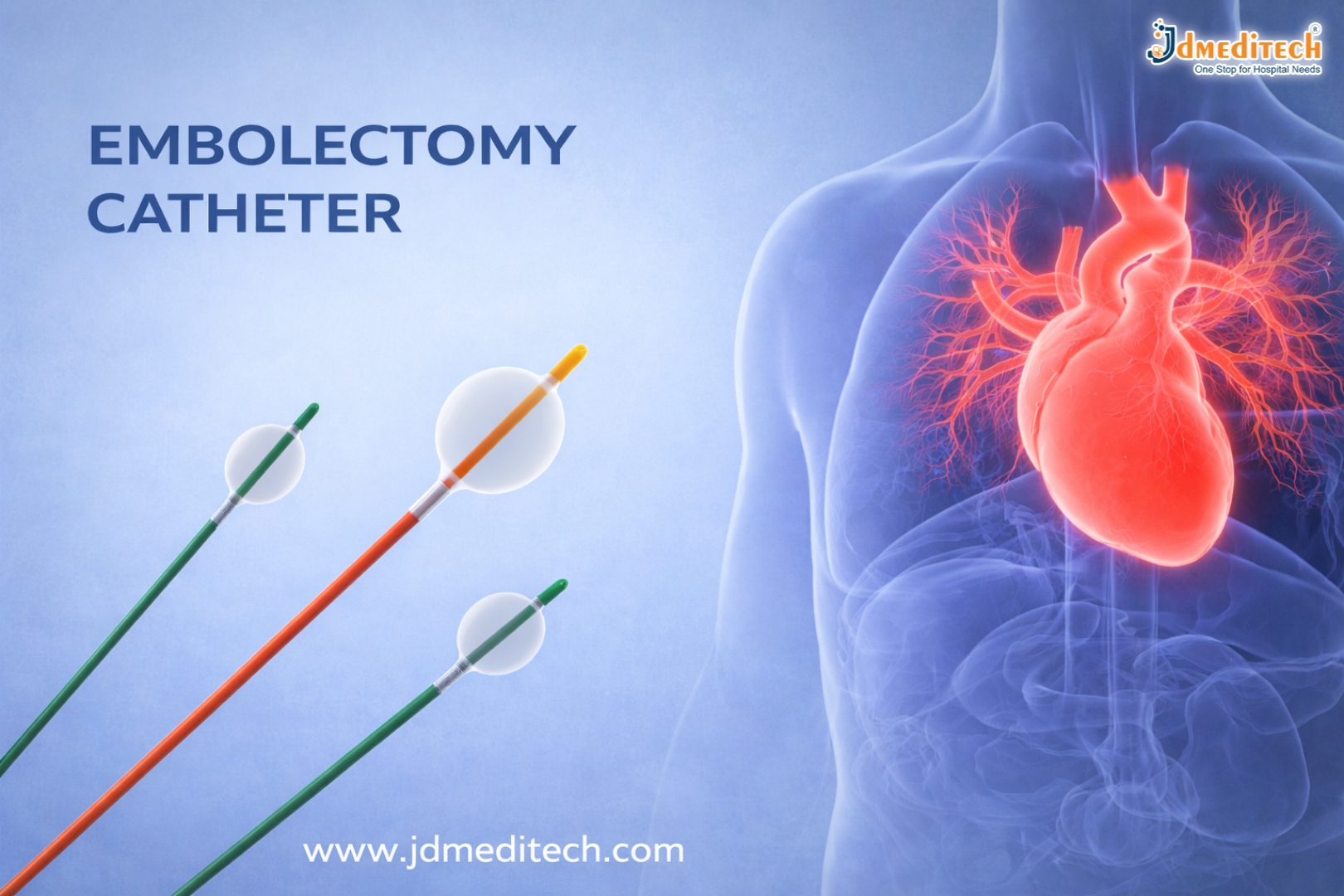
An embolectomy catheter is a medical device used to remove blood clots from blood vessels. These clots can block blood flow and cause serious health problems. Therefore, doctors must remove them quickly.
In many cases, this device helps restore circulation within minutes. As a result, it reduces the risk of stroke, tissue damage, and organ failure.
Today, the embolectomy catheter is widely used in cardiovascular procedures. It offers a fast, safe, and minimally invasive solution.
What is an Embolectomy Catheter?
An embolectomy catheter is a thin and flexible tube. Doctors insert it into a blocked artery or vein.
At the tip, there is a small balloon. First, the catheter reaches the clot. Then, the balloon inflates. After that, the doctor pulls the catheter back. As a result, the clot is removed from the vessel.
Because of this simple method, blood flow returns quickly.
Why is an Embolectomy Catheter Used?
Blood clots can be dangerous. In some cases, they can be life-threatening. Therefore, quick treatment is important.
Doctors use an embolectomy catheter in the following conditions:
- Acute arterial blockage
- Deep vein thrombosis (DVT)
- Pulmonary embolism
- Stroke-related clots
- Peripheral artery disease
In addition, this device is useful in emergency situations. It helps save time and improves survival.
Types of Embolectomy Catheters
There are different types of embolectomy catheter devices. Each type serves a specific purpose.
Balloon Embolectomy Catheter
This is the most common type. It uses a balloon to capture and remove the clot.
Fogarty Catheter
Doctors often use this catheter in vascular surgery. It is reliable and easy to use.
Aspiration Catheter
This type removes clots using suction instead of a balloon.
Mechanical Devices
These devices break the clot into small pieces. Then, they remove it from the vessel.
Embolectomy Procedure
The procedure is simple and quick. Moreover, it is usually safe.
Step 1: Preparation
First, the patient receives anesthesia.
Step 2: Insertion
Next, the doctor inserts the embolectomy catheter into the blood vessel.
Step 3: Positioning
Then, imaging helps guide the catheter to the clot.
Step 4: Removal
After that, the balloon inflates and captures the clot. The doctor removes it carefully.
Step 5: Completion
Finally, blood flow returns to normal.
Benefits of Embolectomy Catheter
The embolectomy catheter offers many benefits.
- Fast clot removal
- Minimally invasive procedure
- Quick recovery time
- Lower risk of complications
- High success rate
Most importantly, it helps prevent serious damage to tissues and organs.
Risks and Complications
Like any procedure, there are some risks. However, they are usually rare.
- Bleeding
- Infection
- Vessel injury
- Partial clot removal
Even so, experienced doctors manage these risks effectively.
Role in Cardiovascular Procedures
The embolectomy catheter plays a key role in modern medicine.
Doctors use it in:
- Emergency vascular treatment
- Stroke management
- Cardiac procedures
- Peripheral artery care
Therefore, it is an important tool in saving lives.
How to Choose the Right Embolectomy Catheter
Choosing the correct device is important. Doctors consider several factors.
- Size of the vessel
- Location of the clot
- Type of blockage
- Patient condition
As a result, the right choice improves treatment success.
Future of Embolectomy Catheters
Medical technology is improving every year. Therefore, newer devices are more advanced.
For example:
- Better flexibility
- Improved precision
- Smart balloon systems
- Combined clot removal techniques
In the future, these devices will become even safer and more effective.
Conclusion
The embolectomy catheter is a powerful tool for clot removal. It helps restore blood flow quickly and safely.
Because it is minimally invasive, patients recover faster. In addition, it reduces the risk of serious complications.
Overall, this device plays a vital role in cardiovascular procedures.
Get Connected:
+91 79909 93062 | +91 63513 72032 | exports@jdmeditech.com