Endoscopic Aspiration Needle: A Complete Guide for Accurate Diagnosis & Minimally Invasive Procedures
Introduction
An Endoscopic Aspiration Needle is a vital medical device used in modern diagnostic and therapeutic procedures. It plays a crucial role in collecting tissue or fluid samples from internal organs through endoscopic guidance.
With increasing demand for minimally invasive procedures, this device has become essential in gastroenterology, pulmonology, and oncology.
What is an Endoscopic Aspiration Needle?
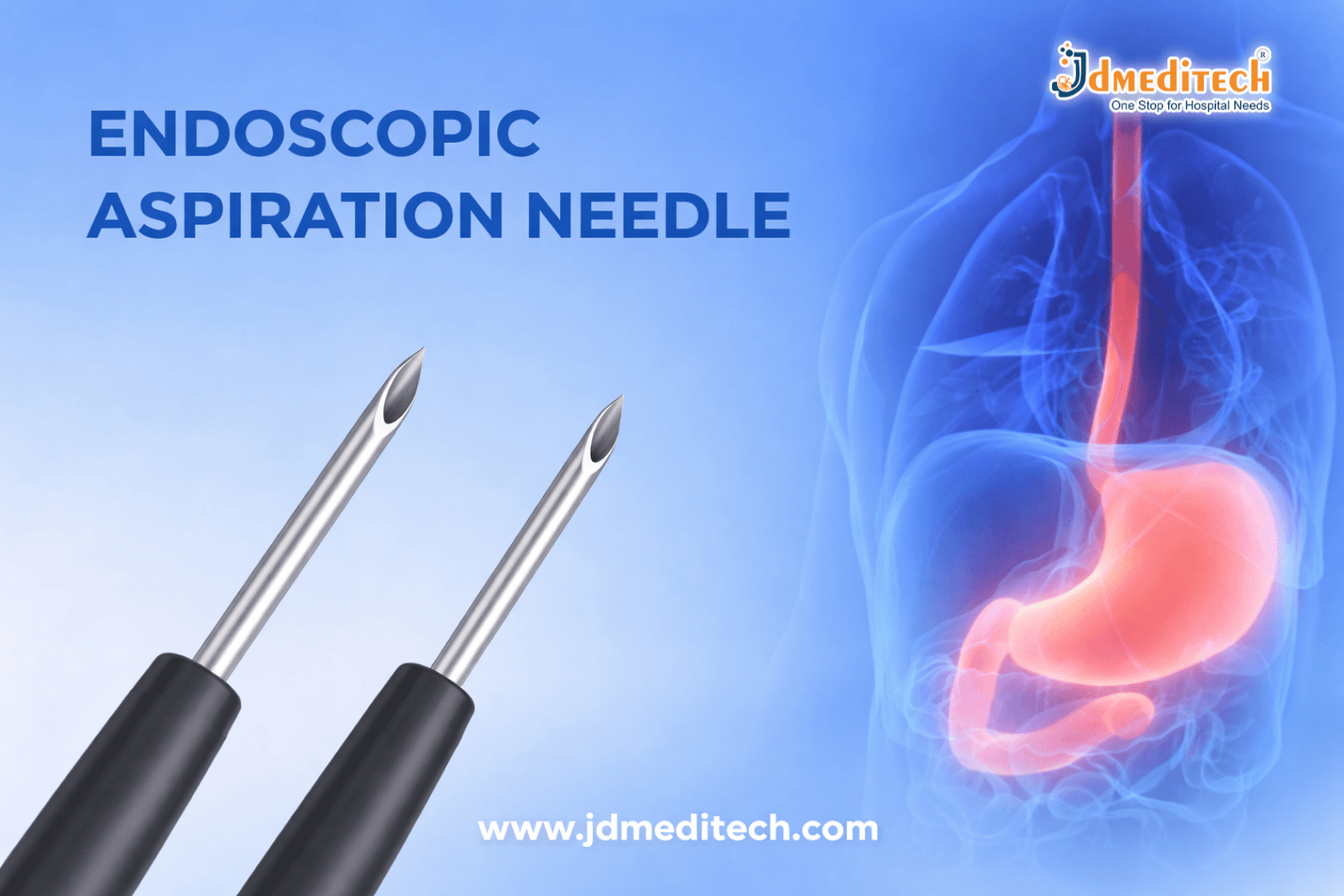
An Endoscopic Aspiration Needle is a specialized needle designed to pass through an endoscope to obtain tissue samples from lesions, lymph nodes, or masses inside the body.
Doctors commonly use it during procedures like:
- Endoscopic Ultrasound (EUS)
- Bronchoscopy
- Fine Needle Aspiration (FNA)
Key Features of Endoscopic Aspiration Needle
Modern Endoscopic Aspiration Needle devices are designed for precision and safety. Key features include:
- High-quality stainless steel needle
- Echogenic tip for better visibility
- Flexible catheter for easy navigation
- Ergonomic handle for control
- Multiple size options (19G, 22G, 25G)
These features ensure accurate targeting and effective sample collection.
Types of Endoscopic Aspiration Needles
Different procedures require different types of Endoscopic Aspiration Needle:
1. Fine Needle Aspiration (FNA) Needle
Used for collecting cytological samples.
2. Fine Needle Biopsy (FNB) Needle
Designed to obtain core tissue samples for histology.
3. EUS-Guided Aspiration Needle
Used with endoscopic ultrasound for precise targeting.
Applications in Medical Procedures
The Endoscopic Aspiration Needle is widely used across various specialties:
- Gastroenterology– Sampling pancreatic lesions
- Oncology– Tumor diagnosis and staging
- Pulmonology– Lung mass biopsy
- Hepatology– Liver lesion evaluation
This versatility makes it a critical diagnostic tool.
Benefits of Using Endoscopic Aspiration Needle
Using an Endoscopic Aspiration Needle offers several advantages:
- Minimally invasive procedure
- Reduced patient discomfort
- Quick recovery time
- High diagnostic accuracy
- Lower risk of complications
As a result, it is preferred over traditional surgical biopsy methods.
Procedure Overview
The procedure using an Endoscopic Aspiration Needle typically involves:
- Insertion of the endoscope into the body
- Identification of the target area
- Needle advancement through the endoscope
- Sample collection via aspiration
- Withdrawal and lab analysis
The entire process is safe and efficient when performed by trained professionals.
Safety and Precautions
Although the Endoscopic Aspiration Needle is safe, certain precautions are necessary:
- Proper sterilization
- Use by trained specialists only
- Monitoring for complications like bleeding or infection
- Correct needle selection based on procedure
Following these ensures optimal patient outcomes.
How to Choose the Right Endoscopic Aspiration Needle
Selecting the right Endoscopic Aspiration Needle depends on:
- Target tissue type
- Required sample size
- Procedure type (EUS, bronchoscopy)
- Needle gauge
Consulting medical experts helps in making the best choice.
Conclusion
The Endoscopic Aspiration Needle is an indispensable tool in modern medicine. It enables accurate diagnosis while minimizing patient discomfort.
With advancements in technology, these needles continue to improve precision, safety, and efficiency in medical procedures.
Get Connected:
+91 79909 93062 | +91 63513 72032 | exports@jdmeditech.com