Facts For Kidney Stones
Kidney stones are hard mineral deposits that develop inside the kidneys and can cause severe pain, urinary problems, and infection if left untreated. Understanding the key facts about kidney stones—such as their causes, symptoms, types, diagnosis, treatment options, and prevention—helps in early detection and better management. This blog explains essential information about kidney stones to help patients recognize signs early and make informed health decisions.
What Are Kidney Stones?
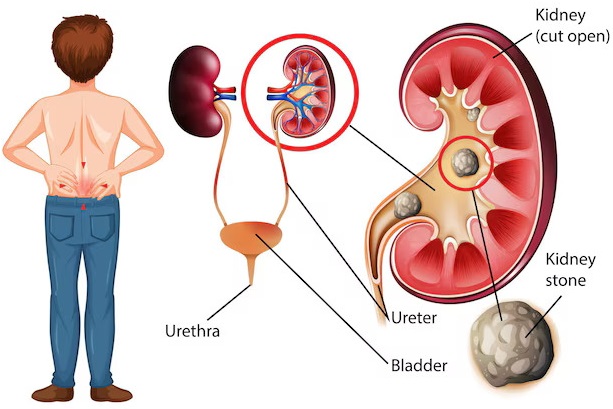
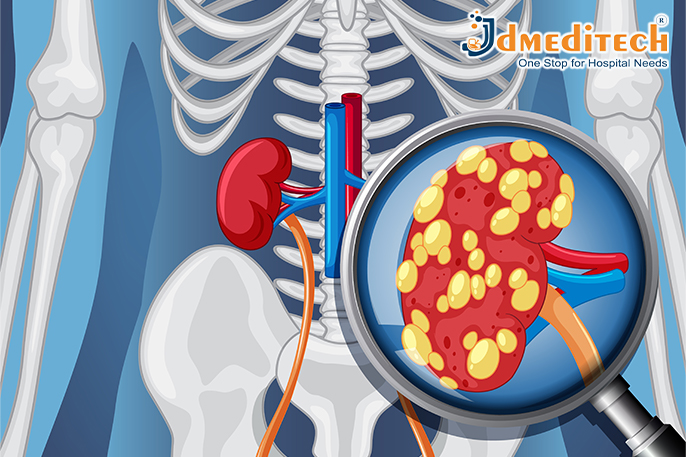
Kidney stones are hard, crystal-like deposits that form inside your kidneys when certain minerals and salts in the urine stick together. When urine becomes too concentrated—due to low water intake or other factors—substances like calcium, oxalate, or uric acid can build up and form small stones.
These stones can stay in the kidney or travel through the urinary tract. When they move, they can cause severe pain, blood in urine, nausea, and difficulty passing urine.
Kidney stones vary in size:
- Some are as small as a grain of sand
- Others can grow large enough to block the urinary tract
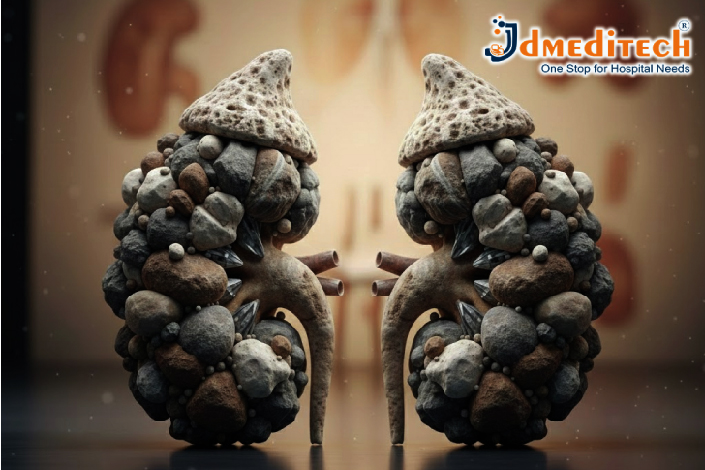
What type of kidney stones do I have?
-
Calcium Oxalate Stones (Most Common)
Formed when calcium combines with oxalate
Often linked to:
– Low water intake
– High oxalate foods (spinach, nuts, chocolate)
– High salt
– Family history
-
Uric Acid Stones
- More common in people who eat high-protein diets
- Seen in those with gout, diabetes, or metabolic issues
- Urine becomes too acidic
-
Struvite Stones
- Caused by repeated urinary tract infections (UTIs)
- Can grow quickly and become large
- More common in women because UTIs are more frequent
-
Cystine Stones (Rare)
- Caused by a genetic disorder called cystinuria
- Happens when cystine leaks into urine and forms stones
Conclusion
Kidney stones are painful but treatable. Early diagnosis and preventive lifestyle changes can significantly reduce the risk of recurrence. If you experience symptoms, consult a urologist for proper evaluation. At JDMeditech, we provide high-quality urology instruments and medical devices used in advanced kidney stone treatments like URS, RIRS, and PCNL.