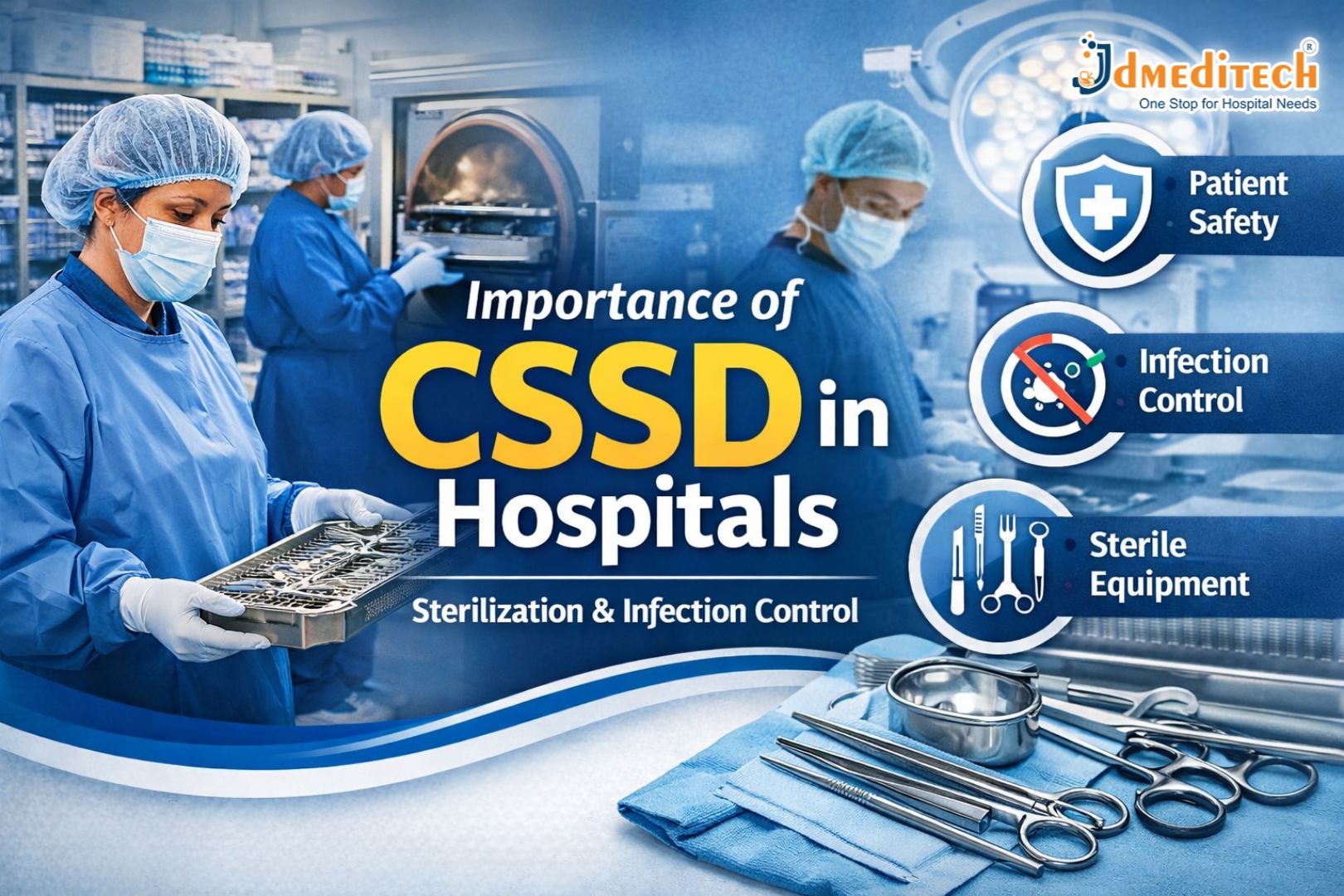
The importance of CSSD in hospitals cannot be overstated. CSSD, or Central Sterile Supply Department, plays a critical role in maintaining hygiene, preventing infections, and ensuring safe surgical procedures.
Every hospital relies on sterile instruments. Without proper sterilization, patients face serious risks such as hospital-acquired infections (HAIs). Therefore, CSSD acts as the backbone of infection control and patient safety.
In this blog, we will explore why CSSD is essential, how it functions, and its impact on healthcare quality.
What is CSSD in Hospitals?
CSSD stands for Central Sterile Supply Department. It is a specialized unit responsible for:
- Cleaning medical instruments
- Disinfecting equipment
- Sterilizing surgical tools
- Storing sterile supplies
- Distributing sterile items across departments
This department ensures that all reusable medical devices are safe for patient use.
Importance of CSSD in Hospitals
1. Ensures Patient Safety
The primary importance of CSSD in hospitals is patient safety. Proper sterilization removes harmful microorganisms, reducing the risk of infections during medical procedures.
As a result, patients receive safe and reliable treatment.
2. Prevents Hospital-Acquired Infections (HAIs)
Hospital-acquired infections can be life-threatening. However, CSSD helps prevent these infections by:
- Using advanced sterilization techniques
- Maintaining strict hygiene protocols
- Monitoring sterilization processes
Therefore, CSSD significantly reduces infection rates.
3. Maintains Quality Healthcare Standards
Hospitals must follow strict healthcare standards. CSSD ensures compliance with:
- Infection control guidelines
- Sterilization protocols
- Regulatory standards
This improves overall healthcare quality and hospital reputation.
4. Supports Surgical Efficiency
Surgical procedures require sterile instruments at all times. CSSD ensures:
- Timely availability of instruments
- Proper packaging and labeling
- Organized workflow
Because of this, surgeries can proceed without delays.
5. Extends Equipment Lifespan
Proper cleaning and sterilization help maintain medical instruments. CSSD:
- Prevents damage caused by improper handling
- Uses appropriate cleaning techniques
- Ensures correct storage
As a result, hospitals save costs on equipment replacement.
6. Reduces Cross-Contamination
Cross-contamination can occur if instruments are not properly sterilized. CSSD minimizes this risk by:
- Separating clean and contaminated areas
- Following strict workflows
- Using standardized procedures
Thus, it protects both patients and healthcare workers.
Key Functions of CSSD
Cleaning and Decontamination
All used instruments are thoroughly cleaned to remove biological material.
Disinfection
Chemical or thermal methods are used to reduce microorganisms.
Sterilization
High-pressure steam (autoclaving) or other methods ensure complete sterilization.
Storage
Sterile items are stored in controlled environments to maintain sterility.
Distribution
Sterile instruments are supplied to various hospital departments.
CSSD Workflow in Hospitals
The CSSD workflow follows a structured process:
- Collection of used instruments
- Cleaning and decontamination
- Inspection and packaging
- Sterilization
- Storage
- Distribution
This systematic approach ensures efficiency and safety.
Modern Technologies Used in CSSD
Modern CSSD units use advanced technologies such as:
- Autoclaves
- Ethylene Oxide (ETO) sterilizers
- Plasma sterilization
- Ultrasonic cleaners
- Washer-disinfectors
These technologies improve accuracy and effectiveness.
Challenges Faced by CSSD
Despite its importance, CSSD faces several challenges:
- High workload and time pressure
- Need for skilled staff
- Strict compliance requirements
- Equipment maintenance
However, proper management can overcome these challenges.
Best Practices for Effective CSSD Management
To maximize the importance of CSSD in hospitals, follow these best practices:
- Train staff regularly
- Maintain strict hygiene protocols
- Use advanced sterilization equipment
- Monitor quality through audits
- Ensure proper documentation
These steps enhance efficiency and safety.
Conclusion
The importance of CSSD in hospitals lies in its ability to ensure patient safety, prevent infections, and maintain high healthcare standards. It is a vital department that supports every medical procedure.
Without CSSD, hospitals cannot deliver safe and effective treatment. Therefore, investing in a well-equipped and properly managed CSSD is essential for any healthcare facility.
Get Connected:
+91 79909 93062 | +91 63513 72032 | exports@jdmeditech.com