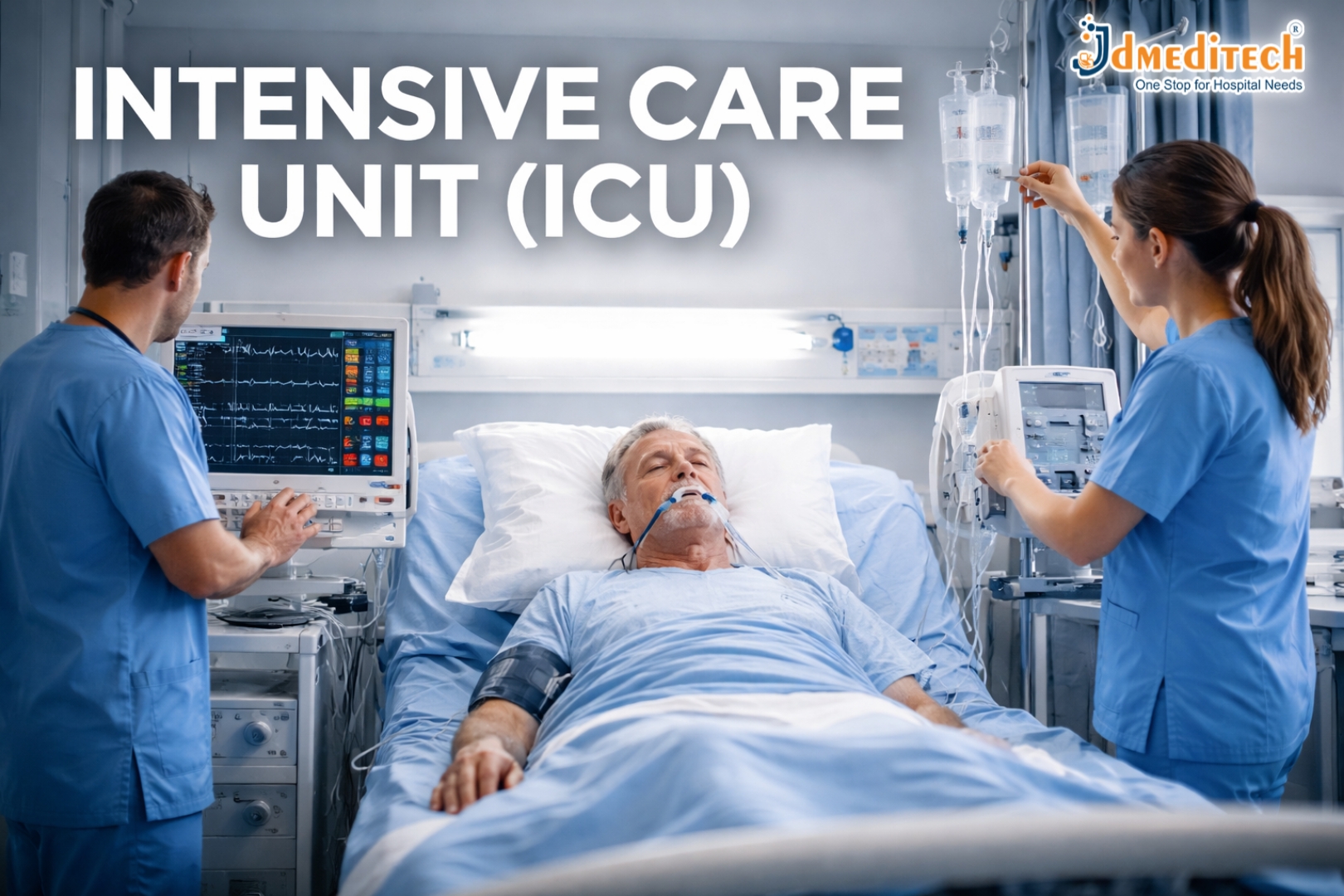
The Intensive Care Unit (ICU) plays a vital role in modern healthcare. It provides advanced medical care to patients with life-threatening conditions. In most hospitals, the ICU is equipped with specialized technology and trained staff to monitor and treat critically ill patients.
Moreover, ICU care ensures constant supervision and quick medical response. Because of this, patients with severe injuries or illnesses receive the best possible support. In this blog, you will learn about ICU meaning, types, equipment, procedures, and patient care.
What is an Intensive Care Unit (ICU)?
An Intensive Care Unit (ICU) is a specialized hospital department designed to treat patients with serious and life-threatening conditions. Doctors and nurses monitor patients 24/7 using advanced machines.
In addition, ICU staff includes intensivists, critical care nurses, and respiratory therapists. Therefore, patients receive continuous and expert medical attention.
Types of ICU
Different hospitals provide various types of ICUs based on patient needs.
1. Medical ICU (MICU)
This ICU treats patients with severe medical conditions such as infections, organ failure, and respiratory diseases.
2. Surgical ICU (SICU)
Doctors use this ICU for patients recovering from major surgeries. As a result, they receive close monitoring after operations.
3. Cardiac ICU (CCU)
This unit focuses on heart-related conditions such as heart attacks and cardiac arrest.
4. Neonatal ICU (NICU)
NICU provides care for premature or critically ill newborn babies.
5. Pediatric ICU (PICU)
This ICU treats infants and children with serious health conditions.
Common Equipment Used in ICU
ICUs use advanced equipment to monitor and support patients.
1. Ventilators
Ventilators help patients breathe when they cannot do so on their own.
2. Cardiac Monitors
These machines track heart rate, blood pressure, and oxygen levels continuously.
3. Infusion Pumps
Doctors use these devices to deliver medications and fluids accurately.
4. Defibrillators
They help restore normal heart rhythm during emergencies.
5. Dialysis Machines
These machines support kidney function in patients with kidney failure.
Conditions Treated in ICU
Patients are admitted to the ICU when they require critical care. Some common conditions include:
- Severe infections (sepsis)
- Respiratory failure
- Heart attack or cardiac arrest
- Stroke
- Major trauma or accidents
- Post-surgical complications
Therefore, ICU care becomes essential for survival in such situations.
ICU Procedures and Treatment
ICU treatment involves continuous monitoring and advanced medical procedures.
1. Mechanical Ventilation
Doctors use ventilators to support breathing in critically ill patients.
2. Continuous Monitoring
Healthcare staff track vital signs such as heart rate, oxygen level, and blood pressure.
3. Medication Management
Patients receive critical medications through IV lines.
4. Life Support Systems
These systems support organs such as lungs, heart, and kidneys.
ICU Patient Care and Safety
Proper care in the ICU is essential for recovery.
- Nurses provide round-the-clock care
- Strict hygiene prevents infections
- Doctors adjust treatment based on patient condition
- Family visits are controlled for safety
In addition, emotional support plays a key role in patient recovery.
Challenges in ICU
Although ICUs provide life-saving care, they also face challenges.
1. High Cost of Treatment
ICU care can be expensive due to advanced equipment and specialized staff.
2. Risk of Infections
Patients may develop hospital-acquired infections.
3. Emotional Stress
Both patients and families experience stress during ICU stays.
Future of ICU Care
The future of ICU care looks advanced and technology-driven. AI and smart monitoring systems are improving patient outcomes.
For example, remote ICU monitoring allows doctors to track patients from different locations. In addition, robotic assistance and data analytics will enhance treatment accuracy.
Conclusion
The Intensive Care Unit (ICU) is an essential part of modern healthcare. It provides life-saving treatment and constant monitoring for critically ill patients.
Although ICU care can be costly and complex, it significantly improves survival rates. Therefore, understanding ICU functions helps patients and families make informed decisions during emergencies.
Get Connected:
+91 79909 93062 | +91 63513 72032 | exports@jdmeditech.com