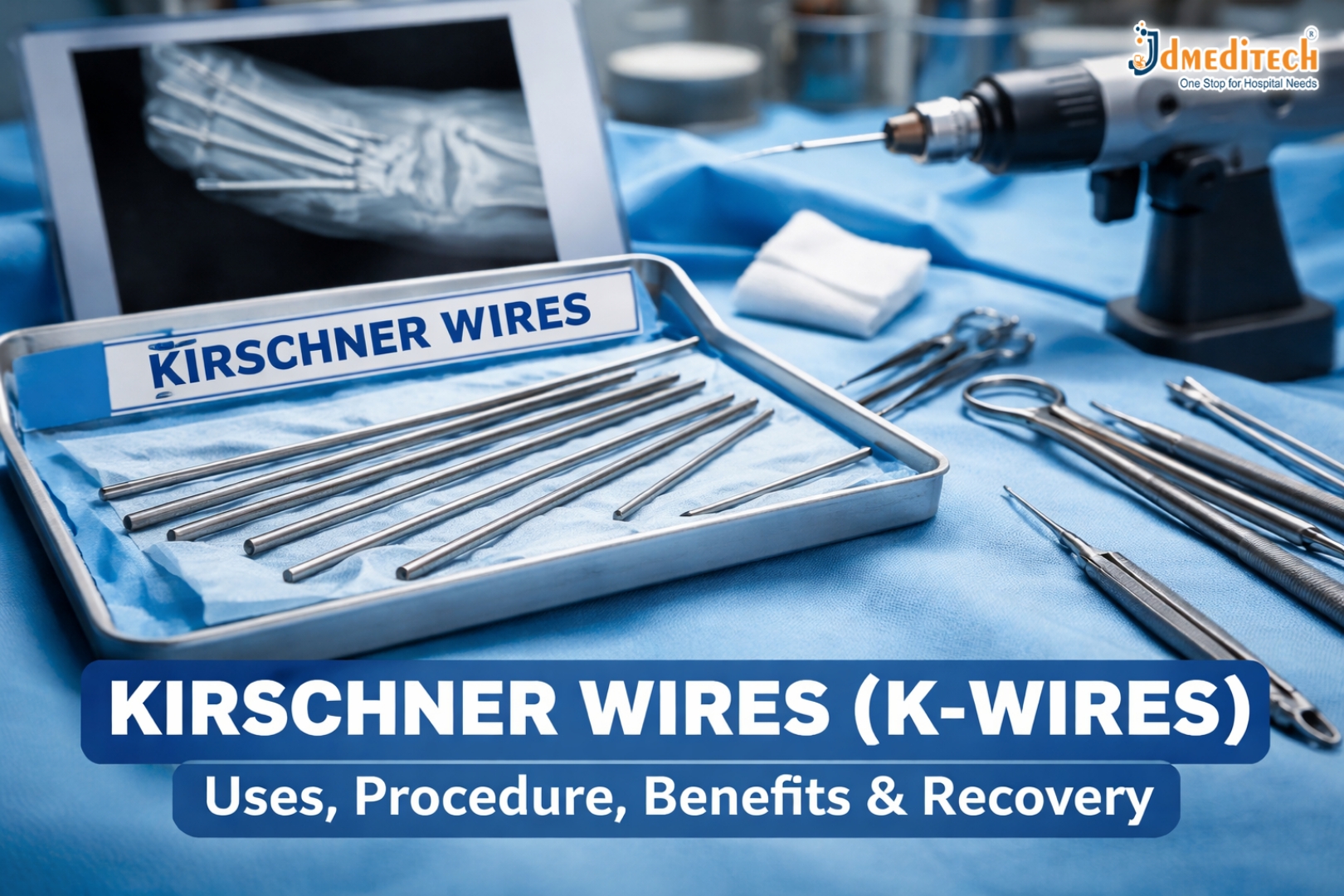
Kirschner wires (K-wires) are thin, smooth stainless steel pins used in orthopedic surgery to stabilize broken bones. These wires are highly effective for treating small bone fractures, pediatric injuries, and temporary fixation during complex procedures.
In this guide, you will learn everything about Kirschner wires, including their uses, procedure, advantages, risks, and recovery process.
What Are Kirschner Wires (K-Wires)?
Kirschner wires, also known as K-wires, are thin metal pins used by orthopedic surgeons to hold bone fragments in proper alignment during healing.
They are:
- Made from surgical-grade stainless steel
- Available in different sizes
- Suitable for various types of fractures
How Are Kirschner Wires Inserted?
Kirschner wires can be inserted using:
- Percutaneous fixation (through the skin)
- Open surgical procedures
Uses of Kirschner Wires
Kirschner wires are widely used in orthopedic treatments:
1. Fracture Fixation
- Wrist fractures (distal radius)
- Finger and hand fractures
- Foot and ankle fractures
2. Pediatric Orthopedics
- Growth plate injuries
- Bone alignment in children
3. Temporary Stabilization
- Before placing plates or screws
- Maintaining alignment during surgery
4. Joint Stabilization
- Dislocations
- Ligament injuries
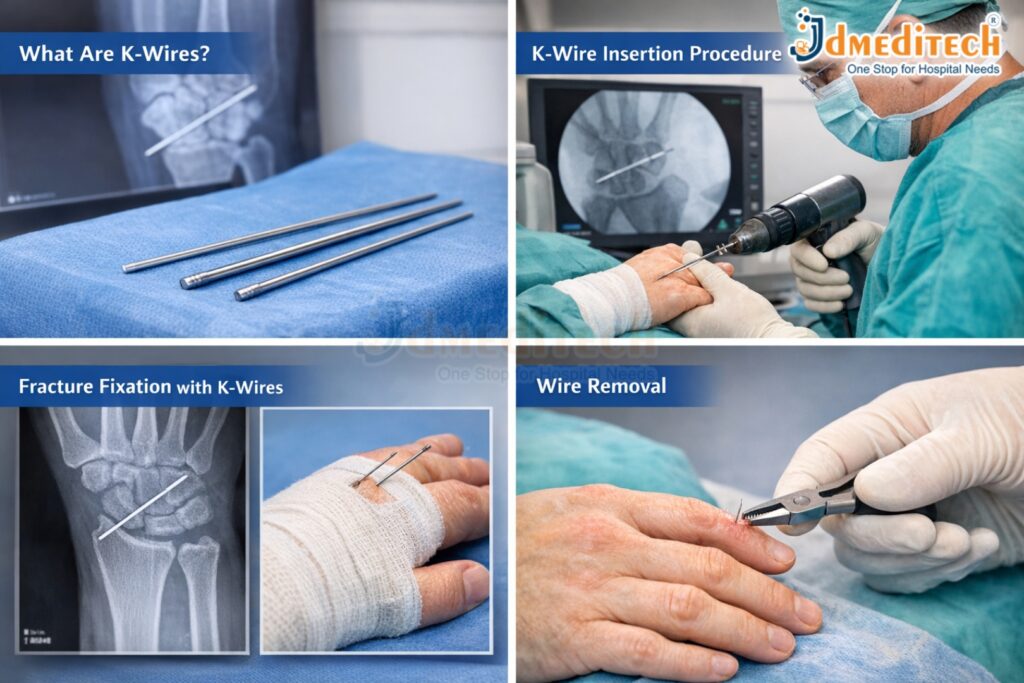
Kirschner Wires Procedure
The Kirschner wires procedure is simple and minimally invasive:
- Anesthesia – Local or general anesthesia is given
- Insertion – The wire is inserted using X-ray or fluoroscopy guidance
- Positioning – The wire stabilizes the fractured bone
- Fixation – Ends may remain outside or inside the skin
- Immobilization – A cast or splint is applied
Advantages of Kirschner Wires
Using Kirschner wires offers several benefits:
- Minimally invasive technique
- Shorter surgery time
- Cost-effective treatment
- Effective for small bones
- Easy removal after healing
Risks and Complications of Kirschner Wires
- Infection at the insertion site
- Wire loosening or migration
- Skin irritation
- Damage to nearby tissues
- Delayed healing (rare)
Proper care reduces these complications.
Recovery After Kirschner Wires Fixation
Recovery after Kirschner wires fixation depends on the fracture:
- Immobilization: 3–6 weeks with cast or splint
- Follow-ups: Regular X-rays
- Wire removal: After healing
- Physiotherapy: Restores movement and strength
Post-Procedure Care for Kirschner Wires
Follow these tips after Kirschner wires surgery:
- Keep the area clean and dry
- Avoid touching exposed wires
- Watch for infection signs
- Follow your doctor’s advice
Conclusion
Kirschner wires (K-wires) are an effective and minimally invasive solution for fracture stabilization. With proper care and follow-up, Kirschner wires treatment ensures excellent recovery outcomes.
Contact Us
+91 79909 93062 | +91 63513 72032 | exports@jdmeditech.com