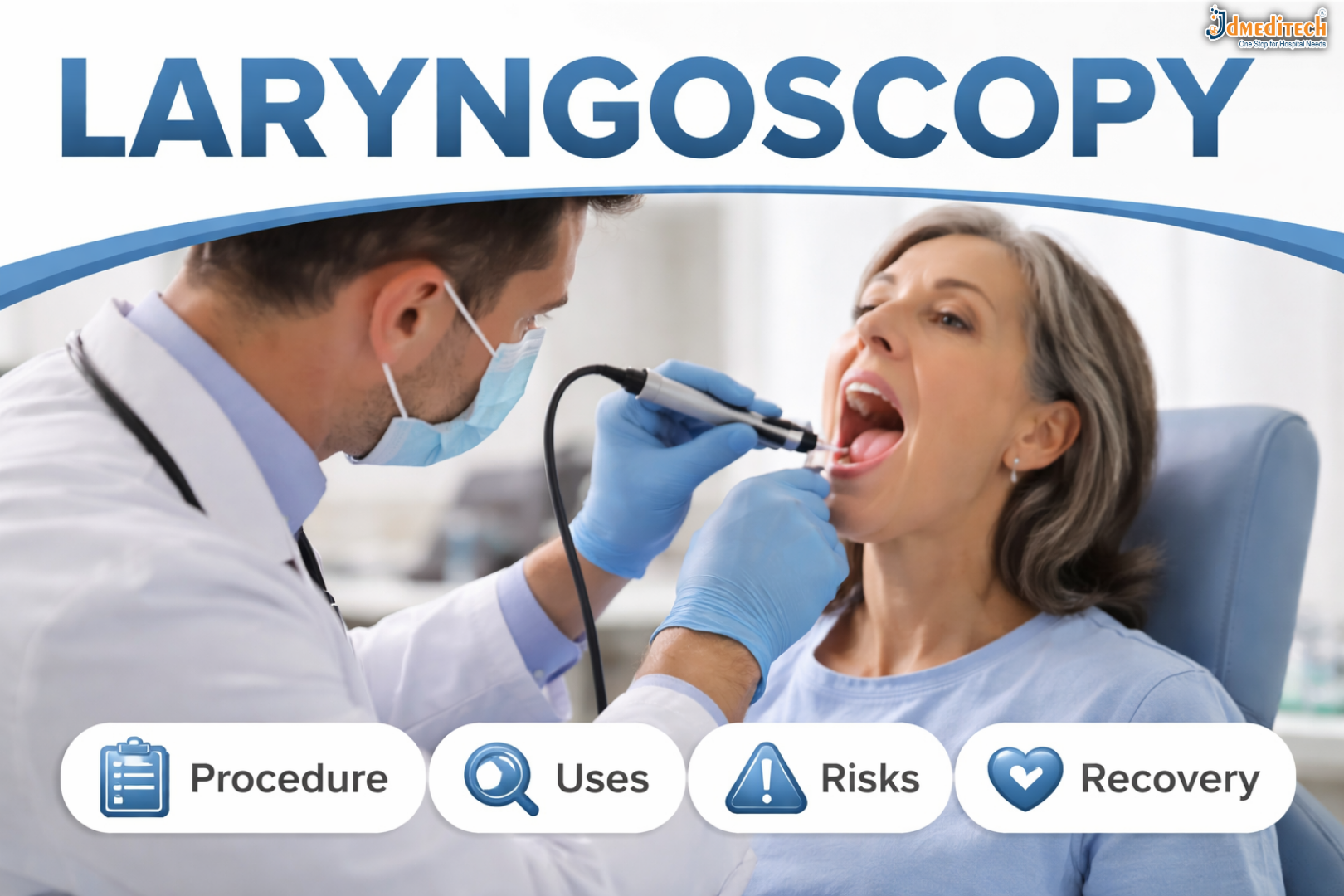
Laryngoscopy is a medical procedure used to examine the larynx (voice box) and surrounding structures. Doctors commonly use it to diagnose throat problems, voice disorders, and breathing issues.
In addition, this procedure helps detect conditions such as infections, tumors, and vocal cord abnormalities. Because of its importance, laryngoscopy plays a key role in ENT (Ear, Nose, and Throat) care.
What is Laryngoscopy?
Laryngoscopy is a diagnostic and sometimes therapeutic procedure. It allows doctors to view the throat using a special instrument called a laryngoscope.
This procedure can be done in different ways. Therefore, the method used depends on the patient’s condition and the purpose of the examination.
Types of Laryngoscopy
There are three main types of laryngoscopy. Each type serves a specific purpose.
1. Indirect Laryngoscopy
This is the simplest method. Doctors use a small mirror or fiber-optic scope to examine the throat.
- Quick and non-invasive
- Performed in a clinic
- No anaesthesia required
2. Direct Laryngoscopy
In this method, a rigid or flexible scope is inserted into the throat.
- Provides a clear and detailed view
- Often done under anesthesia
- Used for diagnosis and minor procedures
3. Fiberoptic (Flexible) Laryngoscopy
This is the most commonly used modern technique.
- Uses a thin, flexible tube with a camera
- Inserted through the nose
- Comfortable and widely used
Why is Laryngoscopy Done?
Doctors recommend laryngoscopy for several reasons. It helps diagnose and treat many conditions.
Common Uses Include:
- Persistent sore throat
- Hoarseness or voice changes
- Difficulty swallowing (dysphagia)
- Chronic cough
- Breathing problems
- Suspected throat cancer
- Removal of foreign objects
Moreover, it helps evaluate vocal cord movement and detect abnormalities early.
Laryngoscopy Procedure
The procedure varies depending on the type. However, most steps remain similar.
Before the Procedure
- The doctor reviews your medical history
- You may be asked to avoid eating for a few hours
- A local anaesthetic spray may be used
During the Procedure
- A laryngoscope is gently inserted
- The doctor examines the throat and vocal cords
- The process usually takes 5 to 30 minutes
After the Procedure
- Mild throat discomfort may occur
- Avoid eating until numbness wears off
- Most patients resume normal activities quickly
Benefits of Laryngoscopy
Laryngoscopy offers several advantages. As a result, it is widely used in medical practice.
- Quick and effective diagnosis
- Minimally invasive procedure
- Helps detect serious conditions early
- Can assist in minor treatments
Risks and Complications
.
Possible Risks:
- Mild throat irritation
- Gagging sensation
- Bleeding (rare)
- Infection (very rare)
- Reaction to anaesthesia
However, serious complications are uncommon when performed by experienced professionals.
Recovery After Laryngoscopy
Recovery is usually quick and simple.
- Most patients recover within a few hours
- Drink warm fluids to soothe the throat
- Avoid smoking or irritants
- Follow doctor’s advice for medications
If symptoms such as severe pain or bleeding occur, seek medical attention immediately.
When to See a Doctor
You should consult a doctor if you experience:
- Persistent hoarseness
- Difficulty breathing
- Pain while swallowing
- Unexplained throat symptoms
Early diagnosis improves treatment outcomes significantly.
Conclusion
Laryngoscopy is an essential procedure for diagnosing and treating throat-related conditions. It is safe, effective, and widely used in modern healthcare.
By understanding the procedure, its types, and benefits, patients can feel more confident and prepared. If you have ongoing throat symptoms, consult an ENT specialist for proper evaluation.
+91 79909 93062 | +91 63513 72032 | exports@jdmeditech.com