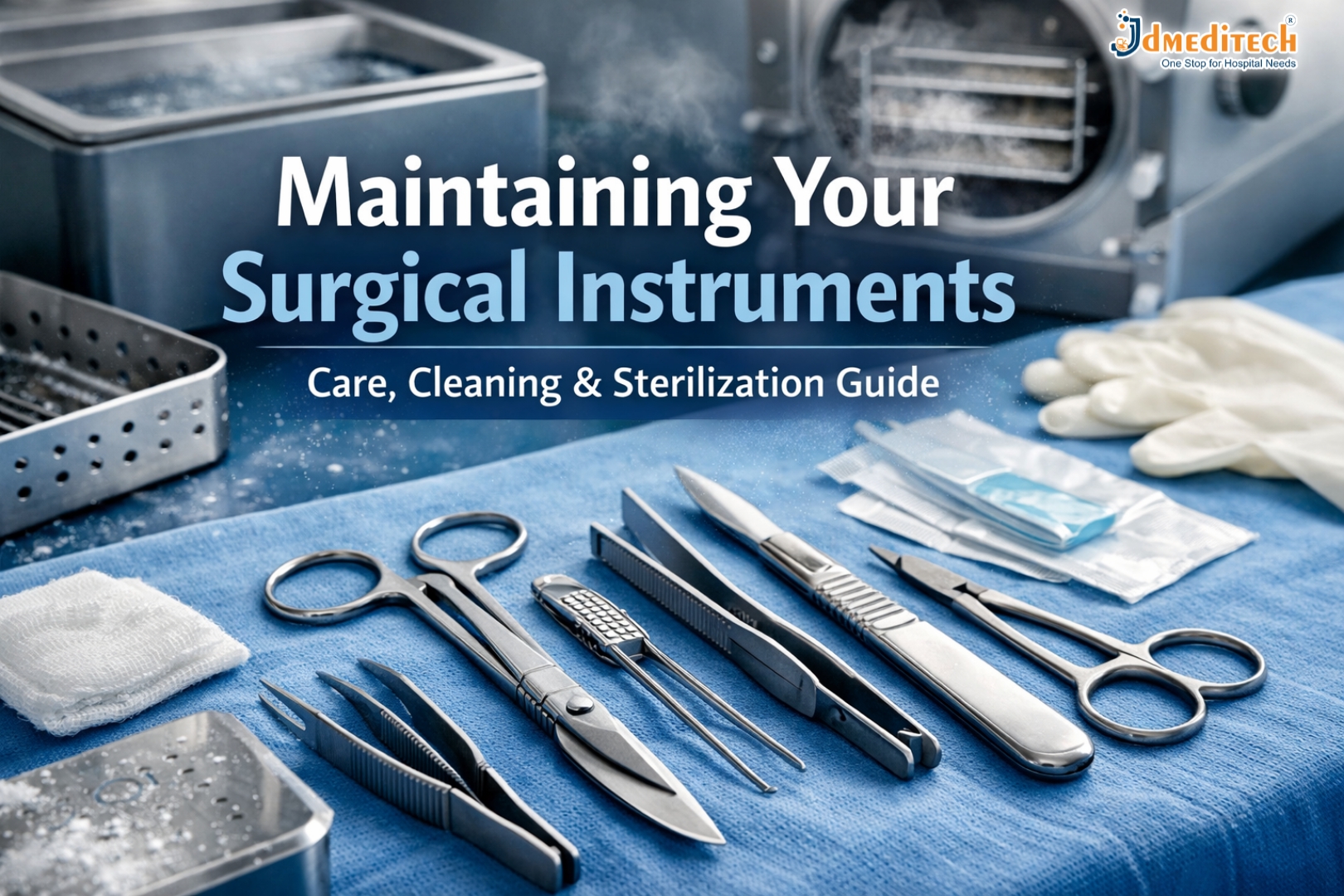
Surgical instruments are the backbone of any healthcare facility. Therefore, maintaining your surgical instruments is essential for ensuring patient safety, improving surgical outcomes, and extending the lifespan of expensive tools.
Proper care not only reduces the risk of infection but also prevents instrument damage. In this guide, you will learn the best practices, step-by-step cleaning methods, and expert tips to maintain surgical instruments effectively.
Why Maintaining Your Surgical Instruments is Important
First and foremost, well-maintained instruments ensure precision during surgery. On the other hand, poorly maintained tools can lead to complications.
Key Benefits:
- Enhances patient safety
- Prevents surgical site infections (SSIs)
- Increases instrument lifespan
- Reduces replacement costs
- Ensures compliance with healthcare standards
Types of Surgical Instruments That Require Maintenance
Different instruments need different care methods. Therefore, understanding categories is crucial.
1. Cutting Instruments
- Scalpels
- Scissors
- Bone cutters
2. Grasping Instruments
- Forceps
- Clamps
3. Retracting Instruments
- Surgical retractors
4. Specialized Instruments
- Endoscopic tools
- Microsurgical instruments
Step-by-Step Guide to Maintaining Surgical Instruments
1. Immediate Cleaning After Use
After surgery, instruments should be cleaned immediately. This step prevents blood and tissue from drying.
Tips:
- Use lukewarm water
- Avoid saline (it causes corrosion)
- Wipe visible debris
2. Proper Cleaning Techniques
Cleaning is the most critical step. Therefore, it must be done carefully.
Manual Cleaning
- Use a soft brush
- Clean joints and hinges thoroughly
- Use neutral pH detergents
Ultrasonic Cleaning
- Removes microscopic debris
- Ideal for complex instruments
- Saves time and effort
3. Rinsing and Drying
After cleaning, rinse instruments with distilled water. Then, dry them completely.
Why this matters:
- Prevents rust formation
- Avoids water stains
4. Inspection and Function Testing
Next, inspect each instrument carefully.
Check for:
- Cracks or corrosion
- Loose joints
- Sharpness of cutting tools
Replace or repair damaged instruments immediately.
5. Lubrication
Lubrication ensures smooth movement.
Best practices:
- Use water-based lubricants
- Apply to hinges and joints
- Avoid oil-based products
6. Sterilization
Sterilization is essential to eliminate microorganisms.
Common Methods:
- Autoclaving (steam sterilization)
- Ethylene oxide (ETO)
- Plasma sterilization
Always follow manufacturer guidelines for best results.
7. Proper Storage
Finally, store instruments correctly.
Storage tips:
- Use dry, clean environments
- Avoid overcrowding
- Use protective trays
Common Mistakes to Avoid
Even small errors can damage instruments. Therefore, avoid these common mistakes:
- Delaying cleaning after surgery
- Using harsh chemicals
- Skipping inspection
- Improper sterilization techniques
- Storing instruments while wet
Best Practices for Long-Term Maintenance
To maintain surgical instruments effectively, consistency is key.
Follow These Practices:
- Train staff regularly
- Use instrument tracking systems
- Follow manufacturer instructions
- Schedule routine maintenance checks
How Often Should You Maintain Surgical Instruments?
Maintenance should be a continuous process.
- After every use: Cleaning and sterilization
- Daily: Inspection and drying
- Weekly: Deep cleaning and lubrication
- Monthly: Detailed inspection and servicing
Latest Innovations in Instrument Maintenance
Modern technology has improved maintenance processes significantly.
New Trends:
- Automated washer-disinfectors
- Smart tracking systems
- Anti-corrosion coatings
- AI-based instrument monitoring
These innovations help reduce human error and improve efficiency.
Conclusion
Maintaining your surgical instruments is not just a routine task—it is a critical responsibility. Proper cleaning, sterilization, and storage ensure safety, efficiency, and cost savings.
By following the steps and best practices in this guide, healthcare facilities can significantly improve surgical outcomes while extending the life of their instruments.
Get Connected:
+91 79909 93062 | +91 63513 72032 | exports@jdmeditech.com