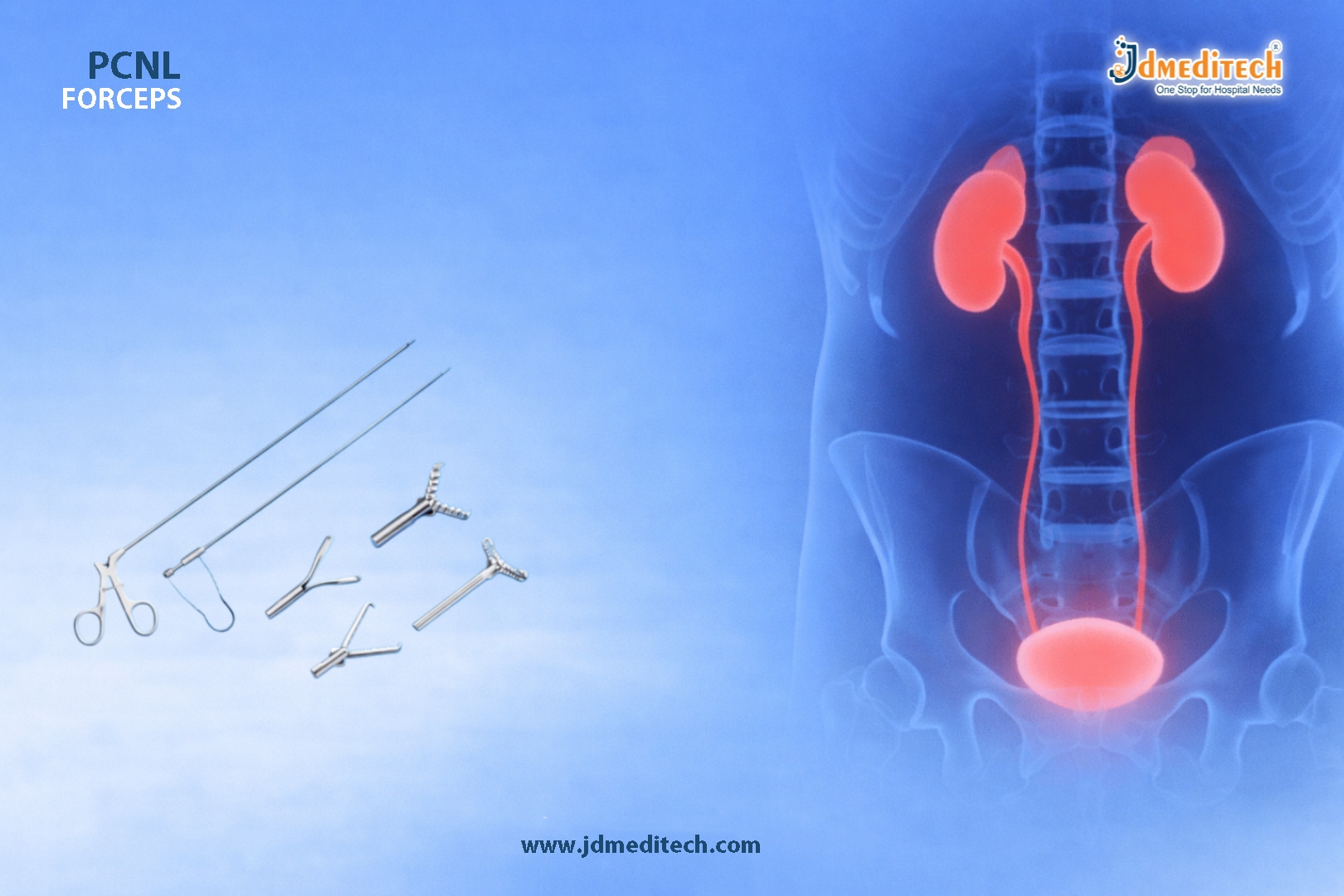
PCNL Forceps play a vital role in modern urology, especially during Percutaneous Nephrolithotomy (PCNL) procedures. These specialized instruments are designed to ensure safe, precise, and efficient stone grasping and extraction from the kidney.
As kidney stone cases continue to rise globally, surgeons rely on high-quality PCNL Forceps to improve procedural accuracy and patient outcomes. Therefore, selecting the right instrument becomes critical for both efficiency and safety.
What Are PCNL Forceps?
PCNL Forceps are precision surgical tools used during PCNL procedures to grasp, hold, and remove kidney stones through a nephroscope.
Unlike standard forceps, these instruments are specifically engineered to:
- Navigate narrow percutaneous tracts
- Provide firm grip on calculi
- Minimize trauma to surrounding tissues
As a result, they significantly enhance surgical control during stone retrieval.
Role of PCNL Forceps in PCNL Procedures
During a PCNL procedure, the surgeon creates a small tract into the kidney to remove stones. At this stage, PCNL Forceps become essential.
Key Functions
- Grasping fragmented or intact stones
- Assisting in stone extraction
- Improving procedural efficiency
- Reducing operative time
Moreover, these forceps allow surgeons to handle stones of different sizes and shapes with ease.
Key Features of PCNL Forceps
High-quality PCNL Forceps are designed with advanced features to meet surgical demands.
1. Precision Tip Design
Ensures accurate stone gripping without slippage.
2. Ergonomic Handle
Provides better control and reduces hand fatigue during long procedures.
3. Durable Construction
Made from medical-grade stainless steel for longevity and repeated sterilization.
4. Variety of Jaw Types
Available in different designs such as:
- Alligator jaws
- Grasping jaws
- Serrated tips
This variety allows surgeons to choose the most suitable option.
5. Compatibility
Designed to work seamlessly with nephroscopes and other PCNL instruments.
Benefits of Using PCNL Forceps
Using advanced PCNL Forceps offers multiple clinical advantages:
- Improved Stone Retrieval Efficiency
- Reduced Procedure Time
- Enhanced Surgical Precision
- Lower Risk of Tissue Damage
- Better Patient Outcomes
Additionally, these instruments contribute to smoother workflow in operating rooms.
Applications of PCNL Forceps
PCNL Forceps are widely used in:
- Percutaneous Nephrolithotomy (PCNL)
- Kidney stone removal procedures
- Urological surgeries involving calculi extraction
Furthermore, they are suitable for both fragmented and intact stone removal.
How to Choose the Right PCNL Forceps
Selecting the ideal PCNL Forceps depends on several factors:
Consider These Points
- Type and size of kidney stones
- Compatibility with existing instruments
- Jaw design and grip strength
- Surgeon preference
- Sterilization and durability
Therefore, choosing the right forceps can directly impact procedural success.
Maintenance and Sterilization
Proper care of PCNL Forceps ensures long-term performance:
- Clean immediately after use
- Use standard sterilization protocols (autoclaving)
- Inspect for wear and tear
- Store in a dry, sterile environment
Consistent maintenance helps maintain precision and reliability.
Why Choose High-Quality PCNL Forceps?
Investing in premium PCNL Forceps ensures:
- Consistent performance
- Enhanced safety
- Cost-effectiveness over time
- Reliable surgical outcomes
In addition, high-quality instruments reduce complications and improve surgeon confidence.
Conclusion
PCNL Forceps are indispensable tools in percutaneous kidney stone procedures. Their ability to provide secure stone grasping, precision handling, and efficient extraction makes them a cornerstone of modern urology.
As surgical techniques evolve, the demand for reliable and high-performance PCNL Forceps continues to grow. Therefore, choosing the right instrument is essential for achieving optimal clinical results.
Get Connected:
+91 79909 93062 | +91 63513 72032 | exports@jdmeditech.com