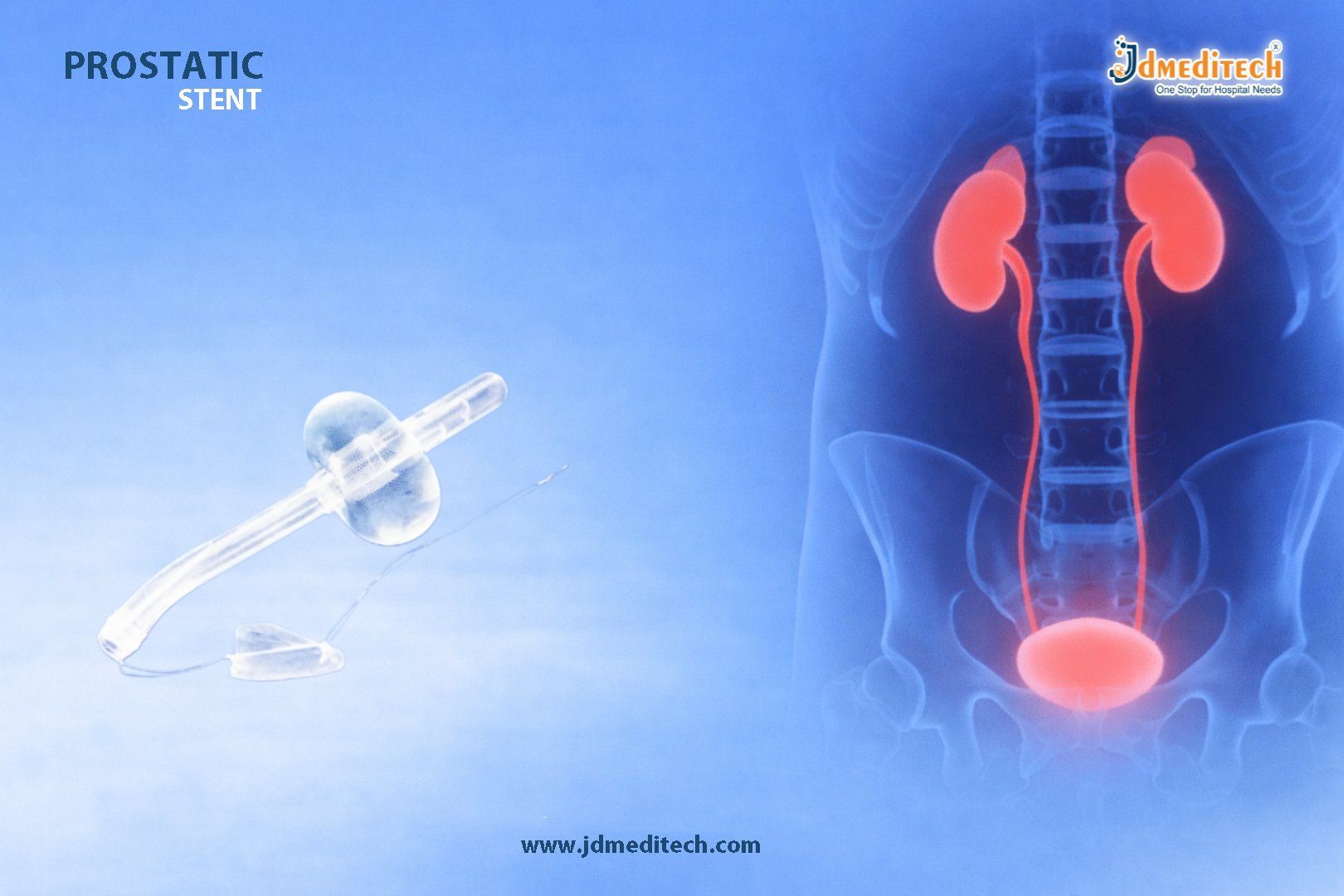
A prostatic stent helps patients manage Benign Prostatic Hyperplasia (BPH) and urinary obstruction effectively. When the prostate enlarges, it presses on the urethra and blocks urine flow. This condition causes discomfort, weak stream, and incomplete emptying.
Doctors use a prostatic stent to restore urine flow without performing major surgery.
What is a Prostatic Stent?
A prostatic stent is a small tubular device that doctors place inside the urethra to keep it open. It supports the narrowed passage and allows urine to pass freely.
Manufacturers design each prostatic stent using biocompatible materials to ensure safety and flexibility.
How Does a Prostatic Stent Work?
The prostatic stent expands inside the urethra and creates a clear pathway for urine flow. It:
- Keeps the urethra open
- Relieves blockage caused by BPH
- Improves urine flow immediately
- Reduces pressure on the bladder
This action gives patients fast and noticeable relief.
Key Features of Prostatic Stent
The prostatic stent offers:
- Endoscopic placement with minimal invasion
- Self-expanding structure for secure fit
- Flexible design for patient comfort
- Biocompatible material to reduce irritation
- Radiopaque markers for accurate positioning
- Options for temporary and permanent use
Clinical Applications of Prostatic Stent
Doctors use the prostatic stent to treat:
- Benign Prostatic Hyperplasia (BPH)
- Urinary obstruction
- Acute and chronic urinary retention
- Patients who cannot undergo surgery
- Temporary urinary management
Benefits of Prostatic Stent
1. Minimally Invasive Approach
Doctors place the prostatic stent without making major incisions.
2. Immediate Relief
Patients notice better urine flow soon after placement.
3. Quick Procedure
Doctors complete the prostatic stent procedure within 15–30 minutes.
4. Suitable for High-Risk Patients
Doctors recommend it for elderly patients and those with medical conditions.
5. Reversible Option
Doctors can remove temporary prostatic stent devices when needed.
Procedure Overview
Doctors follow a simple process:
- They administer local or regional anesthesia
- They insert a cystoscope through the urethra
- They position the prostatic stent carefully
- The stent expands and keeps the passage open
Most patients return home the same day.
Post-Procedure Care
Patients recover quickly after receiving a prostatic stent. Some may experience:
- Mild discomfort
- Urinary urgency
- Slight irritation
These symptoms improve within a few days. Doctors schedule follow-ups to monitor stent performance.
Risks and Considerations
The prostatic stent remains safe, but some risks include:
- Stent migration
- Encrustation
- Urinary tract infection
- Temporary discomfort
Doctors reduce these risks through proper monitoring and care.
Why Choose a Prostatic Stent?
A prostatic stent provides a strong alternative to surgery. It delivers quick relief, reduces recovery time, and lowers complication risks. Therefore, many urologists prefer this solution.
Conclusion
The prostatic stent offers an effective and patient-friendly way to manage BPH and urinary obstruction. It combines safety, speed, and comfort in one solution.
Get Connected:
+91 79909 93062 | +91 63513 72032 | exports@jdmeditech.com