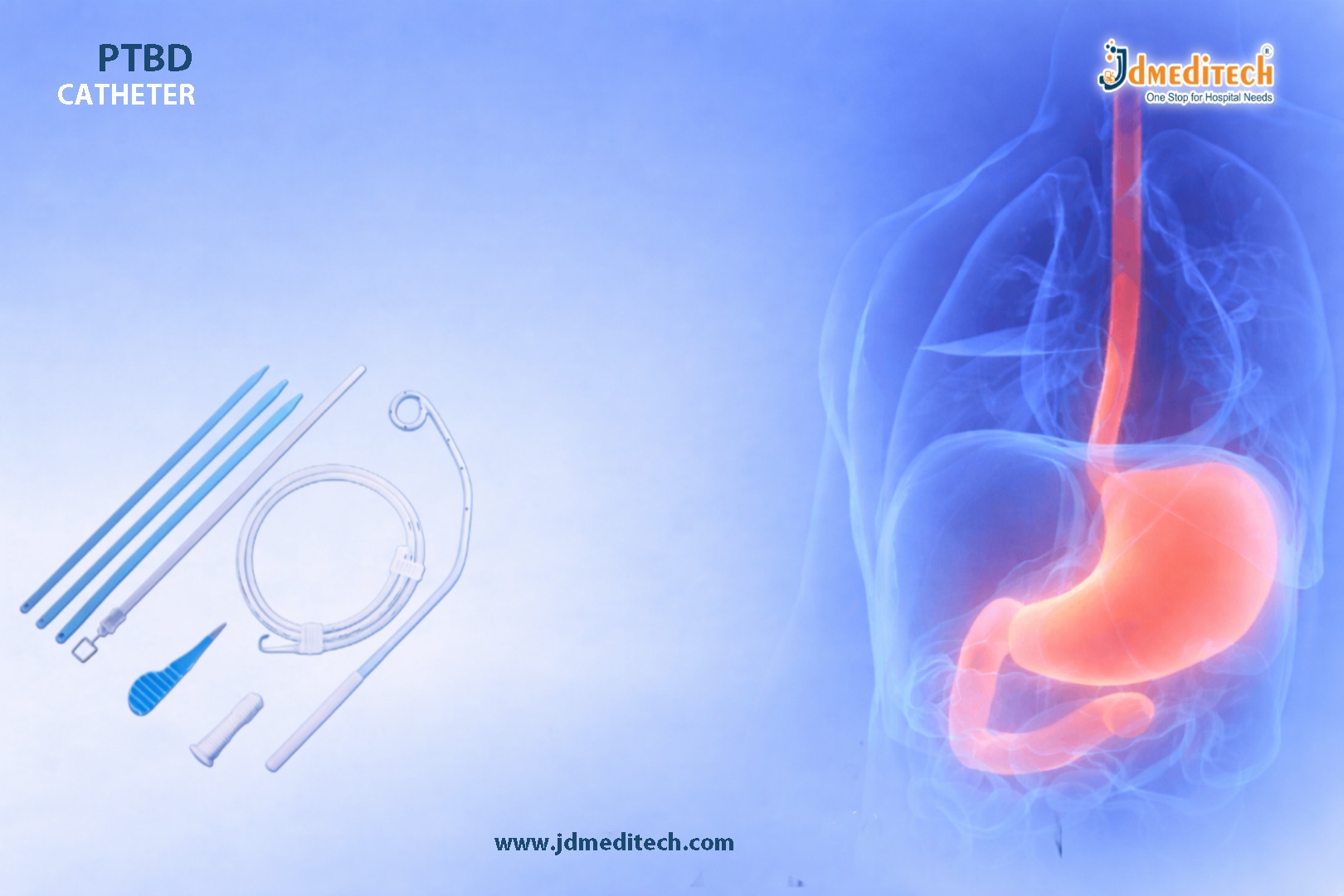
A PTBD catheter (Percutaneous Transhepatic Biliary Drainage catheter) plays a crucial role in managing complex biliary obstructions. It offers a minimally invasive solution to relieve bile duct blockages, especially when endoscopic approaches fail or are not feasible.
In modern interventional radiology, clinicians rely on PTBD catheters to restore bile flow, reduce jaundice, and improve liver function. As a result, this device has become an essential tool in both emergency and elective biliary procedures.
What is a PTBD Catheter?
A PTBD catheter is a flexible medical tube inserted through the skin and liver into the bile ducts. It allows bile to drain either externally into a collection bag or internally into the digestive system.
Doctors typically use this catheter in patients with:
- Malignant biliary obstruction
- Benign strictures
- Post-surgical complications
- Bile duct injuries
Because of its precision and effectiveness, it is widely preferred in interventional procedures.
Key Features of PTBD Catheter
Modern PTBD catheters are designed for optimal performance and patient safety. Key features include:
- High-quality biocompatible material for reduced irritation
- Multiple side holes for efficient bile drainage
- Radiopaque markers for accurate placement under imaging
- Flexible yet kink-resistant structure for smooth insertion
- Secure locking mechanism to prevent displacement
These features ensure consistent drainage and long-term reliability.
How Does a PTBD Catheter Work?
The PTBD procedure involves image-guided catheter placement. First, the clinician inserts a needle into the liver under ultrasound or fluoroscopic guidance. Then, a guidewire helps position the catheter into the obstructed bile duct.
Once placed:
- Bile drains externally or internally
- Pressure in the biliary system decreases
- Liver function gradually improves
Therefore, the procedure provides quick symptomatic relief and prevents complications.
Clinical Applications
PTBD catheters are widely used in various medical scenarios. For instance:
1. Malignant Obstruction
In cancers such as cholangiocarcinoma or pancreatic cancer, the catheter relieves bile duct blockage.
2. Benign Biliary Strictures
It helps manage narrowing caused by inflammation or surgery.
3. Preoperative and Postoperative Care
Doctors use it to stabilize patients before surgery or manage complications afterward.
4. Bile Leak Management
It effectively diverts bile flow, allowing healing of leaks.
Advantages of PTBD Catheter
PTBD catheters offer several benefits over traditional surgical methods:
- Minimally invasive procedure with faster recovery
- Immediate relief from jaundice and pain
- Reduced risk of infection and complications
- Suitable for high-risk patients
- Improved quality of life
Moreover, the procedure can be performed under local anesthesia, making it safer for many patients.
Care and Maintenance
Proper care ensures the longevity and effectiveness of the PTBD catheter:
- Keep the insertion site clean and dry
- Regularly monitor bile output
- Flush the catheter as recommended
- Avoid kinking or pulling the tube
- Follow scheduled medical check-ups
By maintaining hygiene and monitoring function, patients can prevent complications.
Potential Risks and Considerations
Although PTBD is generally safe, some risks may occur:
- Infection at the insertion site
- Bleeding
- Catheter blockage or displacement
- Bile leakage
However, with proper technique and care, these risks remain minimal.
Why Choose High-Quality PTBD Catheters?
Choosing a high-quality PTBD catheter ensures better clinical outcomes. Reliable products provide:
- Smooth insertion and placement
- Consistent drainage performance
- Reduced complication rates
Conclusion
The PTBD catheter stands as a lifesaving, minimally invasive solution for complex biliary conditions. It not only restores bile flow but also significantly improves patient comfort and recovery.
As interventional radiology continues to evolve, PTBD catheters remain a cornerstone in biliary drainage procedures, offering precision, safety, and reliability.
Get Connected:
+91 79909 93062 | +91 63513 72032 | exports@jdmeditech.com