
What Is Retrograde Intrarenal Surgery (RIRS)?
RIRS is a minimally invasive endoscopic technique used to remove kidney stones by entering the urinary system through natural body openings.
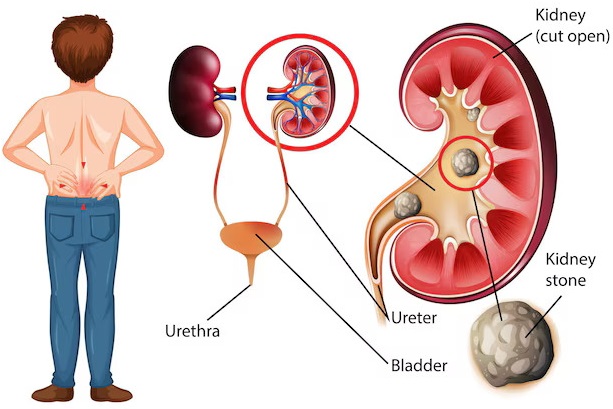
Instead of making any cuts on the body, surgeons pass a flexible ureteroscope through the urethra → bladder → ureter → kidney to reach the stone. Once the stone is located, it is fragmented using a Holmium:YAG or Thulium laser, and tiny pieces are removed or allowed to pass naturally.
When Is RIRS Recommended?
Doctors recommend RIRS in cases such as:
• Kidney stones up to 2 cm in size
• Stones located in the renal pelvis or calyces
• Stones that failed to clear with ESWL (Shock Wave Lithotripsy)
• Patients who are not suitable for PCNL due to bleeding risk
• Stones in children
• Anatomical abnormalities of the urinary tract
• Stones in obese, elderly, or medically unfit patients
RIRS is increasingly preferred due to its high success rate and minimal complications
Procedure of RIRS
The RIRS procedure is done under general or spinal anesthesia and usually takes 45–90 minutes depending on stone size.
1. Accessing the Urinary Tract
A thin flexible ureteroscope is carefully passed through the urethra and bladder into the ureter.
2. Reaching the Kidney
The scope is guided into the kidney chamber where the stone is located.
3. Laser Stone Fragmentation
A fine laser fiber targets the stone and breaks it into small sand-like pieces.
Holmium or Thulium laser is typically used due to its precision and safety.
4. Stone Removal
Small fragments may be removed using a tiny basket, while the rest pass out naturally through urine.
5. Stent Placement (If Needed)
A temporary DJ stent may be inserted to help urine flow and reduce postoperative discomfort.
It is usually removed after 1–2 weeks.
Benefits of RIRS
RIRS offers multiple advantages, making it one of the best treatment options for kidney stones.
✔ No Cuts, No Scars
Entirely endoscopic—performed through the natural urinary tract.
✔ Safe for All Age Groups
Effective in children, elderly patients, and those with comorbidities.
✔ Minimal Pain & Fast Recovery
Less postoperative pain compared to PCNL.
✔ High Stone Clearance Rate
Laser technology ensures complete stone fragmentation.
✔ Short Hospital Stay
Most patients go home within 24 hours.
✔ Reduced Risk of Complications
Lower chances of bleeding and infection.
Recovery After RIRS
Recovery from RIRS is quick and smooth. Patients may experience mild burning sensation or blood-tinged urine for 1–2 days.
Postoperative Care Includes:
• Drinking plenty of water
• Taking prescribed antibiotics and pain relievers
• Avoiding heavy physical activity for a week
• Following up for stent removal on the scheduled date
Most people return to normal activities within 2–3 days.
Risks and Possible Complications
Although rare, some minor risks include:
• Mild urinary infection
• Temporary discomfort due to DJ stent
• Small residual stone fragments
• Bleeding (very minimal)
With modern instruments and experienced surgeons, complications are uncommon.
Conclusion
Retrograde Intrarenal Surgery is a highly effective, minimally invasive, and patient-friendly treatment for kidney stones. With no external incisions, faster recovery, and excellent outcomes, RIRS has become a preferred choice for both patients and urologists. Whether stones are small, difficult-to-reach, or recurrent, RIRS provides a safe and advanced solution with minimal discomfort.
Get Connected:
+91 79909 93062 | +91 63513 72032 | exports@jdmeditech.com