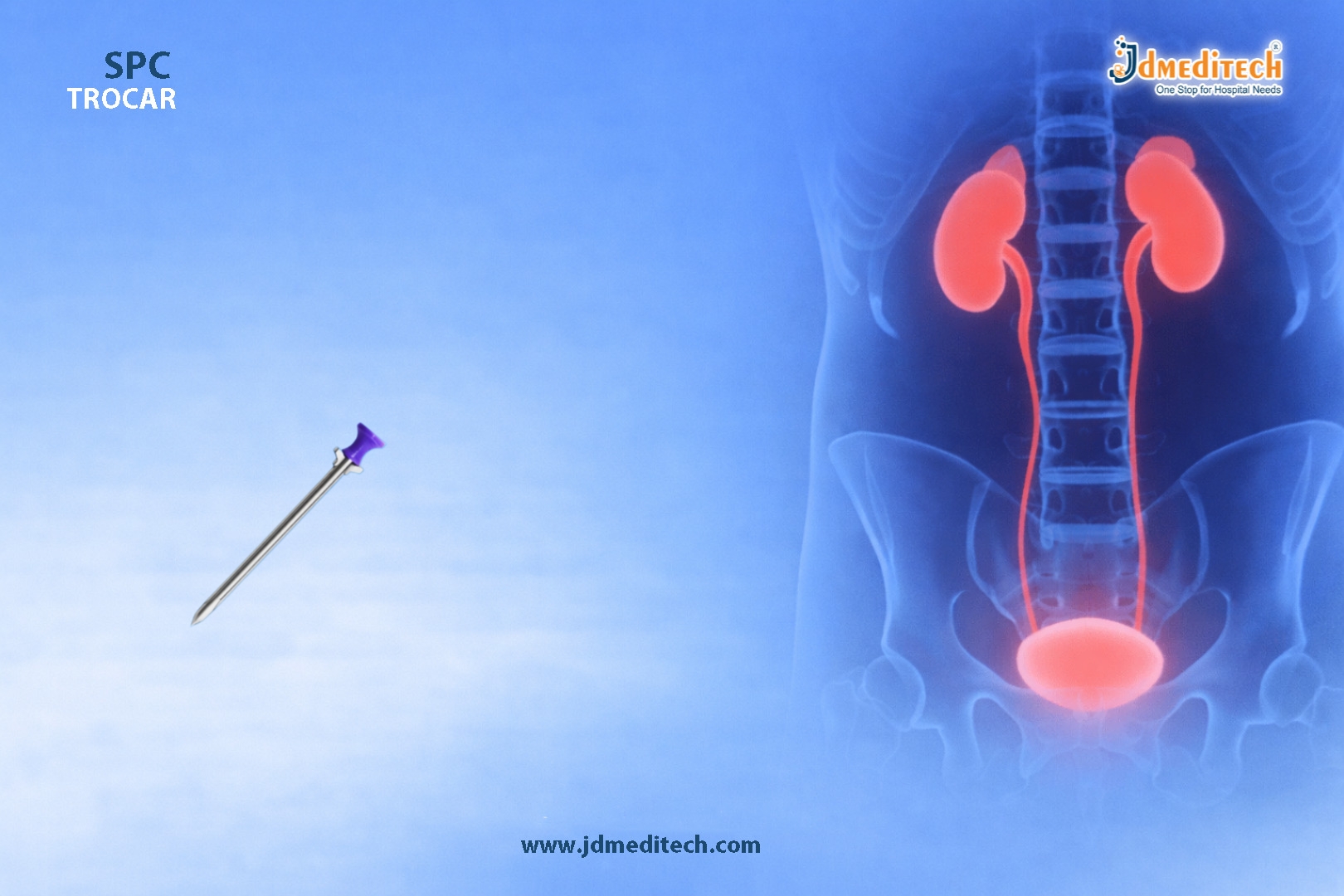
The SPC Trocar is an essential instrument in urology. It enables safe and efficient suprapubic catheterization. Doctors use the SPC Trocar when urethral catheterization is not possible. Therefore, it provides a reliable alternative for bladder drainage.
Moreover, the SPC Trocar improves procedural accuracy and patient comfort. Because of its design, clinicians can perform the procedure quickly and safely.
What is an SPC Trocar?
An SPC Trocar is a specialized surgical instrument. It helps create a controlled entry into the bladder through the abdominal wall. As a result, it allows easy placement of a suprapubic catheter.
Typically, an SPC Trocar includes:
- A sharp obturator
- A hollow cannula
- An ergonomic handle
Together, these components ensure smooth insertion and secure catheter placement.
Why SPC Trocar is Important
The SPC Trocar plays a key role in modern urology. First, it provides direct bladder access. Second, it reduces the risk of urethral injury. In addition, it supports fast intervention in emergency cases.
Furthermore, the SPC Trocar enhances patient comfort during long-term catheterization. Because of these benefits, it is widely used in hospitals and clinics.
Key Features of SPC Trocar
A high-quality SPC Trocar offers several important features:
1. Sharp Precision Tip
The SPC Trocar ensures smooth penetration with minimal tissue damage.
2. Durable Medical Material
Most SPC Trocar devices use stainless steel or medical-grade polymers. Therefore, they ensure strength and sterility.
3. Ergonomic Grip
The SPC Trocar provides better handling and control during procedures.
4. Secure Cannula Design
It allows stable and accurate catheter placement.
5. Sterile Packaging
Many SPC Trocar options come in sterile, single-use formats. As a result, infection risk decreases.
Clinical Applications of SPC Trocar
The SPC Trocar is widely used in several medical conditions:
- Urinary retention
- Neurogenic bladder
- Urethral obstruction
- Post-surgical bladder drainage
- Long-term catheterization
Because of its versatility, the SPC Trocar is a must-have tool in urology.
Procedure Using SPC Trocar
Doctors follow a structured process when using an SPC Trocar:
- First, prepare the patient and apply local anesthesia.
- Next, locate the bladder, often using ultrasound.
- Then, insert the SPC Trocar above the pubic bone.
- After that, create a tract into the bladder.
- Insert the catheter through the cannula.
- Finally, remove the SPC Trocar and secure the catheter.
Thus, the SPC Trocar ensures a safe and controlled procedure.
Benefits of SPC Trocar
The SPC Trocar provides multiple advantages:
- Minimally invasive approach
- Reduced urethral complications
- Improved patient comfort
- Quick bladder decompression
- Lower infection risk
Therefore, the SPC Trocar improves both safety and efficiency.
Safety Considerations
Although the SPC Trocar is effective, proper precautions are necessary.
- Ensure bladder is full before insertion
- Use ultrasound guidance when needed
- Maintain sterile technique
- Avoid incorrect placement
- Monitor patients carefully
By following these steps, clinicians can safely use the SPC Trocar.
How to Choose the Right SPC Trocar
Choosing the right SPC Trocar is important. Consider the following:
- Size compatibility
- Material quality
- Ease of use
- Sterility options
- Compliance with standards
A well-designed SPC Trocar ensures better outcomes.
Conclusion
The SPC Trocar is a vital tool for suprapubic catheterization. It provides safe, precise, and efficient bladder access. In addition, the SPC Trocar improves patient comfort and reduces complications.
Because of its reliability, the SPC Trocar remains essential in modern urology.
Get Connected:
+91 79909 93062 | +91 63513 72032 | exports@jdmeditech.com