In modern interventional cardiology, precision and visualization are critical for successful outcomes. A stripped guide wire for cardiac interventions is specifically engineered to provide enhanced visibility and superior control during complex procedures.
Unlike standard guide wires, stripped variants feature a unique design that improves fluoroscopic visibility and maneuverability in challenging vascular pathways. As a result, they are widely used in advanced coronary and peripheral interventions.
What is a Stripped Guide Wire?
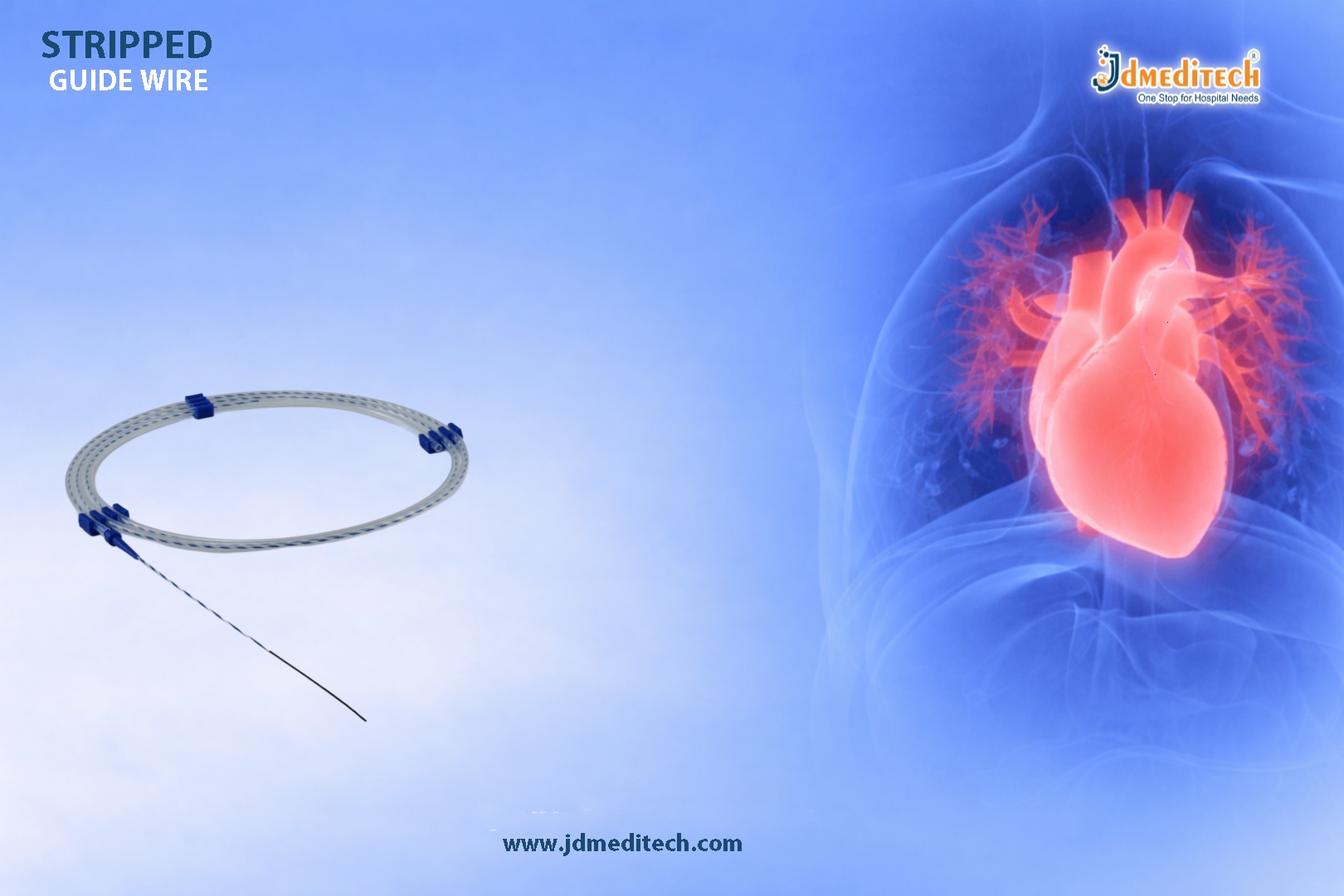
A stripped guide wire for cardiac interventions is a specialized medical device where sections of the outer coating are intentionally removed. This exposed core improves radiopacity and allows clinicians to track the wire more accurately under imaging systems.
Moreover, this design enhances tactile feedback, enabling better control when navigating tortuous or calcified vessels.
Key Features of Stripped Guide Wire
1. Enhanced Radiographic Visibility
The stripped section improves visualization under fluoroscopy. Therefore, clinicians can precisely track wire position during complex interventions.
2. Superior Torque Control
The exposed core enhances torque transmission. As a result, physicians can maneuver the wire with greater accuracy.
3. Improved Tactile Feedback
A stripped guide wire provides better feel inside the vessel. This helps in navigating tight lesions and difficult anatomies.
4. Flexible Yet Durable Construction
Despite the stripped design, the wire maintains flexibility and strength. Thus, it ensures safe navigation without compromising durability.
5. Optimized for Complex Cases
It performs exceptionally well in:
- Chronic total occlusions (CTO)
- Calcified arteries
- Tortuous vascular pathways
Clinical Applications
The stripped guide wire for cardiac interventions is widely used in:
- Percutaneous Coronary Interventions (PCI)
- Chronic Total Occlusion (CTO) Procedures
- Peripheral Vascular Interventions
- Angioplasty and Stenting
- Complex Lesion Crossing
Because of its enhanced visibility and control, it becomes a preferred choice in high-risk and technically demanding procedures.
Benefits of Using Stripped Guide Wire
Better Visualization
Clear imaging reduces procedural uncertainty and improves accuracy.
Increased Procedural Success
Enhanced control helps in crossing difficult lesions more effectively.
Reduced Procedure Time
Improved maneuverability minimizes trial-and-error navigation.
Enhanced Patient Safety
Precise placement reduces the risk of vessel trauma and complications.
Why Choose a High-Quality Stripped Guide Wire?
Choosing a premium stripped guide wire for cardiac interventions ensures consistent performance and reliability. High-quality wires offer:
- Smooth surface transitions
- Consistent core exposure
- Optimal balance between flexibility and support
- Compatibility with modern interventional systems
For healthcare providers, investing in reliable guide wires directly impacts procedural efficiency and patient outcomes.
Best Practices for Use
To maximize performance of a stripped guide wire:
- Always verify compatibility with catheters and devices
- Use appropriate imaging techniques for better visualization
- Avoid excessive force to prevent vessel injury
- Follow standard interventional protocols
Proper handling ensures both safety and effectiveness.
Conclusion
The stripped guide wire for cardiac interventions represents a significant advancement in interventional cardiology. With enhanced visibility, superior control, and improved tactile feedback, it empowers clinicians to perform complex procedures with confidence.
As cardiac interventions continue to evolve, the demand for precision-driven tools like stripped guide wires will only increase. Therefore, selecting the right guide wire can make a critical difference in both procedural success and patient care.
Get Connected:
+91 79909 93062 | +91 63513 72032 | exports@jdmeditech.com