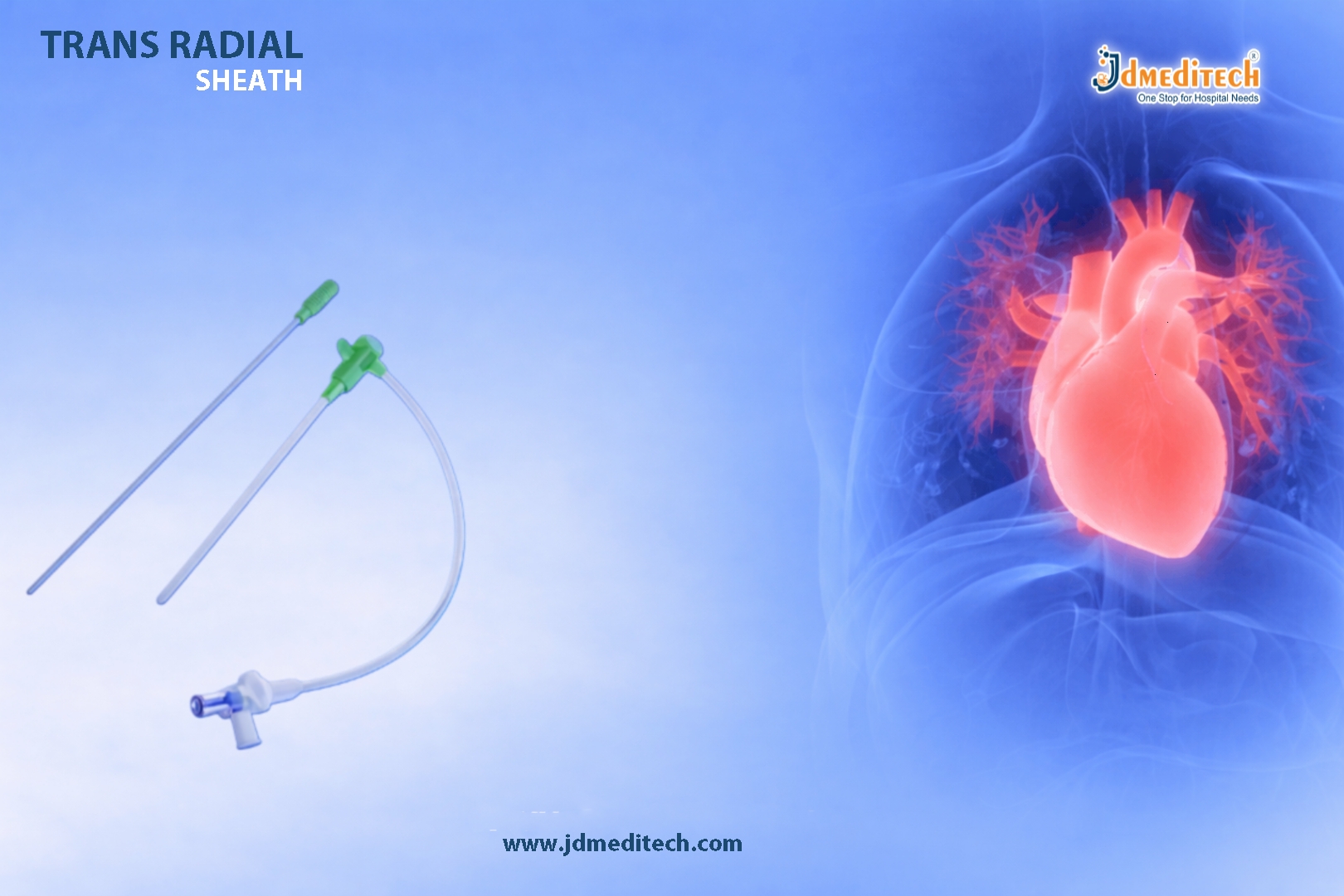
In modern interventional cardiology, precision and patient safety are critical. The Trans Radial Sheath has become an essential device for achieving safe and effective vascular access through the radial artery. Compared to traditional femoral access, the transradial approach offers improved patient comfort, reduced complications, and faster recovery.
This blog explores the features, benefits, applications, and clinical importance of the Trans Radial Sheath, making it a trusted solution for stable catheterization procedures.
What is a Trans Radial Sheath?
A Trans Radial Sheath is a medical device used to facilitate vascular access via the radial artery, typically located in the wrist. It acts as a conduit for guiding catheters, wires, and interventional devices during diagnostic and therapeutic procedures.
Moreover, the sheath ensures smooth insertion and withdrawal of instruments while maintaining hemostasis and minimizing trauma to the artery.
Key Features of Trans Radial Sheath
1. Secure Fit Design
The Trans Radial Sheath is engineered to provide a snug and stable fit within the radial artery. As a result, it reduces movement during procedures and ensures precise catheter navigation.
2. Hydrophilic Coating
Additionally, many sheaths feature a hydrophilic coating, which significantly reduces friction. This enhances patient comfort and allows smoother insertion.
3. Thin-Walled Construction
The thin-wall design maximizes the internal lumen while minimizing the external diameter. Therefore, it reduces vascular trauma and improves blood flow around the sheath.
4. Integrated Hemostasis Valve
The built-in valve prevents blood backflow and maintains a clean working environment. Consequently, it enhances procedural safety.
5. Radiopaque Markers
Radiopaque markers ensure excellent visibility under fluoroscopy. This helps clinicians accurately position the Trans Radial Sheath during interventions.
Advantages of Using Trans Radial Sheath
Improved Patient Comfort
Since the procedure is performed through the wrist, patients experience less discomfort compared to femoral access.
Reduced Risk of Complications
The Trans Radial Sheath significantly lowers the risk of bleeding and vascular complications. Furthermore, it minimizes the chances of major access-site complications.
Faster Recovery Time
Patients can sit up and walk soon after the procedure. Therefore, hospital stays are shorter, and recovery is quicker.
Enhanced Procedural Control
The stable positioning of the Trans Radial Sheath allows clinicians to perform procedures with greater precision and confidence.
Clinical Applications
The Trans Radial Sheath is widely used in various cardiovascular procedures, including:
- Coronary angiography
- Percutaneous coronary intervention (PCI)
- Diagnostic catheterization
- Peripheral vascular interventions
Because of its versatility, it has become the preferred choice in many cardiac catheterization labs.
Why Choose Trans Radial Access Over Femoral Access?
While femoral access has been traditionally used, the transradial approach offers several advantages:
- Lower bleeding risk
- Better patient mobility
- Reduced hospital costs
- Higher patient satisfaction
As a result, the Trans Radial Sheath is increasingly becoming the standard in interventional cardiology.
Safety and Efficiency Combined
The design of the Trans Radial Sheath focuses on both safety and efficiency. Its advanced features reduce procedural risks while ensuring smooth catheter handling.
In addition, the sheath supports complex interventions without compromising stability or control. This balance makes it indispensable in modern medical practice.
Best Practices for Using Trans Radial Sheath
To achieve optimal outcomes, clinicians should follow these practices:
- Select the appropriate sheath size
- Ensure proper insertion technique
- Monitor arterial flow and patient comfort
- Use anticoagulation protocols when necessary
By following these guidelines, the effectiveness of the Trans Radial Sheath can be maximized.
Conclusion
The Trans Radial Sheath represents a significant advancement in vascular access technology. Its secure fit, patient-friendly design, and enhanced safety profile make it a preferred choice for catheterization procedures.
As healthcare continues to evolve toward minimally invasive solutions, the Trans Radial Sheath plays a crucial role in delivering better clinical outcomes and improved patient experiences.
Get Connected:
+91 79909 93062 | +91 63513 72032 | exports@jdmeditech.com