Tympanoplasty is a surgical procedure performed to repair a perforated or damaged eardrum (tympanic membrane). It helps restore hearing, prevents recurrent ear infections, and improves overall ear health. The surgery is usually recommended when the eardrum does not heal on its own or when chronic infections affect hearing ability.
What Is Tympanoplasty?
Tympanoplasty is a procedure in which the surgeon patches or reconstructs the torn eardrum using a tissue graft. The graft can be taken from the patient’s own tissue, such as the fascia (a thin layer from behind the ear) or cartilage. The goal is to close the perforation and improve the transmission of sound waves.
Types of Tympanoplasty
There are different types of tympanoplasty depending on the extent of damage:
-
Type I (Myringoplasty)
Only the eardrum is repaired. The ossicles (hearing bones) are intact.
-
Type II
The eardrum and part of the malleus (one of the ossicles) are repaired.
-
Type III
The eardrum is connected to the stapes bone when other bones are damaged.
-
Type IV
Repair is done when most ossicles are damaged, leaving only the stapes footplate.
-
Type V
Used in complex cases with severe middle ear damage.
Why Is a Tympanoplasty Done?
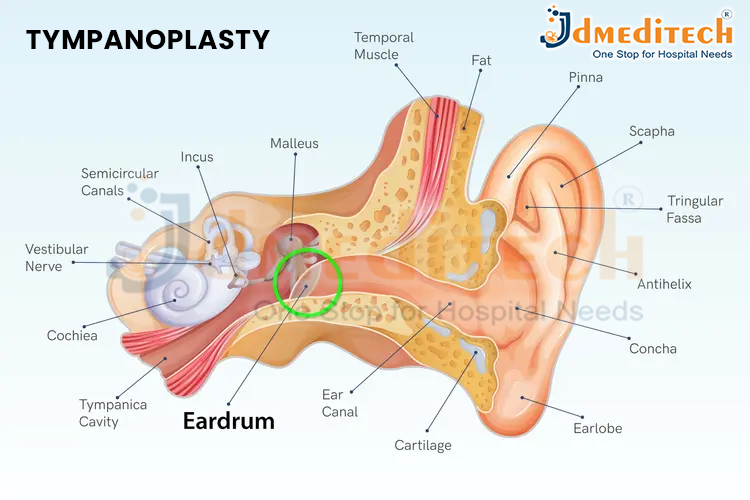
Tympanoplasty is performed to repair a perforated (hole) or damaged eardrum that does not heal on its own. It helps restore normal hearing, prevent infections, and protect the middle ear from further damage. Doctors recommend tympanoplasty in the following situations:
-
Persistent Eardrum Perforation
If the eardrum hole remains open for more than 3–6 months, surgery is needed to close it.
-
Frequent Ear Infections
A damaged eardrum makes the ear more vulnerable to repeated infections. Tympanoplasty helps stop chronic ear discharge and prevents infection spread.
-
Hearing Loss
A perforated eardrum reduces sound transmission, leading to reduced hearing. Repair improves hearing quality.
-
Trauma or Injury
Sudden loud noises, accidents, or inserting objects into the ear can damage the eardrum. Tympanoplasty restores normal structure.
-
Damage From Prior Ear Surgeries
Some previous procedures or untreated infections may weaken the eardrum, requiring surgical repair.
-
Preventing Future Complications
Without treatment, chronic perforation can lead to cholesteatoma (dangerous skin growth in the middle ear), further hearing loss, or long-term infection. Tympanoplasty prevents these issues.
The Tympan Mastoidectomy Procedure
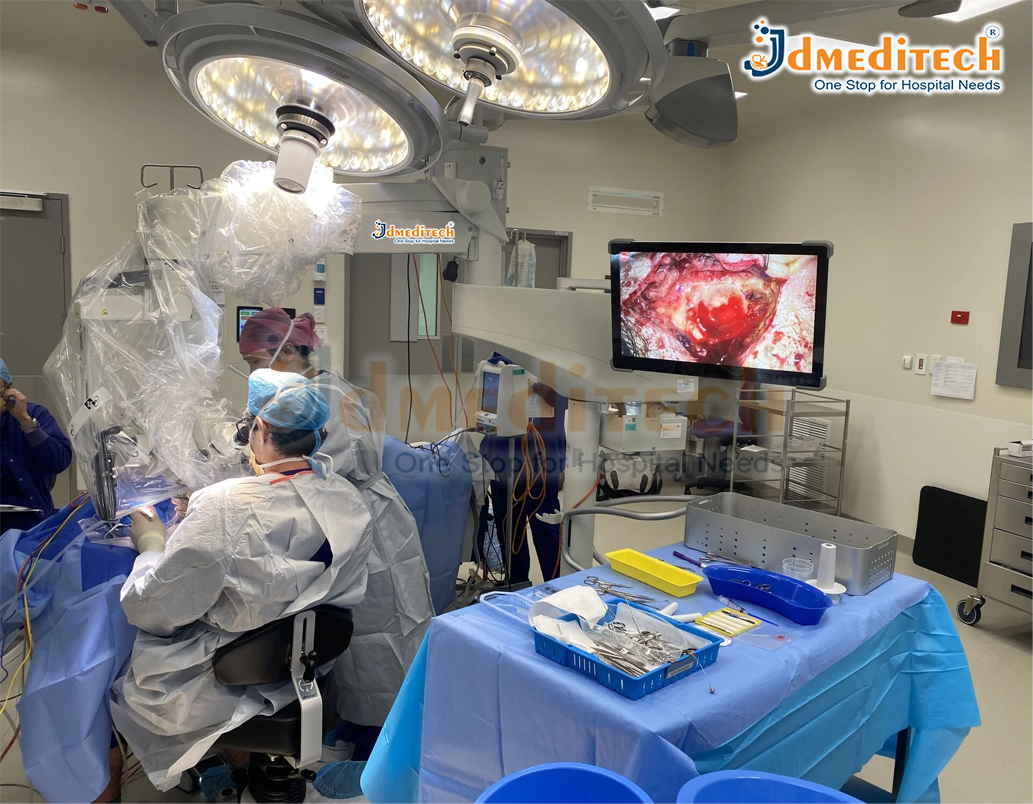
A tympanomastoidectomy procedure is performed in a hospital setting under general anesthesia and typically takes several hours. During the tympanomastoidectomy, incisions are made inside and behind the infected ear. The middle ear and mastoid bone are opened, and the infected tissue, or the cholesteatoma, is removed. The eardrum is repaired with muscle lining from behind the ear.
After the tympanomastoidectomy is completed, the surgeon will place packing inside the ear to keep tissues in place as they heal. Most tympanomastoidectomy patients can be released after an overnight observation, unless they are experiencing nausea or dizziness.
During Tympanoplasty Surgery
Tympanoplasty is a surgical procedure aimed at repairing a damaged or perforated eardrum. The surgery is usually performed under general anesthesia, although in some cases, local anesthesia may be used. Here’s what typically happens step by step:

-
Preparation
- The patient is given anesthesia for comfort and pain-free surgery.
- The surgeon cleans and sterilizes the ear area to prevent infection.
-
Incision
- Depending on the location of the eardrum perforation, the surgeon may make an incision behind the ear or inside the ear canal.
- This allows access to the eardrum and middle ear.
-
Harvesting the Graft
- A small piece of tissue, often fascia from behind the ear or cartilage, is harvested to repair the eardrum.
- This graft acts as a patch over the perforation.
-
Repairing the Eardrum
- The surgeon carefully cleans the edges of the perforation.
- The graft is placed over or under the eardrum and positioned to ensure proper healing.
- In some cases, tiny hearing bones (ossicles) may also be repaired if damaged.
-
Packing the Ear
- The ear canal may be gently packed with absorbable material or gauze to support the graft and stabilize the eardrum.
-
Closing the Incision
- If an external incision was made, it is closed with fine sutures.
- A protective dressing is placed behind the ear if necessary.
-
Duration
- The entire procedure typically lasts 1–2 hours.
- Most patients can go home the same day, depending on the type of anesthesia used.
Conclusion
Tympanoplasty is a highly effective surgery for repairing a damaged eardrum and restoring hearing. With modern techniques, the procedure is safe, minimally invasive, and provides long-lasting relief from ear infections and hearing issues. If you have chronic ear discharge or hearing loss due to a perforated eardrum, consulting an ENT surgeon can help you determine whether tympanoplasty is the right option for you.