What Is Cancer?
Cancer is a group of diseases in which abnormal cells grow uncontrollably and spread to other parts of the body. Normally, the cells in our body grow, divide, and die in a controlled way. But when this process breaks down, cells begin to grow even when they aren’t needed. These abnormal cells form a mass called a tumor, which can be harmless (benign) or dangerous (malignant).
Malignant tumors can invade nearby tissues and organs. They can also spread to distant parts of the body through the bloodstream or lymphatic system—a process known as metastasis. This uncontrolled growth and spread make cancer a serious and sometimes life-threatening condition.
Differences Between Cancer Cells and Normal Cells
Cancer cells differ from normal cells in many important ways that affect how they grow, function, and spread. Normal cells follow the body’s natural rules—they grow in an organized manner, repair themselves when possible, and die when they are old or damaged. This controlled behavior keeps tissues and organs healthy.
Cancer cells, however, do not follow these rules. They grow rapidly and divide without control, even when the body does not need more cells. They do not die when they should, allowing damaged and mutated cells to accumulate. These cells often look abnormal under a microscope, with irregular shapes and larger-than-normal nuclei. Unlike normal cells, cancer cells can invade nearby tissues and spread to distant organs through the bloodstream or lymphatic system, a process known as metastasis.
Cancer cells also have altered metabolism, meaning they use more energy to fuel their rapid growth. They ignore signals from surrounding cells, produce their own growth signals, and often evade the immune system. Because they do not perform any helpful function in the body, cancer cells disrupt normal organ activities and can form harmful tumors.
These key differences explain why cancer is so challenging to control and why early detection and treatment are important.
How Does Cancer Develop?
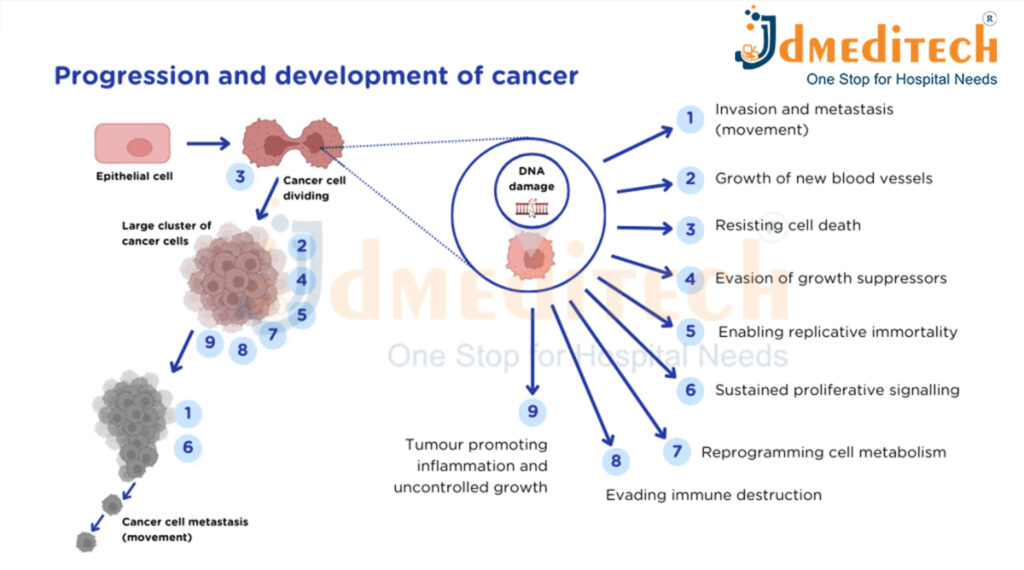
Cancer develops when normal cells in the body begin to grow abnormally due to damage in their DNA. In a healthy body, cells grow, divide, and die in a controlled way. But when the DNA inside a cell becomes damaged or mutated, the cell may start behaving differently.
Instead of repairing itself or dying, the damaged cell continues to divide uncontrollably. Each new cell carries the same mutation, causing a group of abnormal cells to form. Over time, these cells can grow into a tumor.
-
DNA Damage or Mutation
Cancer usually starts when a cell’s DNA becomes damaged. This can happen due to:
- Genetics
- Smoking or tobacco use
- Radiation
- Harmful chemicals
- Viral infections (like HPV)
- Unhealthy lifestyle habits
- Aging
-
Uncontrolled Cell Growth
Once DNA is damaged, the cell ignores normal signals that regulate growth. It keeps dividing, even when the body does not need more cells.
-
Formation of a Tumor
As abnormal cells multiply, they form a mass called a tumor.
- Benign tumors stay in one place and are usually not dangerous.
- Malignant tumors grow aggressively and can damage nearby tissues.
-
Angiogenesis (New Blood Supply)
Cancer cells release signals to create new blood vessels. This gives the tumor oxygen and nutrients, helping it grow faster.
-
Invasion and Metastasis
Advanced cancer cells can break away from the original tumor and travel through:
- The bloodstream
- The lymphatic system
They can form new tumors in other organs—a process called metastasis. This is what makes cancer life-threatening.
When Does Cancer Spread?
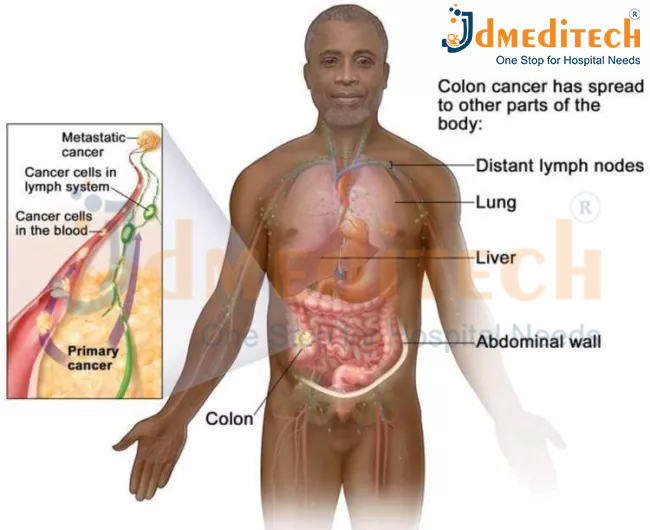
Cancer can become more dangerous when it spreads beyond its original location. This spreading process is known as metastasis. It begins when cancer cells break away from the primary tumor and invade nearby tissues. These cells can then enter the bloodstream or lymphatic system, which act like transportation networks in the body. Through these pathways, cancer cells travel to distant organs such as the lungs, liver, bones, or brain.
Once they settle in a new area, the cancer cells may start growing and form a secondary tumor. Even if the cancer spreads to another organ, it still remains the same type as the original cancer. For example, breast cancer that spreads to the lungs is still classified as breast cancer, not lung cancer.
The spread of cancer is serious because it interferes with the normal functioning of vital organs and makes treatment more complex. Metastatic cancer often requires stronger or combination treatments like chemotherapy, targeted therapy, immunotherapy, radiation, or specialized surgery. Detecting cancer early and starting treatment promptly can help reduce the chances of metastasis.
Types of Cancer
- Carcinomas
- Sarcomas
- Leukemias
- Lymphomas
- Myeloma (Multiple Myeloma)
- Melanoma
- Central Nervous System (CNS) Cancers
- Germ Cell Tumors
- Neuroendocrine Tumors
Conclusion
Cancer is a complex disease, but early detection, modern treatments, and healthy lifestyle choices can significantly improve outcomes. Understanding the basics of cancer empowers individuals to take charge of their health and seek timely medical help.