



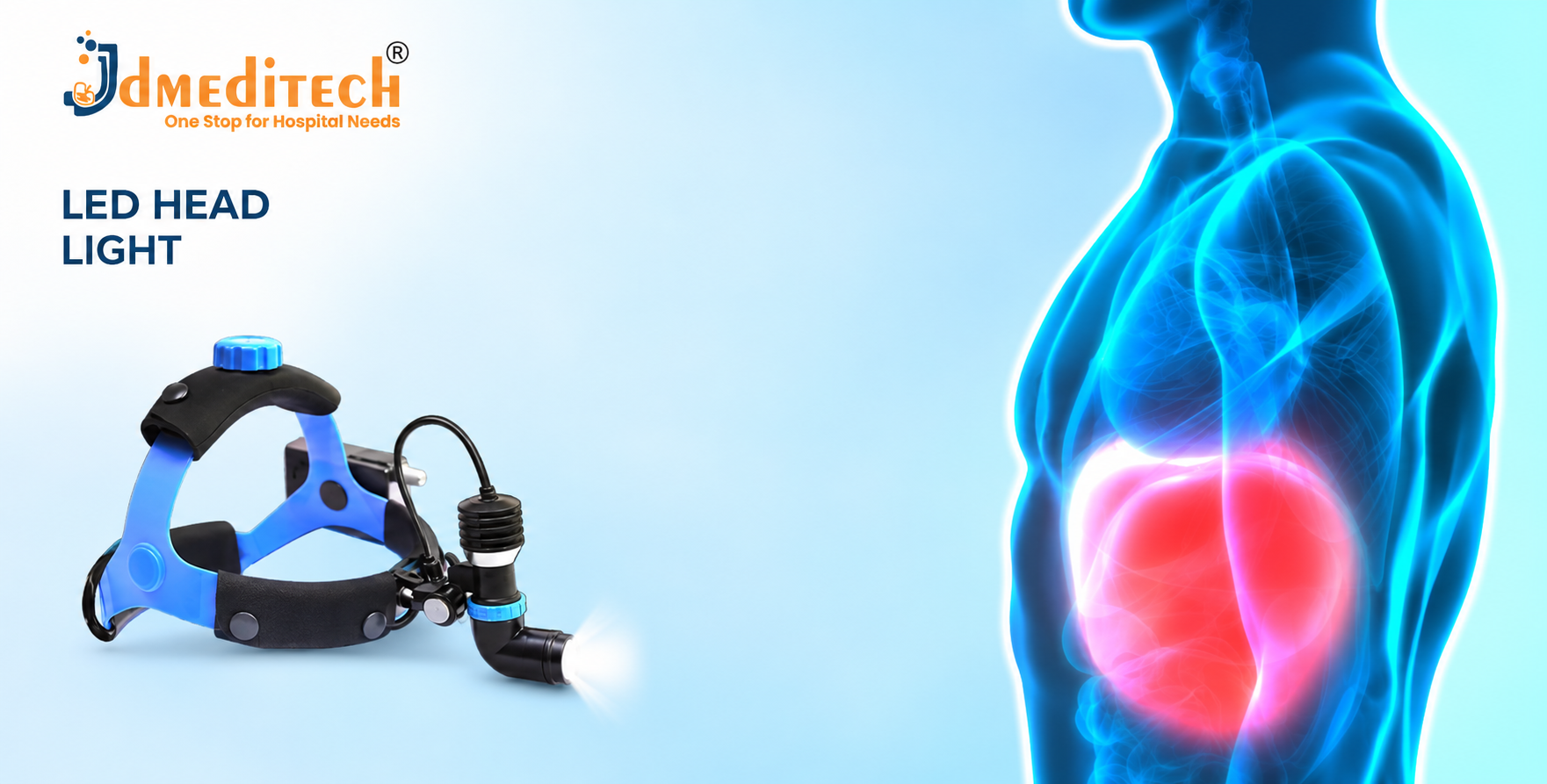
LED Head Light – Features, Uses, Benefits and Specifications
An LED Head Light is a head-mounted illumination device that helps healthcare professionals illuminate a selected examination or surgical area. Its hands-free design allows clinicians to direct light toward the working field while keeping their hands available for clinical tasks.
Medical professionals use head-mounted lights in selected surgical procedures, outpatient examinations and other healthcare applications. Furthermore, the adjustable headband helps position the light according to the user’s requirements.
Unlike a fixed examination lamp, a head-mounted LED light moves with the user’s head. Therefore, clinicians can adjust the direction of illumination as they change their viewing angle.
JDMeditech supplies medical instruments, surgical equipment and healthcare accessories for hospitals, clinics and medical distributors. Customers can contact our team to confirm available LED Head Light models and technical specifications.
What Is an LED Head Light?
An LED Head Light is a wearable lighting device that provides focused illumination during medical examinations and selected surgical procedures.
Typically, the device includes a headband, LED light module, adjustment mechanism and an electrical power connection.
Additionally, some models offer adjustable light intensity, rechargeable batteries or external power units.
However, the exact configuration depends on the manufacturer and product model.
Purpose of an LED Head Light
The main purpose of an LED Head Light is to illuminate the clinical working area without requiring the user to hold a separate light source.
Furthermore, the device allows clinicians to direct light by adjusting the position of their head or the light module.
Consequently, it can serve as a useful supplementary illumination device during selected examinations and procedures.
However, a headlight does not automatically replace the operating room’s primary surgical lighting system.
Importance of LED Head Lights in Healthcare
Appropriate illumination helps healthcare professionals observe anatomical structures and perform clinical tasks.
Therefore, a head-mounted light can support visibility when additional directed illumination is useful.
Furthermore, hands-free operation allows the clinician to handle instruments without holding a flashlight.
However, safe clinical use also depends on suitable brightness, correct positioning and appropriate infection-control practices.
Main Components of an LED Head Light
A typical LED Head Light may include the following components:
- Adjustable Headband
- LED Light Module
- Light Housing
- Optical Lens or Focusing Assembly
- Light Adjustment Mechanism
- Power Cable
- Power Connector
- Brightness Control, If Provided
- Battery Pack or Power Supply, If Provided
- Headband Padding
However, not every model includes all these components.
1. Adjustable Headband
The adjustable headband secures the light to the user’s head.
Furthermore, adjustment mechanisms help accommodate different head sizes and fitting preferences.
Therefore, users should adjust the headband according to the manufacturer’s instructions.
2. LED Light Module
The LED light module generates illumination for the working area.
Additionally, LED technology supports compact lighting designs.
However, brightness, color temperature and optical performance vary between models.
3. Light Housing
The light housing supports and protects the LED module and associated components.
Furthermore, the housing design influences how the light attaches to the headband.
However, users should inspect the housing for cracks or damage before use.
4. Optical Lens or Focusing Assembly
Some LED Head Lights include optical lenses that direct the emitted light toward the working area.
Additionally, selected models may offer adjustable spot size or focusing capability.
However, users should verify whether the selected model includes a focusing mechanism.
5. Light Adjustment Mechanism
The adjustment mechanism allows users to position the light module.
Furthermore, this feature helps direct illumination toward the intended examination field.
Therefore, clinicians should confirm that the light remains securely positioned during use.
6. Power Cable
Some LED Head Lights use a power cable to connect the light module to a compatible power source.
Additionally, cable routing influences user movement and comfort.
However, damaged cables can create electrical hazards. Therefore, users must inspect the cable before use.
7. Power Connector
The power connector links the lighting device to an approved power supply.
Furthermore, different models may use different connector designs.
Therefore, users should only connect manufacturer-approved power accessories.
8. Brightness Control
Some LED Head Lights provide adjustable brightness.
Additionally, this feature allows users to select an appropriate illumination level for the clinical task.
However, users must follow the manufacturer’s brightness and exposure guidance.
9. Battery Pack or Power Supply
Depending on the model, an LED Head Light may use a rechargeable battery or an external power supply.
Furthermore, battery capacity and operating time vary by configuration.
Therefore, buyers should verify the power specifications before purchasing.
10. Headband Padding
Some models include padding along the headband.
Additionally, padding may help distribute pressure during use.
However, users should follow the manufacturer’s cleaning instructions for all patient-care environments.
Key Features of an LED Head Light
Depending on the selected model, an LED Head Light may offer:
- Hands-Free Illumination
- Head-Mounted Design
- Adjustable Headband
- Directional Light Positioning
- Compact LED Light Module
- Optional Brightness Adjustment
- Optional Focus Adjustment
- Rechargeable or External Power Options
- Different Illumination Configurations
- Model-Specific Optical Performance
However, customers should confirm the exact features against the official product datasheet.
Types of LED Head Lights
Manufacturers offer different head-mounted lighting configurations for clinical applications.
- Rechargeable LED Head Light
- External Power LED Head Light
- Adjustable Focus LED Head Light
- Fixed Focus LED Head Light
- Adjustable Brightness LED Head Light
- Medical Examination LED Head Light
- Surgical LED Head Light
However, these are general categories. The uploaded image does not confirm every feature or configuration of the illustrated product.
1. Rechargeable LED Head Light
A rechargeable LED Head Light uses a compatible rechargeable power system.
Furthermore, its operating time depends on battery capacity and selected brightness.
Therefore, users should verify charging instructions and battery specifications.
2. External Power LED Head Light
An external power LED Head Light receives electrical power from a compatible external source.
Additionally, its cable arrangement may influence mobility and equipment positioning.
However, users must follow the manufacturer’s power-supply requirements.
3. Adjustable Focus LED Head Light
Selected models allow users to adjust the light beam or spot size.
Furthermore, this feature may support different working distances.
However, focusing capabilities vary by model.
4. Fixed Focus LED Head Light
A fixed focus LED Head Light provides a predetermined optical beam configuration.
Additionally, the user may adjust the direction of the light by repositioning the module.
However, the beam characteristics depend on the optical design.
5. Adjustable Brightness LED Head Light
Some models include controls for changing the light intensity.
Furthermore, adjustable brightness helps users select an illumination level suitable for the task.
However, excessive brightness may create glare or discomfort.
6. Medical Examination LED Head Light
Medical examination headlights provide directed illumination during selected clinical assessments.
Additionally, clinicians may use them when fixed room lighting does not adequately illuminate the examination field.
However, the device must be appropriate for the intended clinical environment.
7. Surgical LED Head Light
Surgical LED Head Lights support illumination during selected procedures.
Furthermore, their head-mounted design allows the light direction to follow the user’s viewing position.
However, the surgical team must verify that the device meets the procedure’s illumination and safety requirements.
How Does an LED Head Light Work?
An LED Head Light converts electrical energy into visible light through its LED module.
First, the device receives power from its approved battery or power supply.
Next, the LED module produces light that the optical assembly directs toward the working area.
During use, the clinician adjusts the headband and light position according to the manufacturer’s instructions.
Furthermore, selected models allow adjustments to brightness or beam focus.
However, the user must follow all operating and electrical safety instructions.
Importance of Hands-Free Illumination
Hands-free illumination allows clinicians to direct light without holding a separate lighting device.
Furthermore, the light can follow the user’s head movements.
Therefore, the device may be useful during selected examinations and clinical tasks.
Importance of Adjustable Light Positioning
Adjustable positioning helps direct the light toward the intended working area.
Additionally, the clinician can reposition the light according to the examination field.
However, the device should remain securely adjusted during use.
Importance of Light Intensity
Appropriate light intensity supports visibility during medical examinations.
Furthermore, the required brightness depends on the working distance and clinical environment.
However, excessive intensity can cause glare or discomfort.
Therefore, users should follow the manufacturer’s recommendations.
Importance of Color Temperature
Color temperature describes the visual appearance of the emitted light.
Additionally, different LED systems may produce different color temperatures.
However, the suitability of a particular light depends on its overall optical performance and intended application.
Importance of Battery Performance
Battery performance influences how long a rechargeable headlight can operate.
Furthermore, brightness settings may affect operating time.
Therefore, healthcare facilities should verify battery capacity, charging requirements and expected runtime.
Applications of an LED Head Light
Healthcare professionals may use suitable LED Head Lights during selected examinations and procedures.
- General Surgical Procedures
- ENT Examinations
- Dental Procedures
- Minor Surgical Procedures
- Outpatient Examinations
- Wound Assessment
- Selected Gynecological Examinations
- Emergency Department Procedures
- Other Manufacturer-Approved Clinical Applications
Application in General Surgery
Surgeons may use a suitable LED Head Light for supplementary illumination during selected procedures.
Furthermore, head-mounted lighting can follow the surgeon’s viewing direction.
However, the device does not necessarily replace primary surgical lighting.
Application in ENT Examinations
Ear, nose and throat examinations often require directed illumination.
Additionally, compatible head-mounted lights may support visibility during selected assessments.
Therefore, clinicians should choose a device appropriate for the examination.
Application in Dental Procedures
Dental professionals may use suitable head-mounted lights during selected examinations and treatments.
Furthermore, focused illumination can support visibility of the working area.
However, users should verify the device’s suitability for dental applications.
Application in Minor Surgical Procedures
Minor procedures may require supplementary lighting.
Additionally, head-mounted illumination allows clinicians to direct light toward the procedural field.
However, lighting requirements vary according to the procedure.
Application in Outpatient Examinations
Outpatient clinicians may use head-mounted lights during selected examinations.
Furthermore, the wearable design allows light direction to follow the clinician’s movements.
Therefore, the device can serve as a supplementary clinical lighting accessory.
Application in Wound Assessment
Wound assessment requires adequate visualization of the affected area.
Additionally, suitable directed illumination may support examination.
However, clinicians must follow appropriate infection-control and patient-safety practices.
Technical Specifications of an LED Head Light
Exact specifications vary by manufacturer and model. Therefore, customers should request the official product datasheet before ordering.
| Parameter | Product Information |
|---|---|
| Product Name | LED Head Light |
| Alternative Name | Medical LED Headlight |
| Product Category | Medical and Surgical Illumination Equipment |
| Primary Function | Head-Mounted Illumination |
| Light Source | LED |
| Headband | Adjustable Head-Mounted Design |
| Illumination Intensity | Confirm Manufacturer Specifications |
| Color Temperature | Confirm Manufacturer Specifications |
| Spot Diameter | Confirm Manufacturer Specifications |
| Working Distance | Confirm Manufacturer Specifications |
| Focus Adjustment | Model-Dependent |
| Brightness Adjustment | Model-Dependent |
| Power Source | Confirm Battery or External Power Configuration |
| Battery Capacity | Confirm Manufacturer Specifications |
| Operating Time | Confirm Manufacturer Specifications |
| Charging Time | Confirm Manufacturer Specifications |
| Device Weight | Confirm Manufacturer Specifications |
| Cleaning Instructions | Follow Manufacturer Instructions |
| Packaging | Confirm Supplied Configuration |
| Regulatory Documentation | Verify for Destination Market |
Potential Benefits of an LED Head Light
When appropriately selected and used, an LED Head Light may offer several practical advantages.
- Hands-Free Clinical Illumination
- Directional Lighting
- Adjustable Headband Positioning
- Compact Head-Mounted Design
- Supplementary Illumination for Selected Procedures
- Optional Brightness Adjustment
- Optional Beam Focus Adjustment
- Different Power Configurations
However, these characteristics do not guarantee improved clinical outcomes or eliminate the need for appropriate room lighting.
LED Head Light vs Conventional Examination Light
| Feature | LED Head Light | Conventional Examination Light |
|---|---|---|
| Mounting | Head-Mounted | Typically Stand, Wall or Ceiling Mounted |
| Light Direction | Follows User Position | Adjusted Through Lamp Positioning |
| Hands-Free Operation | Yes, During Normal Use | Yes, After Positioning |
| Power Source | Model-Dependent | Model-Dependent |
| Typical Role | Directed Personal Illumination | General or Localized Examination Illumination |
| Clinical Suitability | Depends on Device Specifications | Depends on Device Specifications |
Important Safety Precautions
Healthcare professionals should follow the manufacturer’s operating instructions when using an LED Head Light.
Furthermore, facilities should maintain appropriate electrical and infection-control practices.
- Inspect the Light Module Before Use
- Check the Headband Condition
- Verify Power-Supply Compatibility
- Inspect Cables and Connectors
- Avoid Direct Viewing of High-Intensity Light
- Do Not Direct Intense Light Into Eyes Unnecessarily
- Follow Battery Charging Instructions
- Keep Electrical Components Away From Inappropriate Moisture Exposure
- Follow Approved Cleaning Instructions
- Remove Damaged Devices From Service
Additionally, users should monitor for excessive heat or unusual device behavior.
Potential Risks and Limitations
Improper selection or use may create safety concerns.
Potential risks include:
- Glare or Visual Discomfort
- Eye Exposure to Intense Light
- Heat-Related Discomfort
- Electrical Malfunction
- Battery Failure
- Headband Discomfort
- Unexpected Loss of Illumination
- Contamination From Improper Cleaning
- Insufficient Lighting for the Intended Procedure
Therefore, users should verify device suitability and follow the manufacturer’s instructions.
Inspection Before Use
Healthcare personnel should inspect the device before clinical use.
- Confirm Product Identification
- Inspect the Headband
- Check the Light Housing
- Inspect the LED Module
- Check the Power Cable
- Inspect Electrical Connectors
- Verify the Power Source
- Check Battery Charge, If Applicable
- Test Approved Controls
- Confirm Appropriate Light Output
Furthermore, personnel should remove damaged or malfunctioning devices from service.
Cleaning and Maintenance Guidelines
Facilities should clean and maintain LED Head Lights according to the manufacturer’s instructions.
Furthermore, different materials may require different cleaning agents.
However, users should not assume that the device can withstand immersion, steam sterilization or harsh chemical disinfectants.
Therefore, hospitals must follow the approved cleaning and maintenance procedures.
Storage and Handling Guidelines
Proper storage helps protect LED Head Lights.
For example, facilities should protect the light module and electrical connectors from impact.
Additionally, users should avoid excessive cable tension and improper battery storage.
Therefore, healthcare facilities should follow the manufacturer’s storage recommendations.
How to Choose the Right LED Head Light
Hospitals and procurement teams should consider several factors before purchasing.
- Intended Clinical Application
- Illumination Intensity
- Color Temperature
- Spot Diameter
- Working Distance
- Headband Adjustment
- Device Weight
- Brightness Control
- Focus Adjustment
- Power Configuration
- Battery Operating Time
- Cleaning Requirements
- Regulatory Documentation
Furthermore, clinicians should confirm that the device provides suitable illumination for the intended task.
Applications in Hospitals and Clinics
Hospitals and clinics may use LED Head Lights for selected clinical examinations and procedures.
Furthermore, different departments may require different brightness levels, working distances and power configurations.
Therefore, procurement teams should coordinate with healthcare professionals before selecting a model.
Applications for Medical Distributors
Medical distributors should confirm illumination intensity, power configuration, operating time and supplied accessories before preparing quotations.
Additionally, customers may request technical documentation and regulatory information.
Therefore, distributors should verify the official product specifications.
Why Choose JDMeditech?
JDMeditech supplies medical instruments, surgical equipment and healthcare accessories for hospitals, clinics and medical distributors.
Furthermore, our team can assist customers with product inquiries, available configurations and technical information.
Customers can contact JDMeditech regarding:
- LED Head Light Product Inquiries
- Medical Headlight Requirements
- Surgical Illumination Accessories
- Available Power Configurations
- Hospital Procurement Requirements
- Medical Distributor Requests
- International Export Inquiries
However, exact availability and technical specifications require confirmation.
Frequently Asked Questions About LED Head Lights
1. What Is an LED Head Light?
An LED Head Light is a head-mounted lighting device used to illuminate selected medical examination or surgical areas.
2. What Is Its Main Purpose?
Its primary purpose is to provide hands-free, directed illumination.
3. How Does an LED Head Light Work?
The device uses electrical power to operate an LED module that directs light toward the working area.
4. Is an LED Head Light Used in Surgery?
Yes. Suitable models may provide supplementary illumination during selected surgical procedures.
5. Can It Be Used for ENT Examinations?
Yes. Compatible models may support illumination during selected ear, nose and throat examinations.
6. Is the Headband Adjustable?
Many models include adjustable headbands. However, the exact adjustment mechanism varies.
7. Is the Brightness Adjustable?
Some models offer brightness adjustment. Buyers should verify this feature before ordering.
8. Is the Light Focus Adjustable?
Selected models offer focus adjustment. However, not every LED Head Light includes this feature.
9. Does It Use a Rechargeable Battery?
Some models use rechargeable batteries, while others use external power supplies.
10. How Long Does the Battery Last?
Operating time depends on battery capacity, brightness settings and product specifications.
11. Can It Replace a Surgical Operating Light?
Not necessarily. Users must verify whether the device meets the illumination requirements of the intended procedure.
12. Can the Device Be Sterilized?
Cleaning and sterilization compatibility depend on the manufacturer’s instructions. Users should not assume that the complete device can be autoclaved.
13. What Are the Main Safety Precautions?
Users should inspect electrical components, avoid inappropriate eye exposure and follow approved cleaning and power-supply instructions.
14. What Should Buyers Confirm Before Ordering?
Buyers should verify brightness, working distance, power configuration, battery specifications and regulatory documentation.
15. Where Can Customers Request Product Information?
Hospitals, clinics and medical distributors can contact JDMeditech for product information and quotations.
Conclusion
In conclusion, an LED Head Light is a practical illumination accessory for selected medical examinations and surgical procedures.
Furthermore, its head-mounted design provides hands-free directional lighting.
However, performance depends on the specific optical system, power configuration and clinical application.
Therefore, healthcare facilities should verify the product specifications and intended use before purchasing.
JDMeditech – One Stop for Hospital Needs
Website:
www.jdmeditech.com
Related Medical and Surgical Equipment
- Surgical Headlight
- Medical Examination Light
- Laparoscopic Camera System
- Laparoscope Holder
- Laparoscopic Hand Instruments
- Surgical Instruments
Medical Disclaimer
This article provides general educational and product information only. It does not replace manufacturer instructions, professional clinical judgment or institutional safety protocols. Healthcare professionals must verify device specifications, electrical safety, cleaning requirements and intended clinical use before operation.




