



LED Light Source for Endoscopy – Features, Working Principle, Applications and Benefits
An LED Light Source is medical illumination equipment that provides light for compatible endoscopic imaging systems. Healthcare professionals use suitable illumination devices to visualize internal anatomical structures during selected diagnostic and surgical procedures.
The equipment generates light using light-emitting diode technology. A compatible fiber optic light cable can transfer this illumination to an endoscope.
Furthermore, appropriate lighting supports clear observation of the examination area. However, overall image quality also depends on the endoscope, camera, optical components and monitor.
JDMeditech supplies endoscopy equipment, surgical instruments and medical imaging accessories for hospitals, clinics and medical distributors.
What Is an Endoscopy LED Light Source?
An endoscopic illumination unit uses LED technology to produce light for compatible medical optical instruments.
Typically, the system contains an LED module, optical coupling components, electronic power controls and a protective housing.
During operation, the device generates illumination that travels through a suitable light cable.
Consequently, the connected endoscope can illuminate the target examination area.
How Does an LED Light Source Work?
The equipment uses a semiconductor LED module to generate light when electrical current passes through it.
Next, optical components collect and direct the generated illumination toward the output connection.
A compatible fiber optic cable then transfers the light to the endoscope.
Finally, the endoscope directs illumination toward the examination area.
Therefore, the imaging system can capture visible anatomical details under appropriate lighting conditions.
Working Principle of LED Endoscopic Illumination
LED illumination combines semiconductor technology, optical transmission and electronic power management.
First, the power supply delivers regulated electrical energy to the LED module.
Next, the LED converts electrical energy into light.
The optical assembly then directs the illumination toward the connected cable.
Consequently, the endoscope receives light through its compatible illumination interface.
However, brightness, color temperature and optical performance vary between models.
Key Features of an LED Light Source
- LED-Based Illumination Technology
- Compatible Fiber Optic Light Cable Connection
- Electronic Power Control
- Compact Medical Equipment Design
- Model-Specific Brightness Adjustment
- Suitable Optical Output Interface
- Continuous Illumination During Intended Operation
- Model-Specific Cooling Arrangement
- Compatibility With Selected Endoscopes
- Manufacturer-Defined Safety Features
- Potential Long LED Service Life
- Integration With Compatible Imaging Equipment
Furthermore, buyers should confirm the exact features of the selected model.
Main Components of an LED Light Source
A typical endoscopic illumination system may include:
- LED Illumination Module
- Electronic Power Supply
- Optical Collection Assembly
- Light Cable Output Connector
- Brightness Control Interface
- Cooling Components
- Protective Equipment Housing
- Electrical Connection Interface
- Compatible Fiber Optic Light Cable
- Manufacturer-Approved Accessories
However, the exact components depend on the equipment design.
1. LED Illumination Module
The LED module generates light using semiconductor technology.
Furthermore, its electrical and optical characteristics influence illumination performance.
2. Electronic Power Supply
The power supply delivers electrical energy to the illumination system.
Additionally, electronic control circuits help manage operation according to the device design.
3. Optical Collection Assembly
The optical assembly collects and directs light toward the output interface.
Consequently, a compatible light cable can receive the illumination.
4. Light Cable Output Connector
The output connector allows attachment of an approved fiber optic light cable.
However, connector designs vary between manufacturers and equipment models.
5. Brightness Control Interface
Selected devices include controls for adjusting illumination intensity.
Furthermore, suitable adjustment can help operators manage lighting for the intended examination.
However, available control functions depend on the model.
6. Cooling System
LED modules generate heat during operation.
Therefore, suitable thermal management helps maintain operating conditions within the manufacturer’s specified limits.
Depending on the equipment design, cooling may involve heat sinks, ventilation or other components.
7. Fiber Optic Light Cable
A compatible fiber optic cable transfers light from the source to the endoscope.
Furthermore, cable condition and connector compatibility can influence illumination delivery.
However, the cable may be sold separately.
Clinical Applications of LED Light Sources
Compatible illumination equipment supports visualization in selected endoscopic procedures.
- Laparoscopic Procedures
- Urological Endoscopy
- Diagnostic Cystoscopy
- Selected Ureteroscopy Procedures
- Hysteroscopy
- Arthroscopy
- ENT Endoscopy
- Selected General Surgical Procedures
- Endoscopic Training
- Medical Education
However, clinical suitability depends on the approved intended use and compatibility of the complete system.
LED Light Source in Laparoscopy
Laparoscopy uses compatible optical instruments to visualize structures inside the abdominal cavity.
A suitable light source delivers illumination through an approved cable and laparoscope.
Consequently, the camera system can capture images of the illuminated operative field.
LED Light Source in Urology
Urologists use endoscopic imaging equipment during selected diagnostic and therapeutic procedures.
Compatible illumination supports visualization through appropriate rigid endoscopes.
Furthermore, suitable light delivery helps the camera capture anatomical details.
LED Light Source in Hysteroscopy
Hysteroscopy involves visualization of the uterine cavity using a suitable hysteroscope.
An approved light source can provide illumination through the connected optical system.
However, the equipment must match the hysteroscope and associated accessories.
LED Light Source in Arthroscopy
Arthroscopy uses specialized optical instruments to view structures inside a joint.
A compatible illumination system supports visualization during the intended procedure.
Furthermore, correct cable selection helps maintain appropriate light transmission.
Potential Benefits of LED Illumination Technology
- Efficient Semiconductor Light Generation
- Potentially Long Light-Module Service Life
- Model-Specific Brightness Adjustment
- Compatible Endoscopic Illumination
- Compact Equipment Configurations
- Electronic Illumination Control
- Potentially Lower Energy Consumption
- Integration With Selected Imaging Systems
However, actual energy efficiency, heat generation and service life depend on the equipment design and operating conditions.
LED vs Xenon Endoscopy Light Source
| Feature | LED Light Source | Xenon Light Source |
|---|---|---|
| Light Generation | Semiconductor LEDs | Xenon Arc Lamp |
| Light Module Life | Often Long | Requires Lamp Replacement |
| Energy Consumption | Model-Dependent | Model-Dependent |
| Heat Management | Required | Required |
| Brightness | Model-Dependent | Model-Dependent |
| Maintenance | Manufacturer-Defined | May Include Lamp Replacement |
Technical Specifications of LED Light Source
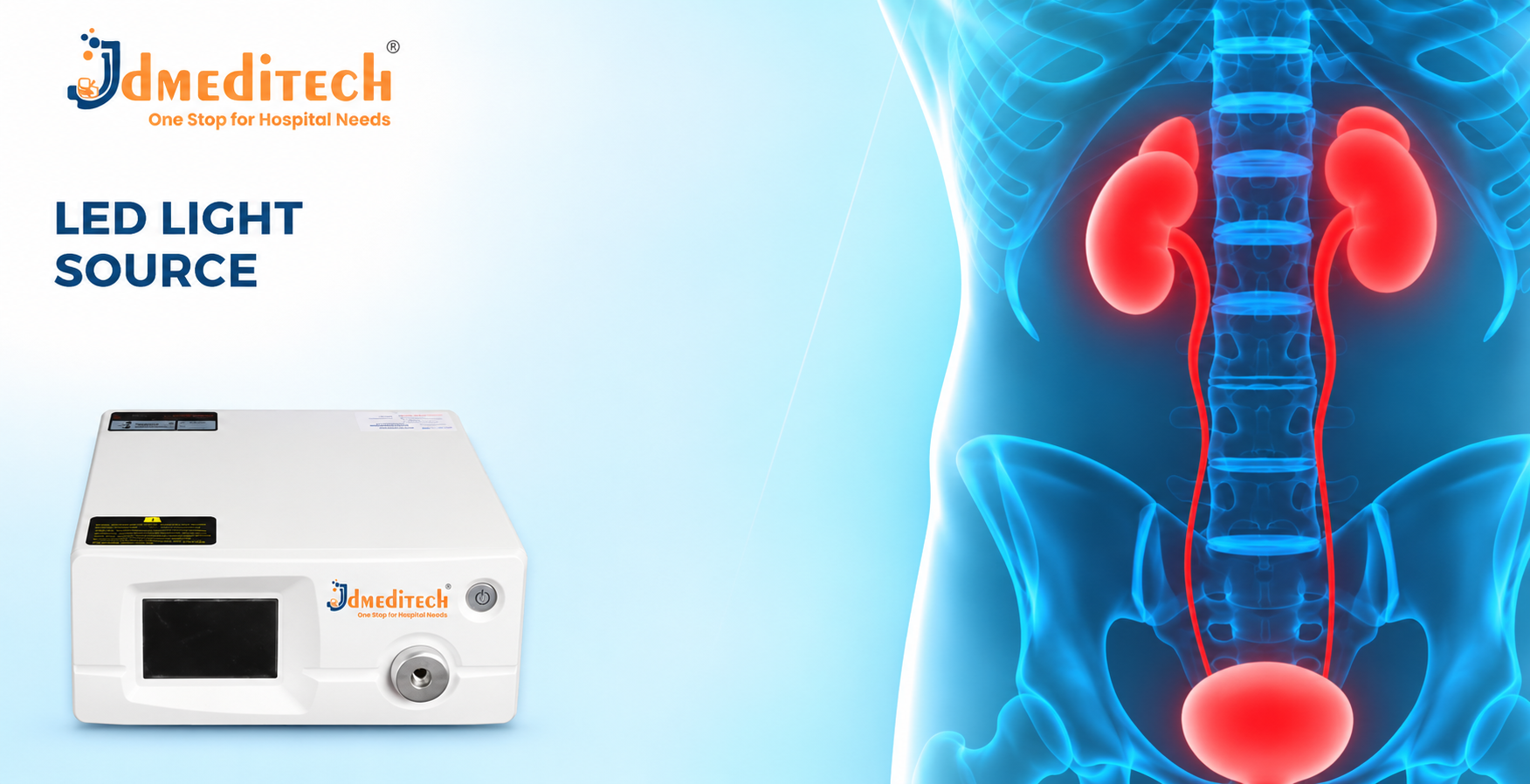
The supplied product image shows a compact illumination unit with a front-panel display area and circular optical output connector.
However, the image does not establish LED power, color temperature, light output, cable compatibility or electrical specifications.
Therefore, buyers should verify the manufacturer’s official technical datasheet.
| Parameter | Product Information |
|---|---|
| Product Name | LED Light Source |
| Equipment Category | Endoscopic Illumination Equipment |
| Illumination Technology | LED |
| Primary Function | Illumination for Compatible Endoscopes |
| LED Power Rating | Confirm Manufacturer Specifications |
| Color Temperature | Confirm Manufacturer Specifications |
| Light Output | Confirm Manufacturer Specifications |
| Brightness Adjustment | Confirm Available Configuration |
| Light Cable Connector | Confirm Manufacturer Specifications |
| Compatible Light Cable | Confirm Approved Accessories |
| Endoscope Compatibility | Confirm Approved Instruments |
| Cooling Arrangement | Confirm Manufacturer Specifications |
| LED Service Life | Confirm Manufacturer Specifications |
| Input Voltage | Confirm Manufacturer Specifications |
| Power Consumption | Confirm Manufacturer Specifications |
| Dimensions | Confirm Manufacturer Specifications |
| Weight | Confirm Manufacturer Specifications |
| Regulatory Documentation | Verify for Destination Market |
Importance of Illumination Brightness
Appropriate brightness helps the imaging system capture visible details within the examination area.
However, excessive illumination may produce glare or overexposed images.
Therefore, operators should adjust the system according to the manufacturer’s instructions and clinical requirements.
Importance of Color Temperature
Color temperature describes the visual appearance of light from a source.
Furthermore, illumination characteristics can influence the color representation of captured images.
However, final image color also depends on the camera sensor, white balance and display settings.
Importance of Fiber Optic Cable Compatibility
Different illumination systems may use different optical connectors.
Therefore, healthcare facilities should verify cable compatibility before purchasing.
Additionally, damaged cables can reduce light transmission and may create safety concerns.
Importance of Thermal Management
LED illumination systems generate heat during operation.
Consequently, appropriate cooling helps maintain the device within its specified operating conditions.
Furthermore, operators should keep ventilation openings unobstructed where applicable.
Installation and Setup Considerations
Qualified personnel should install the equipment according to the manufacturer’s instructions.
First, they should verify electrical compatibility and the operating environment.
Next, they should confirm the light cable and endoscope connections.
Finally, they should check illumination output and available controls.
However, installation procedures vary between models.
Safety Precautions for LED Light Sources
- Follow Manufacturer Instructions
- Verify Electrical Safety
- Use Approved Fiber Optic Cables
- Inspect Optical Connections
- Avoid Direct Viewing Into the Light Output
- Protect Patients and Staff From Hot Cable Tips
- Maintain Adequate Ventilation
- Keep Equipment Away From Excessive Moisture
- Use Appropriate Illumination Settings
- Perform Required Equipment Maintenance
Inspection Before Equipment Use
- Confirm Equipment Identification
- Inspect the Equipment Housing
- Check the Optical Output Connector
- Inspect the Fiber Optic Cable
- Verify Electrical Connections
- Confirm Endoscope Compatibility
- Check Illumination Output
- Verify Brightness Controls Where Available
- Review Maintenance Status
- Follow Manufacturer Pre-Use Checks
Cleaning and Maintenance Guidelines
Healthcare facilities should clean the external equipment surfaces according to the manufacturer’s instructions.
Furthermore, operators should protect optical connectors and electrical ports from moisture.
Additionally, technical personnel should inspect the cooling system and verify illumination performance when required.
However, maintenance procedures depend on the specific model.
Storage and Handling Recommendations
- Store Equipment in a Clean Environment
- Protect Optical Connections
- Avoid Mechanical Impact
- Follow Manufacturer Temperature Requirements
- Keep Electrical Connections Dry
- Protect Fiber Optic Cables From Excessive Bending
- Inspect Equipment Before Use
- Remove Damaged Equipment From Service
How to Choose the Right LED Light Source
Hospitals and procurement teams should evaluate several factors before purchasing endoscopic illumination equipment.
- Approved Intended Use
- LED Power Rating
- Light Output Performance
- Color Temperature
- Brightness Adjustment Functions
- Fiber Optic Cable Compatibility
- Endoscope Compatibility
- Cooling System
- Electrical Requirements
- Expected LED Service Life
- Cleaning and Maintenance Requirements
- Electrical Safety Documentation
- Regulatory Documentation
- Technical Support Availability
Why Choose JDMeditech?
JDMeditech supplies endoscopy equipment, surgical instruments and medical imaging accessories for hospitals, clinics and medical distributors.
Furthermore, our team assists customers with product inquiries, available configurations and quotation requests.
Customers can contact JDMeditech regarding:
- LED Endoscopy Light Sources
- Full HD Endoscopy Camera Systems
- USB Camera Systems
- Endoscopy Camera Couplers
- Fiber Optic Light Cables
- Laparoscopes
- Urology Endoscopy Equipment
Frequently Asked Questions
1. What Is an LED Light Source?
It is an illumination device that uses light-emitting diodes to generate light for compatible equipment.
2. What Is an Endoscopy LED Light Source Used For?
Healthcare professionals use compatible models to illuminate internal anatomical structures during selected endoscopic procedures.
3. How Does an LED Light Source Connect to an Endoscope?
A compatible fiber optic light cable commonly transfers illumination from the source to the endoscope.
4. Can It Be Used for Laparoscopy?
Yes, when the light source, cable and laparoscope are compatible and approved for the intended procedure.
5. Can It Be Used for Urology Endoscopy?
Selected illumination systems support compatible urological endoscopes.
6. Does Every LED Light Source Have Brightness Control?
No. Available adjustment functions depend on the model.
7. Does LED Technology Produce Heat?
Yes. LED illumination systems generate heat and require suitable thermal management.
8. Is an LED Light Source Better Than Xenon?
The appropriate choice depends on illumination performance, compatibility, maintenance and clinical requirements.
9. Does the Equipment Include a Fiber Optic Cable?
Not necessarily. The cable may be an optional or separately supplied accessory.
10. What Determines Illumination Quality?
Light output, optical coupling, cable condition and endoscope compatibility influence illumination performance.
11. Does the Equipment Require Maintenance?
Yes. Healthcare facilities should follow manufacturer instructions for inspection, cleaning and maintenance.
12. Where Can Customers Request Product Information?
Hospitals, clinics and medical distributors can contact JDMeditech for product details and quotations.
Conclusion
In conclusion, the LED Light Source provides illumination for compatible endoscopic imaging equipment.
Furthermore, LED technology supports electronic light generation and model-specific illumination control.
However, actual performance depends on the device, fiber optic cable, endoscope and imaging configuration.
Therefore, customers should verify technical specifications and compatibility before purchasing.
JDMeditech – One Stop for Hospital Needs
Website:
www.jdmeditech.com
Related Endoscopy Equipment
- Full HD Endoscopy Camera Systems
- USB Camera Systems
- Endoscopy Video Recorders
- Camera Couplers
- Fiber Optic Light Cables
- Laparoscopes
Medical Equipment Reference
For general information about medical device safety and regulation, visit the
World Health Organization – Medical Devices
.
Medical Disclaimer
This article provides general educational and product information only. It does not replace professional medical advice, clinical judgment, specialist training or manufacturer instructions. Healthcare professionals must verify approved indications, illumination specifications, equipment compatibility, electrical safety, cleaning requirements and regulatory documentation before clinical use.




