Surgeons use specialised instruments during nephrectomy surgery to remove part or all of a kidney. These instruments help the surgical team cut tissue, control bleeding, move organs and close the surgical area.
The exact instrument set depends on the type of surgery. Open, laparoscopic and robot-assisted nephrectomy procedures require different tools. In addition, partial nephrectomy may require instruments that help preserve healthy kidney tissue.
What Is Nephrectomy Surgery?
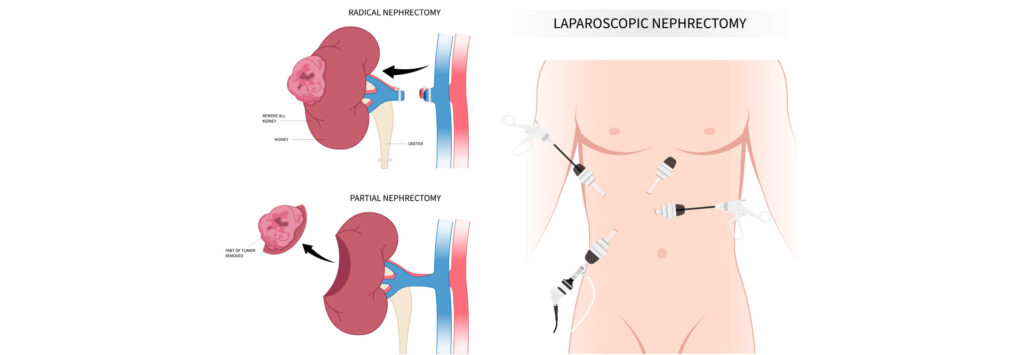
Nephrectomy is an operation that removes part or all of a kidney. A surgeon may recommend it for kidney cancer, severe kidney damage, repeated infections or living kidney donation.
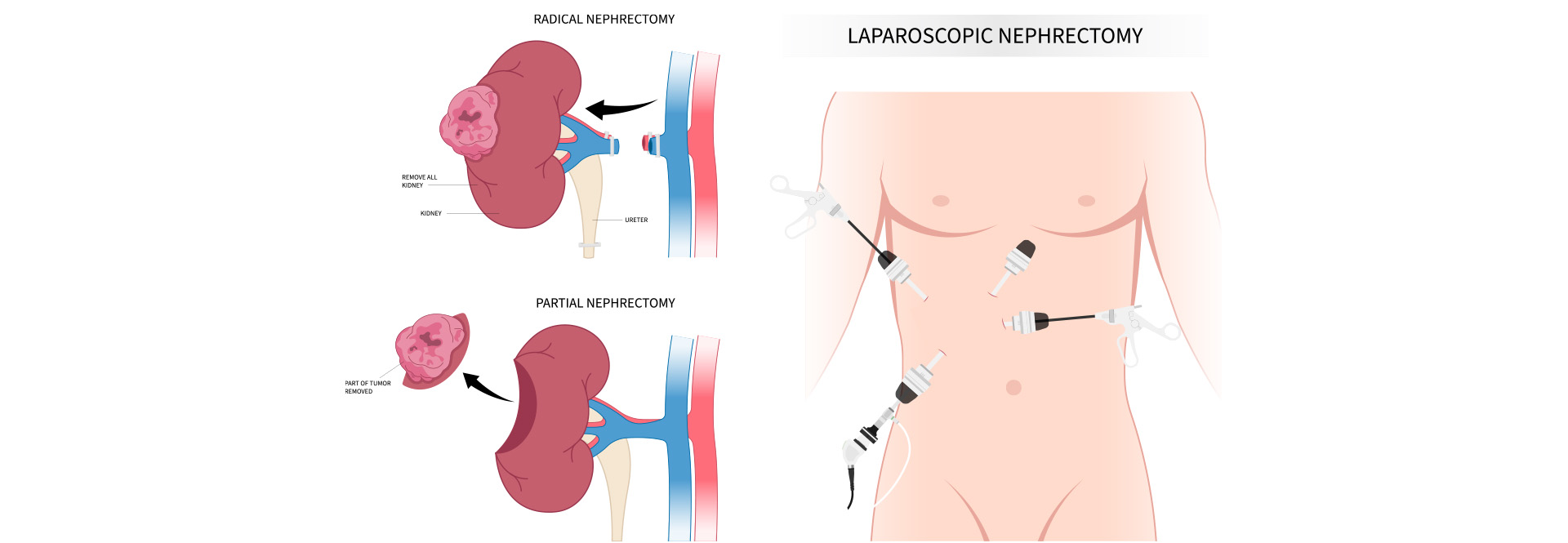
During a partial nephrectomy, the surgeon removes only the affected area. During a radical nephrectomy, the surgeon removes the entire kidney and, when necessary, nearby tissue.
Essential Surgical Instruments Used in Nephrectomy
A nephrectomy instrument set usually contains tools for cutting, holding, clamping, retracting and suturing. The hospital selects each instrument according to the surgical plan.
1. Cutting and Dissecting Instruments
Cutting and dissecting instruments help the surgeon open the surgical area and separate tissue around the kidney.
- Scalpel: The surgeon uses a scalpel with a suitable blade for the initial skin incision.
- Metzenbaum scissors: These scissors help with fine and careful tissue dissection.
- Mayo scissors: The surgeon may use these scissors to cut thicker tissue or fascia.
- Laparoscopic scissors: These long instruments support cutting during minimally invasive surgery.
The surgeon selects the blade and scissors according to the tissue and surgical approach.
2. Grasping and Holding Instruments
Grasping instruments help the surgeon hold or move tissue. Some forceps have a firm grip, while others handle delicate structures more gently.
- Allis forceps: These forceps firmly hold selected tissue.
- Babcock forceps: Their rounded jaws can hold delicate tubular structures with less crushing force.
- DeBakey forceps: Surgeons use these forceps when handling blood vessels and delicate tissue.
- Laparoscopic graspers: These long instruments help surgeons hold tissue through small access ports.
The surgical team must choose the correct grasper for each structure. This selection helps reduce unnecessary tissue damage.
3. Clamping and Vessel-Control Instruments
Safe control of the renal artery and vein is an important part of nephrectomy. Surgeons use clamps, clips or stapling devices according to the surgical method.
- Kelly or Crile forceps: These instruments can clamp small blood vessels.
- Satinsky clamp: This vascular clamp can help control a large blood vessel during open surgery.
- Bulldog vascular clamps: These small clamps temporarily stop blood flow through selected vessels.
- Laparoscopic clip applicator: This instrument applies suitable clips to blood vessels or other structures.
- Vascular stapler: A surgeon may use this device to divide and seal selected vessels.
Instrument choice depends on the vessel, procedure and surgeon’s plan. Only trained surgical professionals should use vascular-control devices.
4. Retractors and Exposure Instruments
Retractors hold tissue away from the surgical area. As a result, the surgeon gains a clearer view of the kidney and nearby structures.
- Army–Navy retractor: This handheld tool provides shallow or surface-level retraction.
- Balfour retractor: This self-retaining instrument helps keep an open abdominal incision apart.
- Kidney retractor: This specialised instrument supports exposure during open kidney surgery.
- Laparoscopic fan retractor: This tool gently moves organs during minimally invasive procedures.
Open surgery usually requires larger retractors. In contrast, laparoscopic surgery uses long and narrow instruments through access ports.
5. Suturing and Stapling Instruments
Suturing instruments help the surgeon repair tissue and close the incision. Partial nephrectomy may also require careful suturing of the remaining kidney.
- Mayo-Hegar needle holder: This instrument holds a surgical needle during open suturing.
- Laparoscopic needle driver: The surgeon uses this long instrument for internal suturing.
- Endoscopic stapler: This device can cut and seal suitable tissue or vessels.
- Surgical sutures: Absorbable and non-absorbable sutures support internal repair and wound closure.
The surgeon chooses the suture type according to the tissue and purpose. Therefore, one nephrectomy may require several suture materials.
6. Suction and Irrigation Instruments
Suction instruments remove blood and fluid from the surgical area. Irrigation also helps the team clean the field and maintain visibility.
- Yankauer suction tip: The team may use this suction instrument during open surgery.
- Laparoscopic suction and irrigation device: This instrument manages fluid during minimally invasive surgery.
- Suction tubing and canister: These products collect fluid from the operating area.
- Sterile saline: The surgical team may use saline for irrigation.
7. Energy and Vessel-Sealing Devices
Energy devices can cut tissue and control bleeding. They may also reduce the need for repeated manual tying.
- Monopolar electrosurgical device: This device supports cutting and tissue control.
- Bipolar electrosurgical device: It applies energy between two instrument tips.
- Ultrasonic surgical device: This system uses mechanical energy to cut and seal selected tissue.
- Advanced vessel sealer: This device seals suitable blood vessels and tissue bundles.
Each device has specific instructions and limitations. Therefore, trained staff must select suitable settings and accessories.
Instruments for Laparoscopic Nephrectomy
Laparoscopic nephrectomy requires instruments that can pass through small abdominal openings. A camera system displays the surgical area on a monitor.
- Trocars and cannulas: These devices create access points for the camera and instruments.
- Laparoscope: The camera provides a magnified view inside the abdomen.
- CO₂ insufflator: This system creates working space inside the abdomen.
- Insufflation tubing and filter: These products connect the gas source to the patient access system.
- Laparoscopic dissectors: These tools help separate tissue around the kidney.
- Clip applicator: This instrument places clips on selected vessels or structures.
- Endoscopic stapler: The surgeon may use it for suitable vessels or tissue.
- Specimen retrieval bag: This bag contains the removed tissue during extraction.
The exact port size and instrument selection can vary. Therefore, the surgical team follows the planned technique and approved device instructions.
Instruments for Robot-Assisted Nephrectomy
Robot-assisted nephrectomy uses a camera and wristed surgical instruments. The surgeon controls these instruments from a console.
Common robotic tools may include:
- Robotic graspers
- Robotic scissors
- Robotic needle drivers
- Bipolar grasping instruments
- Clip applicators
- Suction and irrigation devices
However, robotic instruments depend on the available surgical system. The hospital must follow the manufacturer’s instructions for use.
Disposable Products Used in Nephrectomy Surgery
In addition to reusable instruments, the operating team uses several sterile disposable products. These supplies support infection control, drainage and wound care.
1. Sterile Drapes and Gowns
- Kidney or abdominal surgical drape set
- Sterile surgical gowns
- Sterile gloves
- Instrument table covers
- Sterile adhesive drapes, when required
2. Sutures and Ligatures
- Absorbable sutures
- Non-absorbable sutures
- Surgical needles
- Vessel loops
- Suture clips, when required
3. Suction and Irrigation Supplies
- Suction tubing
- Collection canisters
- Sterile irrigation fluid
- Disposable suction tips
- Laparoscopic suction and irrigation probes
4. Laparoscopic Supplies
- Disposable trocars and cannulas
- Clip cartridges or single-use clip applicators
- Endoscopic stapler cartridges
- CO₂ tubing and filters
- Specimen retrieval bags
- Camera covers
5. Catheters and Drainage Products
- Foley catheter: This catheter drains urine and allows the team to monitor urine output.
- Ureteral catheter or stent: The surgeon may use one when the procedure requires urinary drainage or identification.
- Surgical drain: A drain may remove fluid from the surgical area.
- Drain collection bag and tubing: These products collect fluid from the drain.
6. Additional Access Products
Some patients may require additional monitoring or vascular access. However, these products do not form part of every standard nephrectomy set.
- Central venous catheter
- Femoral catheter
- Guidewire
- Introducer needle
- Haemodialysis catheter for patients who specifically require dialysis access
The medical team selects these products only when the patient’s condition requires them.
Choosing the Correct Nephrectomy Instruments
No single instrument list suits every nephrectomy. The surgeon considers the surgical approach, tumour size, kidney anatomy and patient’s health.
In addition, the hospital must check device compatibility and sterility. Staff should inspect reusable instruments before surgery and use disposable items within their expiry dates.
The surgical team must also keep backup instruments available. This preparation supports a safe response if the surgical plan changes.
Conclusion
Nephrectomy surgery requires instruments for cutting, grasping, clamping, retracting, suturing and fluid control. Laparoscopic and robot-assisted procedures also require specialised access and camera systems.
Furthermore, sterile disposable products support drainage, wound care and infection control. However, the exact selection varies for each patient and procedure.
Only trained healthcare professionals should select and use these devices. They must follow hospital protocols and each product’s approved instructions.
This article provides general educational information. It does not replace clinical training, hospital protocols or professional medical guidance.