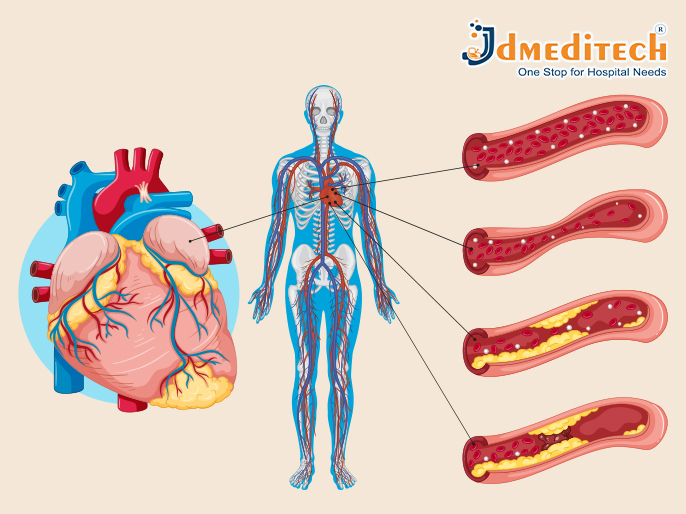
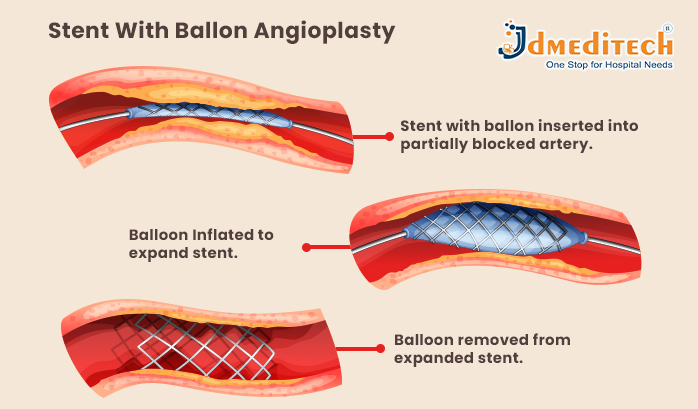
Angioplasty is a procedure in which a cardiologist inserts a small balloon inside a blocked artery. When the balloon is inflated, it pushes the plaque against the artery walls, widening the blood vessel. In many cases, a stent (a small metal mesh tube) is placed to keep the artery open permanently.
When Is Angioplasty Recommended?
Doctors may suggest angioplasty for patients experiencing:
• Coronary Artery Disease (CAD)
Plaque buildup narrows the arteries and reduces blood supply to the heart.
• Heart Attack
Angioplasty can quickly restore blood flow and reduce damage to the heart muscle.
• Severe Chest Pain (Angina)
Especially when pain does not improve with medication.
• Blockages Detected in Tests
Such as stress tests, CT scans, or angiograms.
How Angioplasty Is Performed
1. Preparation
• Local anesthesia is applied.
• A catheter is inserted through the groin or wrist.
• Using X-ray guidance, the catheter is moved toward the blocked artery.
2. Balloon Inflation
• A tiny balloon at the tip of the catheter is inflated.
• This compresses plaque and widens the artery.
3. Stent Placement
• A metal stent is placed in most cases.
• The stent stays in the artery to prevent re-narrowing.
4. Completion
• The catheter is removed.
• The entire procedure usually takes 30–60 minutes.
Benefits of Angioplasty
• Quickly restores blood flow
• Reduces chest pain
• Minimizes heart damage during a heart attack
• Shorter recovery time compared to open-heart surgery
• High success rate with stent placement
Risks and Complications
Although angioplasty is generally safe, some risks may include:
• Bleeding at the catheter insertion site
• Re-narrowing of the artery (restenosis)
• Blood clots in the stent
• Irregular heartbeats
• Rare chances of heart attack or stroke
Recovery After Angioplasty
Most patients recover quickly and may return home within a day. Recovery tips include:
• Avoid heavy lifting for a week
• Take prescribed blood-thinning medications
• Follow a heart-healthy diet
• Regular exercise as advised by the doctor
• Scheduled follow-ups to monitor progress
Lifestyle changes play a key role in preventing future blockages.
Conclusion
Angioplasty surgery is a safe, effective, and life-saving procedure for opening blocked arteries and improving heart function. With modern medical technology and expert cardiac care, patients can enjoy faster recovery and a healthier future. Understanding the procedure helps individuals make confident decisions about their heart health.
Get Connected:
+91 79909 93062 | +91 63513 72032 | exports@jdmeditech.com