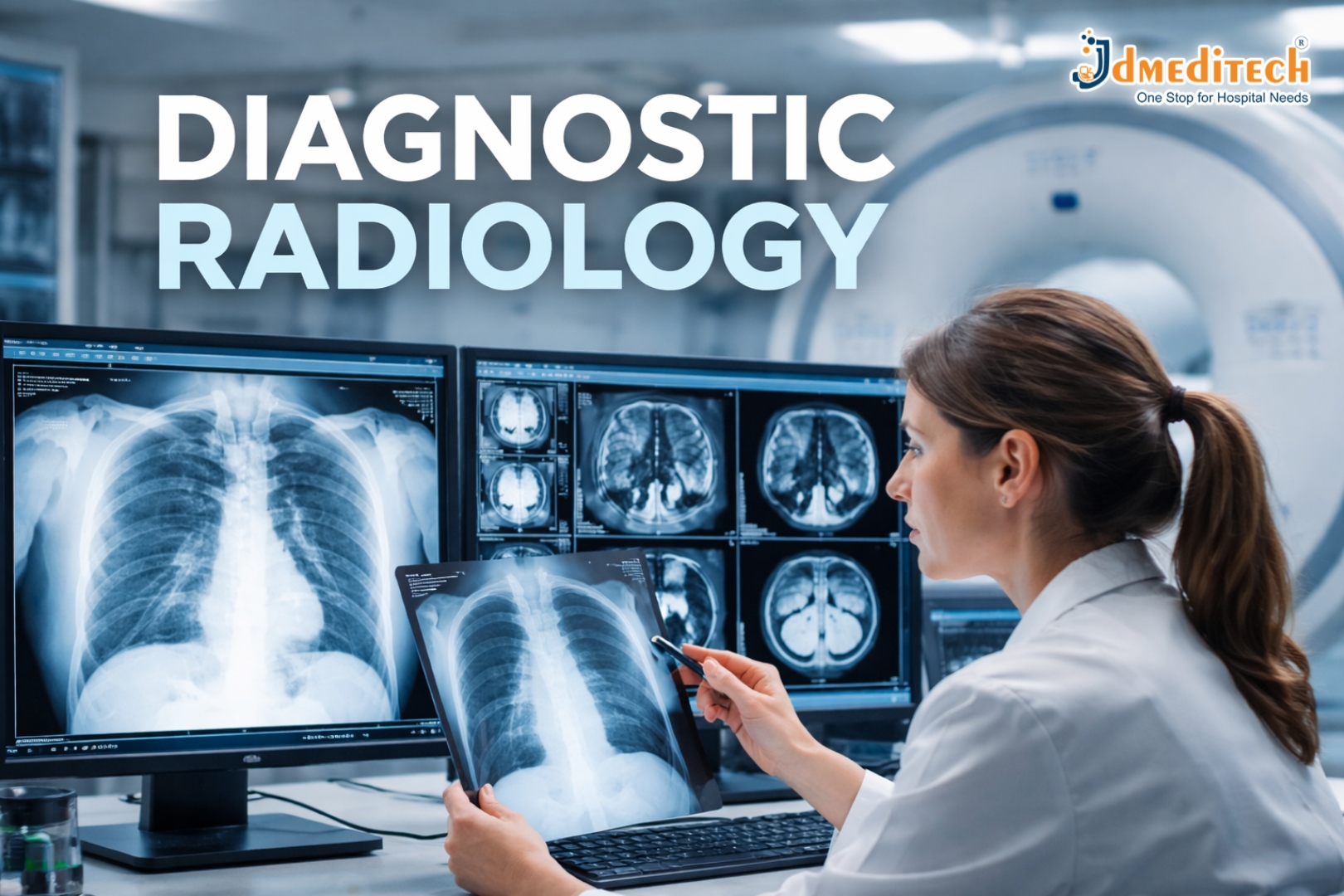
Diagnostic radiology plays a vital role in modern healthcare. It helps doctors detect, diagnose, and monitor various medical conditions using advanced imaging techniques. Because early diagnosis improves treatment outcomes, radiology has become essential in medical practice.
In this blog, you will learn what diagnostic radiology is, its types, procedures, benefits, and why it is important.
What is Diagnostic Radiology?
Diagnostic radiology is a medical specialty that uses imaging techniques to examine the inside of the body. These images help doctors identify diseases, injuries, and abnormalities without surgery.
For example, doctors use X-rays to detect fractures, while MRI scans help identify brain or spinal cord issues. As a result, radiology provides quick and accurate diagnoses.
Types of Diagnostic Radiology
There are several types of diagnostic radiology. Each method serves a different purpose.
1. X-rays
X-rays are the most common imaging test. They are mainly used to detect:
- Bone fractures
- Lung infections
- Dental issues
Because X-rays are fast and cost-effective, they are widely used.
2. Computed Tomography (CT Scan)
CT scans provide detailed cross-sectional images of the body. Doctors use them to diagnose:
- Internal injuries
- Tumors
- Infections
Moreover, CT scans offer more detail than standard X-rays.
3. Magnetic Resonance Imaging (MRI)
MRI uses magnetic fields and radio waves instead of radiation. It is ideal for:
- Brain disorders
- Joint injuries
- Soft tissue evaluation
Therefore, MRI is safer for repeated imaging.
4. Ultrasound
Ultrasound uses sound waves to create images. It is commonly used for:
- Pregnancy monitoring
- Abdominal conditions
- Heart evaluation
Additionally, it is painless and radiation-free.
5. Mammography
Mammography is a specialized X-ray used to detect breast cancer early. Early detection significantly improves survival rates.
Common Diagnostic Radiology Procedures
Radiology procedures are usually simple and non-invasive. However, some may require preparation.
Before the Procedure
- You may need to fast for a few hours
- Remove metal objects
- Inform your doctor about allergies or pregnancy
During the Procedure
- You must remain still for clear images
- The process is usually painless
- Some tests may use contrast dye
After the Procedure
- Most patients can resume normal activities
- Drink water to flush contrast dye
- Your doctor will review the results
Benefits of Diagnostic Radiology
Diagnostic radiology offers many advantages in healthcare.
1. Early Detection of Diseases
It helps identify diseases at an early stage. Therefore, treatment becomes more effective.
2. Non-Invasive Diagnosis
Most imaging tests do not require surgery. As a result, patients experience less discomfort.
3. Accurate Results
Radiology provides precise images. This improves diagnosis and treatment planning.
4. Faster Treatment Decisions
Doctors can quickly analyze results and begin treatment immediately.
5. Monitoring of Treatment
Radiology helps track the progress of ongoing treatments.
Risks and Safety Measures
Although diagnostic radiology is generally safe, some risks exist.
- Exposure to radiation in X-rays and CT scans
- Allergic reactions to contrast dye (rare)
However, doctors always minimize risks by using the lowest effective radiation dose. In addition, protective measures ensure patient safety.
Why Diagnostic Radiology is Important
Diagnostic radiology is essential because it improves healthcare outcomes. It allows doctors to:
- Detect diseases early
- Plan effective treatments
- Avoid unnecessary surgeries
Furthermore, it enhances patient care by providing accurate and timely information.
Conclusion
Diagnostic radiology is a cornerstone of modern medicine. It uses advanced imaging technologies to diagnose diseases quickly and accurately. Because it is non-invasive and efficient, it improves patient outcomes significantly.
If your doctor recommends a radiology test, there is no need to worry. These procedures are safe, effective, and essential for proper diagnosis.
Get Connected:
+91 79909 93062 | +91 63513 72032 | exports@jdmeditech.com