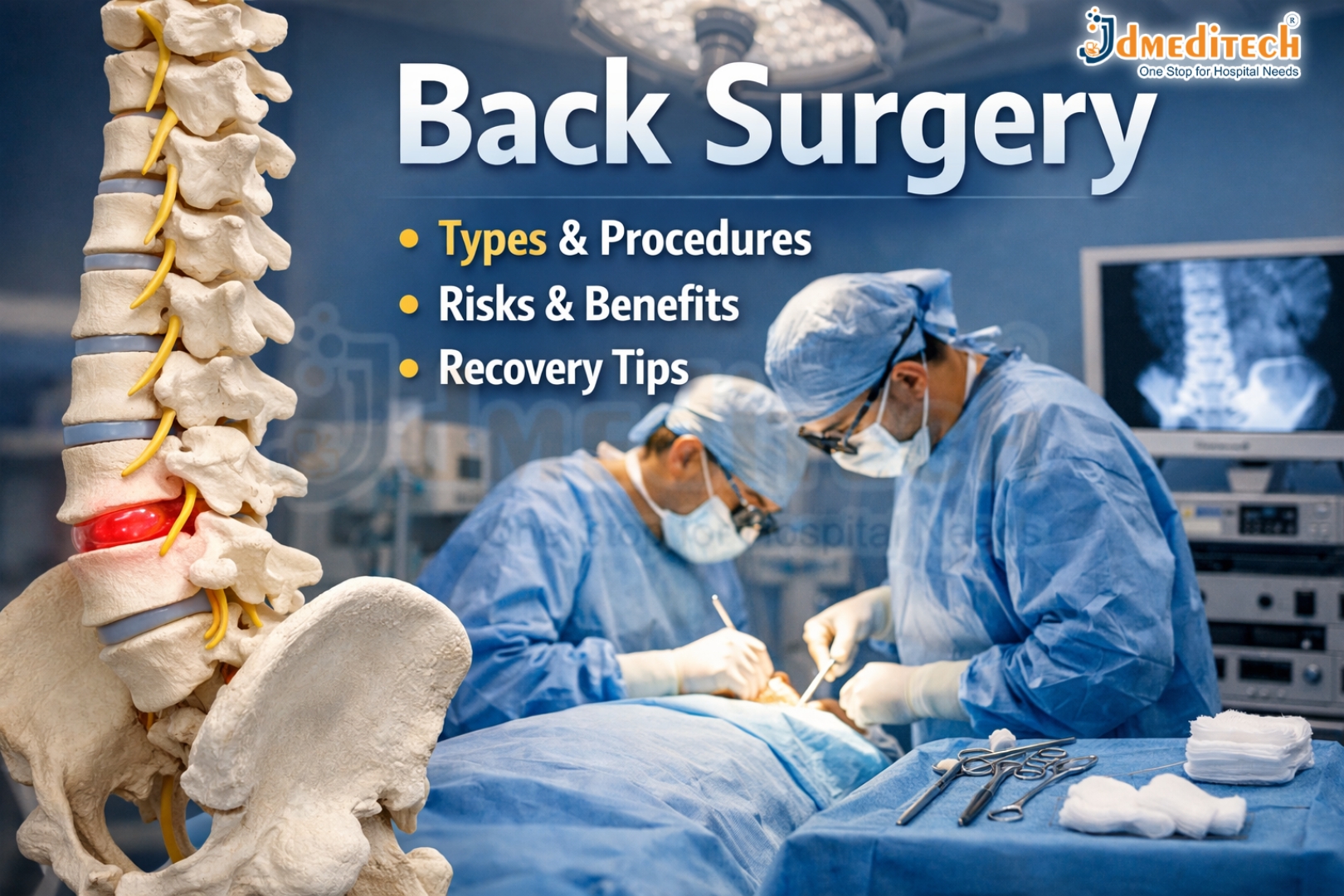
Back surgery is a medical procedure used to treat severe spinal problems that do not improve with non-surgical treatments. It can help relieve chronic pain, restore mobility, and improve quality of life. This guide explains everything you need to know about back surgery, including types, benefits, risks, and recovery.
What is Back Surgery?
Back surgery refers to various surgical procedures performed on the spine to correct structural issues, relieve pressure on nerves, or stabilize the spine. Doctors usually recommend back surgery only after conservative treatments like medication, physiotherapy, or injections fail.
Common Types of Back Surgery
1. Discectomy
A discectomy involves removing part or all of a damaged disc that is pressing on a nerve. It is commonly used to treat herniated discs.
2. Laminectomy
In this procedure, a portion of the bone (lamina) is removed to relieve pressure on the spinal cord or nerves.
3. Spinal Fusion
Spinal fusion joins two or more vertebrae together to stabilize the spine and reduce pain caused by movement.
4. Artificial Disc Replacement
This surgery replaces a damaged disc with an artificial one, helping maintain natural movement.
5. Minimally Invasive Spine Surgery
This modern technique uses smaller incisions, resulting in less pain, quicker recovery, and reduced complications.
When is Back Surgery Needed?
Back surgery may be recommended if you experience:
- Chronic back pain lasting more than 6 months
- Nerve compression causing numbness or weakness
- Herniated or slipped discs
- Spinal stenosis
- Severe spinal injuries or fractures
- Loss of bladder or bowel control (medical emergency)
Benefits of Back Surgery
- Relief from chronic pain
- Improved mobility and flexibility
- Better quality of life
- Reduced nerve compression symptoms
- Long-term spinal stability
Risks of Back Surgery
Like any surgical procedure, back surgery carries some risks, including:
- Infection
- Bleeding
- Nerve damage
- Blood clots
- Failure to relieve symptoms
- Need for additional surgery
Back Surgery Procedure: What to Expect
Before Surgery
- Medical evaluation and imaging tests
- Discussion of risks and benefits
- Fasting before surgery
During Surgery
- Performed under general anesthesia
- Duration varies depending on the procedure
After Surgery
- Monitoring in recovery room
- Pain management and wound care
- Gradual movement and physiotherapy
Recovery After Back Surgery
Recovery time depends on the type of surgery and patient health. General guidelines include:
- Hospital stay: 1–5 days
- Return to normal activities: 4–12 weeks
- Full recovery: 3–6 months
Tips for Faster Recovery
- Follow your doctor’s instructions
- Attend physiotherapy sessions
- Avoid heavy lifting
- Maintain a healthy diet
- Stay active with light exercises
Conclusion
Back surgery can be a life-changing solution for individuals suffering from severe spinal conditions. With proper diagnosis, expert care, and post-surgery rehabilitation, most patients experience significant pain relief and improved mobility. Always consult a qualified spine specialist to determine the best treatment for your condition.
Get Connected:
+91 79909 93062 | +91 63513 72032 | exports@jdmeditech.com