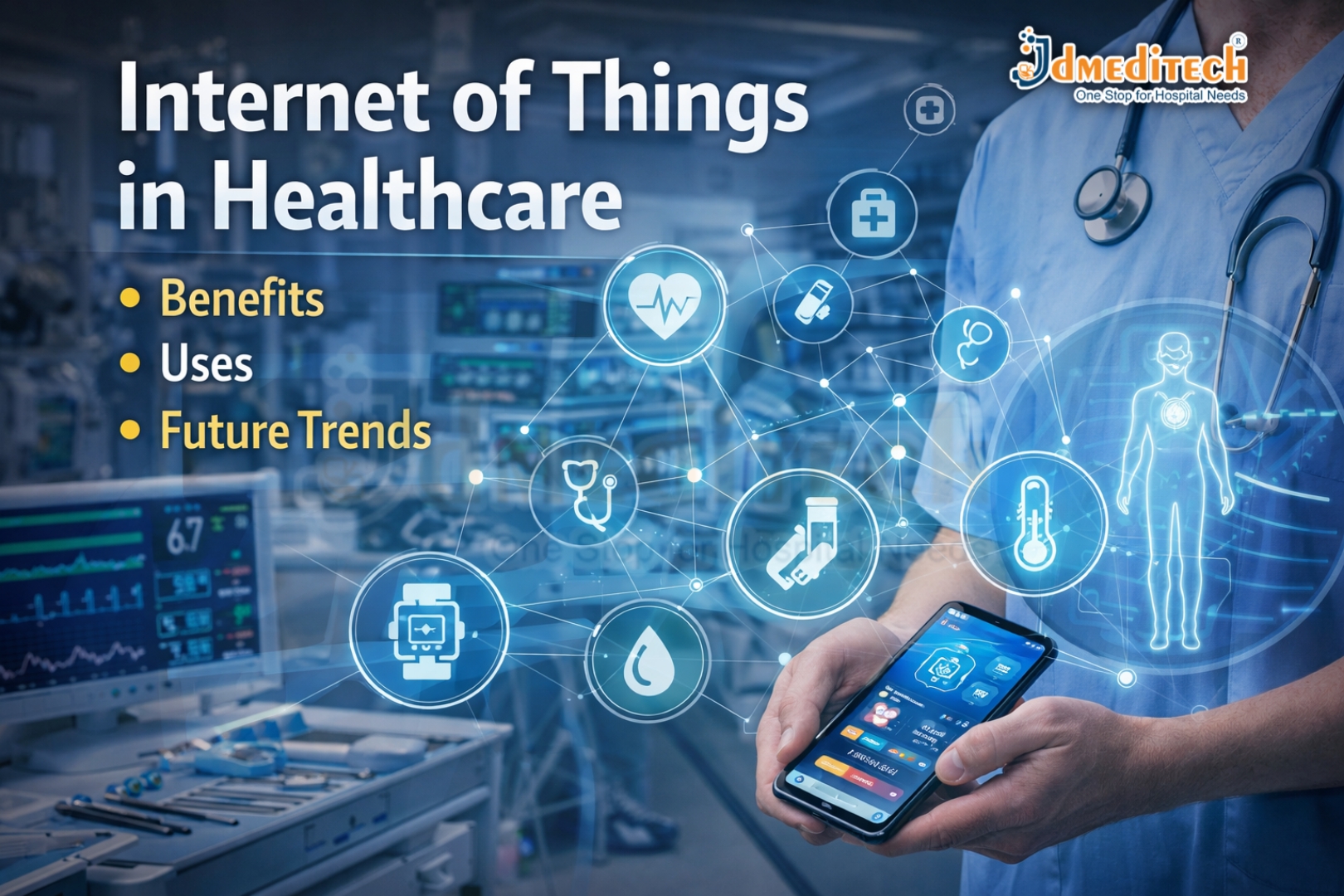
The Internet of Things in Healthcare is transforming the way medical services are delivered. By connecting devices, systems, and people, IoT enables real-time monitoring, improved patient outcomes, and efficient healthcare management. Today, hospitals and clinics are increasingly adopting IoT technologies to provide smarter and faster care.
What is Internet of Things (IoT) in Healthcare?
The Internet of Things in Healthcare refers to a network of connected medical devices and applications that collect, analyze, and transmit health data. These devices communicate with healthcare providers through the internet, allowing continuous monitoring and timely intervention.
Common IoT devices include:
- Wearable fitness trackers
- Smart glucose monitors
- Connected heart rate monitors
- Remote patient monitoring systems
Key Benefits of IoT in Healthcare
1. Real-Time Patient Monitoring
IoT devices allow doctors to monitor patients in real time. This helps in early detection of health issues and reduces emergency situations.
2. Improved Patient Outcomes
With continuous data tracking, healthcare providers can make better decisions. This leads to improved treatment and faster recovery.
3. Cost Reduction
The Internet of Things in Healthcare reduces hospital visits and readmissions. Remote monitoring helps save both time and money.
4. Enhanced Patient Engagement
Patients can track their own health using IoT devices. This encourages them to take an active role in their treatment.
5. Efficient Hospital Management
IoT helps hospitals manage equipment, staff, and patients efficiently. Smart systems reduce delays and improve workflow.
Applications of Internet of Things in Healthcare
Remote Patient Monitoring
Remote monitoring systems allow doctors to track patients from home. This is especially useful for chronic diseases like diabetes and heart conditions.
Smart Wearable Devices
Wearable devices such as smartwatches and fitness bands collect health data like heart rate, steps, and sleep patterns.
Connected Medical Equipment
Hospitals use IoT-enabled devices such as smart beds and infusion pumps to improve patient care and safety.
Medication Management
IoT helps remind patients to take medicines on time. Smart pill dispensers reduce medication errors.
Emergency Response Systems
IoT devices can send alerts during emergencies. This ensures quick medical assistance.
Challenges of IoT in Healthcare
Data Security and Privacy
Handling sensitive patient data requires strong security measures. Cybersecurity is a major concern in IoT healthcare systems.
High Implementation Cost
Setting up IoT infrastructure can be expensive for small healthcare providers.
Device Integration Issues
Different devices and systems may not always work together smoothly.
Regulatory Compliance
Healthcare organizations must follow strict regulations when using IoT technologies.
Future of Internet of Things in Healthcare
The future of the Internet of Things in Healthcare is very promising. With advancements in AI and machine learning, IoT systems will become more intelligent and predictive. Smart hospitals, personalized treatment plans, and automated healthcare services will soon become more common.
Conclusion
The Internet of Things in Healthcare is revolutionizing the medical industry. From real-time monitoring to improved patient care, IoT offers numerous benefits. Despite some challenges, its future is bright and full of innovation. Healthcare providers who adopt IoT technologies will be better equipped to deliver high-quality care.
Get Connected:
+91 79909 93062 | +91 63513 72032 | exports@jdmeditech.com