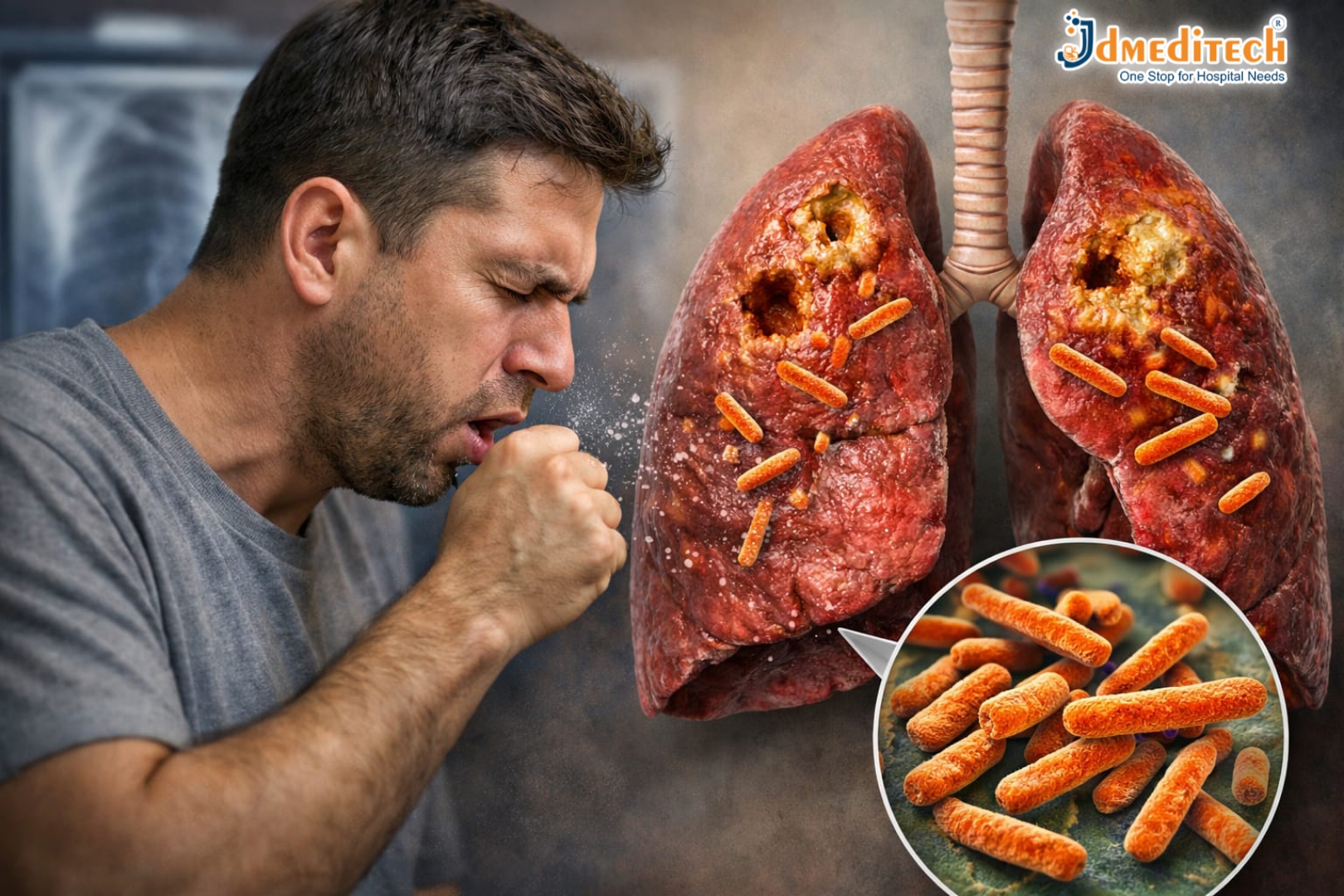
Tuberculosis is caused by a bacterium called Mycobacterium tuberculosis. It spreads through the air when an infected person coughs or sneezes.
Types of Tuberculosis
- Active TB – Symptoms are present and contagious
- Latent TB – No symptoms and not contagious
- Extrapulmonary TB – Affects organs other than lungs
Symptoms of Tuberculosis
Common symptoms include:
- Persistent cough for more than 2 weeks
- Chest pain
- Coughing up blood
- Fever and chills
- Night sweats
- Weight loss and fatigue
Causes and Risk Factors
Tuberculosis spreads through airborne droplets. Risk factors include:
- Weak immune system
- Close contact with TB patients
- Poor nutrition
- Smoking and alcohol use
- Living in crowded conditions
Diagnosis of Tuberculosis
Doctors use several tests to diagnose TB:
- Chest X-ray
- Sputum test
- Tuberculin skin test (Mantoux test)
- Blood tests
Tuberculosis Treatment
Tuberculosis treatment involves a long course of antibiotics, usually lasting 6 to 9 months.
Common Medications
- Isoniazid
- Rifampicin
- Pyrazinamide
- Ethambutol
Important Tips
- Complete the full course of tuberculosis treatment
- Do not skip doses
- Regular follow-ups are necessary
Prevention of Tuberculosis
- Get BCG vaccination
- Maintain good hygiene
- Avoid close contact with infected individuals
- Ensure proper ventilation
- Wear masks in high-risk areas
Complications of Untreated TB
- Severe lung damage
- Spread to other organs
- Respiratory failure
- Death in severe cases
Who is at Higher Risk?
- People with HIV/AIDS
- Diabetic patients
- Elderly individuals
- Healthcare workers
Conclusion
Tuberculosis is a preventable and curable disease with timely diagnosis and proper tuberculosis treatment. Awareness and early medical intervention can significantly reduce complications and transmission.
Get Connected:
+91 79909 93062 | +91 63513 72032 | exports@jdmeditech.com