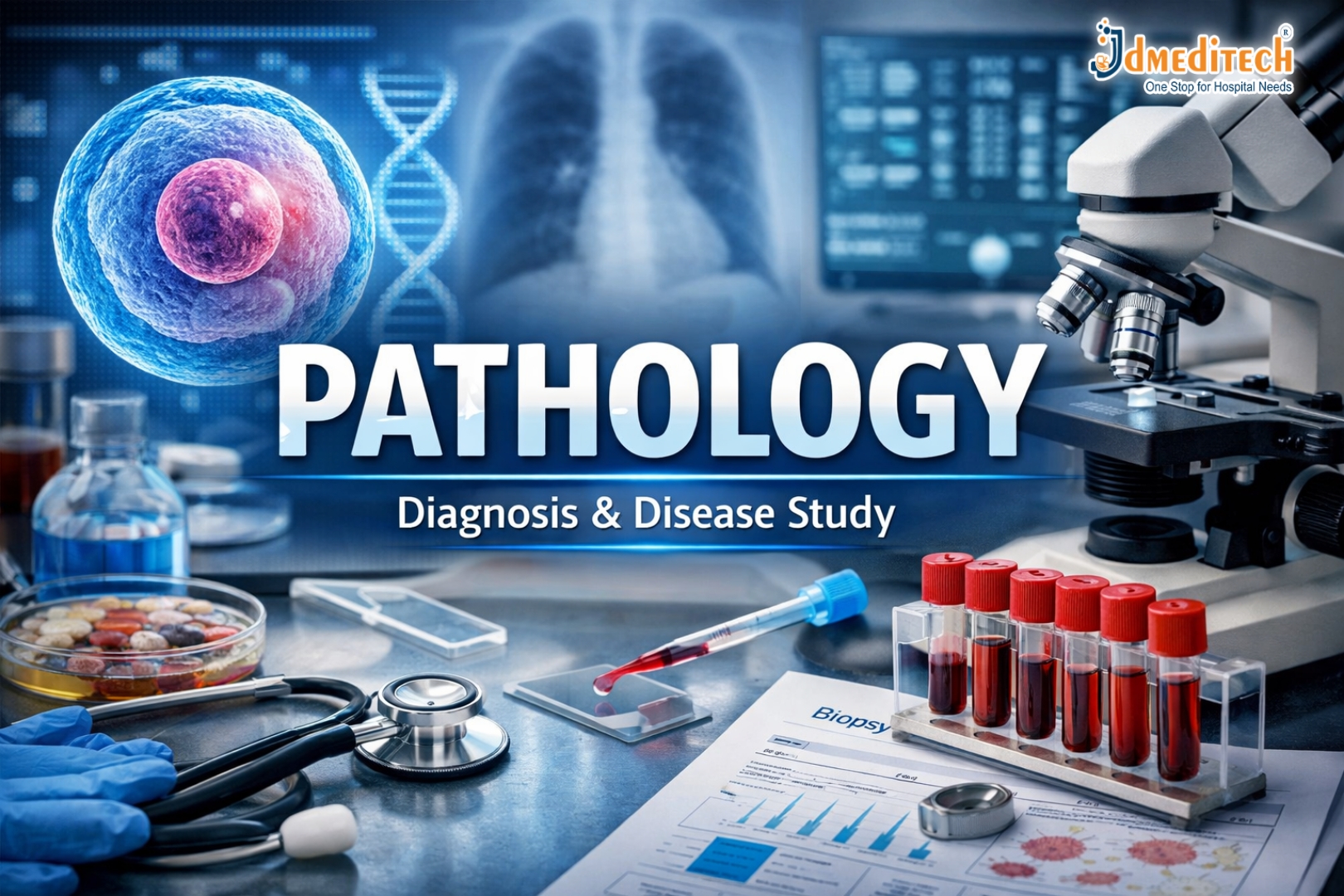
Pathology is a vital branch of medical science that focuses on the study of diseases. It helps doctors understand the causes, development, and effects of various illnesses. Without pathology, accurate diagnosis and effective treatment would not be possible.
In modern healthcare, pathology plays a crucial role in detecting diseases early. As a result, it improves patient outcomes and supports life-saving treatments.
What is Pathology?
Pathology is the scientific study of disease through the examination of organs, tissues, blood, and bodily fluids. Pathologists analyze samples to identify abnormalities and determine the exact nature of a disease.
In simple terms, pathology answers key questions like:
- What disease is present?
- How severe is it?
- What is causing it?
Therefore, it acts as the foundation of medical diagnosis.
Types of Pathology
Pathology is divided into several specialized branches. Each type focuses on a different aspect of disease analysis.
1. Clinical Pathology
Clinical pathology involves the analysis of blood, urine, and other body fluids. It includes:
- Hematology (study of blood)
- Microbiology (study of infections)
- Biochemistry (study of chemical processes in the body)
2. Anatomical Pathology
Anatomical pathology focuses on examining tissues and organs. It includes:
- Histopathology (study of tissues under a microscope)
- Cytopathology (study of individual cells)
3. Molecular Pathology
Molecular pathology studies diseases at a genetic and molecular level. It is widely used in cancer diagnosis and personalized medicine.
4. Forensic Pathology
Forensic pathology determines the cause of death, especially in cases of accidents or criminal investigations.
Importance of Pathology in Healthcare
Pathology is essential in every stage of healthcare. It not only helps in diagnosis but also guides treatment decisions.
1. Accurate Disease Diagnosis
Pathology provides precise information about diseases. As a result, doctors can make correct diagnoses and avoid unnecessary treatments.
2. Early Detection of Diseases
Many diseases, including cancer, can be detected early through pathology tests. Early detection significantly improves survival rates.
3. Treatment Planning
Pathology reports help doctors choose the best treatment options. For example, cancer treatments often depend on biopsy results.
4. Monitoring Disease Progress
Pathology tests are used to track how a disease is progressing or responding to treatment.
Common Pathology Tests
Pathology laboratories perform a wide range of tests. Some of the most common include:
- Blood tests (CBC, glucose levels)
- Urine analysis
- Biopsy tests
- Pap smear tests
- Culture tests for infections
These tests provide essential insights into a patient’s health.
Role of Pathologists
Pathologists are highly trained medical professionals who specialize in diagnosing diseases. Although they usually work behind the scenes, their role is critical.
They:
- Analyze lab results
- Interpret biopsy samples
- Provide diagnostic reports
- Support clinicians in treatment decisions
Therefore, pathologists are key contributors to patient care.
How Pathology Supports Modern Medicine
Pathology is the backbone of modern medicine. It supports advanced medical practices such as:
- Cancer diagnosis and staging
- Genetic testing and personalized medicine
- Infectious disease detection
- Organ transplant compatibility testing
As technology advances, pathology continues to evolve with digital pathology and AI-based diagnostics.
Future of Pathology
The future of pathology is rapidly advancing. New technologies are improving accuracy and efficiency.
Some key trends include:
- Digital pathology systems
- Artificial intelligence in diagnostics
- Automated laboratory testing
- Precision medicine
These innovations will make diagnosis faster and more reliable.
Conclusion
Pathology is a fundamental part of healthcare that ensures accurate diagnosis and effective treatment. From routine blood tests to advanced molecular analysis, pathology provides critical insights into diseases.
As healthcare continues to evolve, pathology will remain at the center of medical innovation and patient care.
Get Connected:
+91 79909 93062 | +91 63513 72032 | exports@jdmeditech.com