Functional Endoscopic Sinus Surgery (FESS) is a minimally invasive surgical procedure used to treat chronic sinus problems. It helps restore normal drainage of the sinuses and improves breathing.
Today, FESS is one of the most advanced and commonly performed procedures for patients suffering from chronic sinusitis, nasal blockages, and sinus infections.
In this blog, we will explain everything about Functional Endoscopic Sinus Surgery, including its procedure, benefits, risks, and recovery.
What is Functional Endoscopic Sinus Surgery (FESS)?
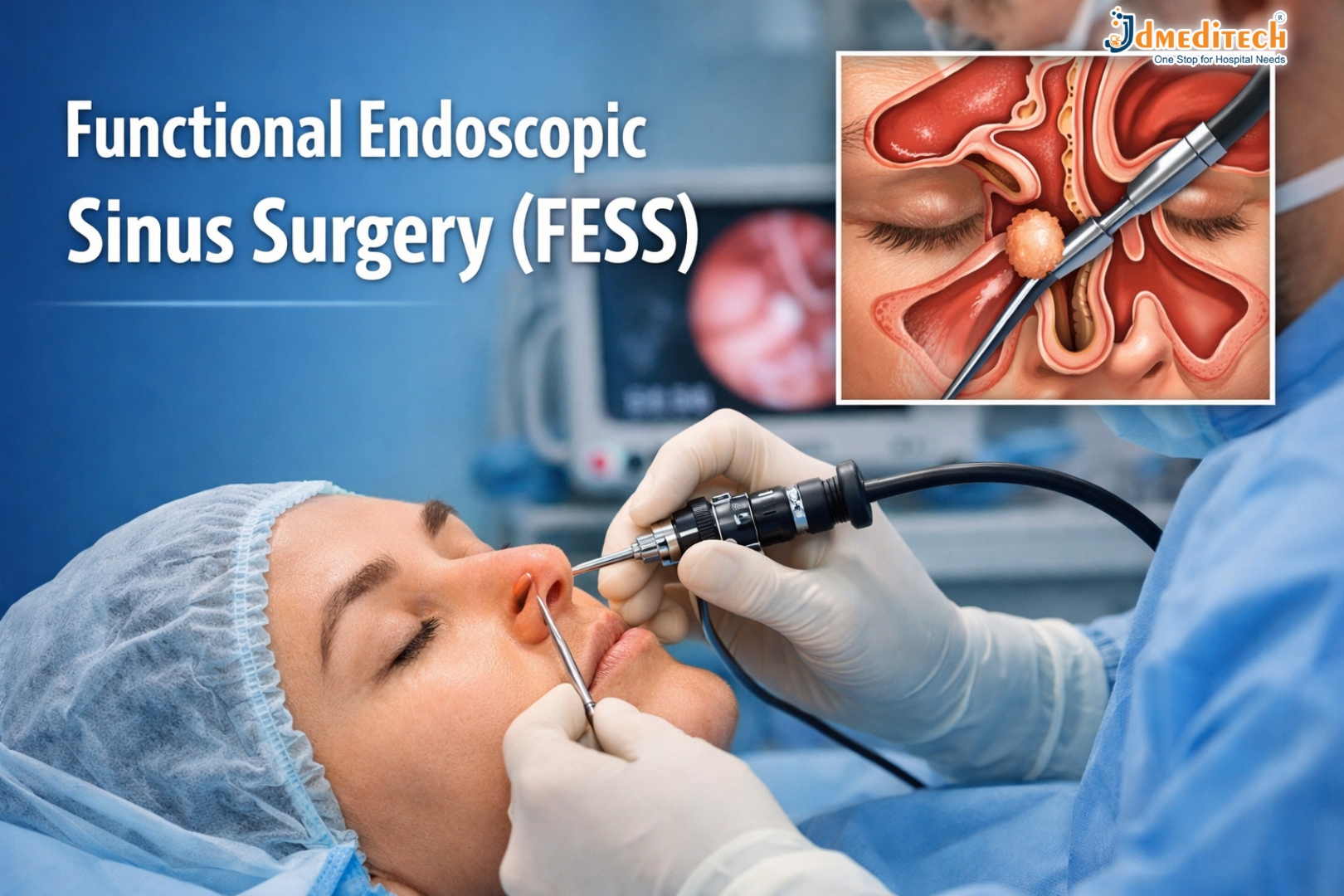
Functional Endoscopic Sinus Surgery (FESS) is a modern surgical technique that uses a thin, flexible endoscope inserted through the nose to treat sinus issues.
Unlike traditional surgery, FESS:
- Does not require external cuts
- Is less painful
- Offers faster recovery
This procedure focuses on restoring the natural function of the sinuses rather than removing large amounts of tissue.
Why is FESS Needed?
Doctors recommend Functional Endoscopic Sinus Surgery when medications fail to treat sinus conditions.
Common Conditions Treated:
- Chronic sinusitis
- Nasal polyps
- Deviated nasal septum (in some cases)
- Sinus infections
- Blocked sinus drainage pathways
- Fungal sinusitis
If you experience persistent nasal congestion, facial pain, or breathing difficulty, FESS may be the right solution.
Functional Endoscopic Sinus Surgery Procedure
The FESS procedure is safe and usually performed under general anesthesia.
Step-by-Step Procedure:
1. Preparation
The patient is given anesthesia to ensure comfort.
2. Endoscope Insertion
A small camera (endoscope) is inserted through the nostrils.
3. Identifying Blockages
The surgeon carefully examines sinus passages.
4. Removing Obstructions
Blocked tissues, polyps, or bone are removed to open sinus pathways.
5. Restoring Drainage
Normal airflow and sinus drainage are restored.
The entire procedure typically takes 1 to 3 hours, depending on the condition.
Benefits of Functional Endoscopic Sinus Surgery
FESS offers several advantages compared to traditional sinus surgery.
Key Benefits:
- Minimally invasive procedure
- No external scars
- Faster recovery time
- Reduced pain and bleeding
- Improved breathing
- Long-term relief from sinus symptoms
As a result, patients often experience a significant improvement in quality of life.
Risks and Complications of FESS
Although Functional Endoscopic Sinus Surgery is generally safe, some risks may occur.
Possible Risks:
- Bleeding
- Infection
- Recurrence of sinus problems
- Damage to surrounding structures (rare)
- Vision-related complications (very rare)
However, choosing an experienced surgeon greatly reduces these risks.
Recovery After Functional Endoscopic Sinus Surgery
Recovery from FESS is usually quick and smooth.
What to Expect:
- Mild discomfort for a few days
- Nasal congestion or slight bleeding
- Return to normal activities within 1–2 weeks
Post-Surgery Care Tips:
- Avoid blowing your nose forcefully
- Use prescribed nasal sprays
- Attend follow-up appointments
- Keep your nasal passages clean
Following proper care ensures faster healing and better results.
Who is a Good Candidate for FESS?
You may be a suitable candidate for Functional Endoscopic Sinus Surgery if:
- You have chronic sinusitis lasting more than 12 weeks
- Medications are not effective
- You have nasal polyps or structural blockage
- You frequently experience sinus infections
Consult an ENT specialist for proper evaluation.
Conclusion
Functional Endoscopic Sinus Surgery (FESS) is a safe, effective, and minimally invasive solution for chronic sinus problems. It helps restore normal sinus function, improves breathing, and enhances overall quality of life.
If you are struggling with long-term sinus issues, consult your doctor to see if FESS is the right option for you.
Get Connected:
+91 79909 93062 | +91 63513 72032 | exports@jdmeditech.com