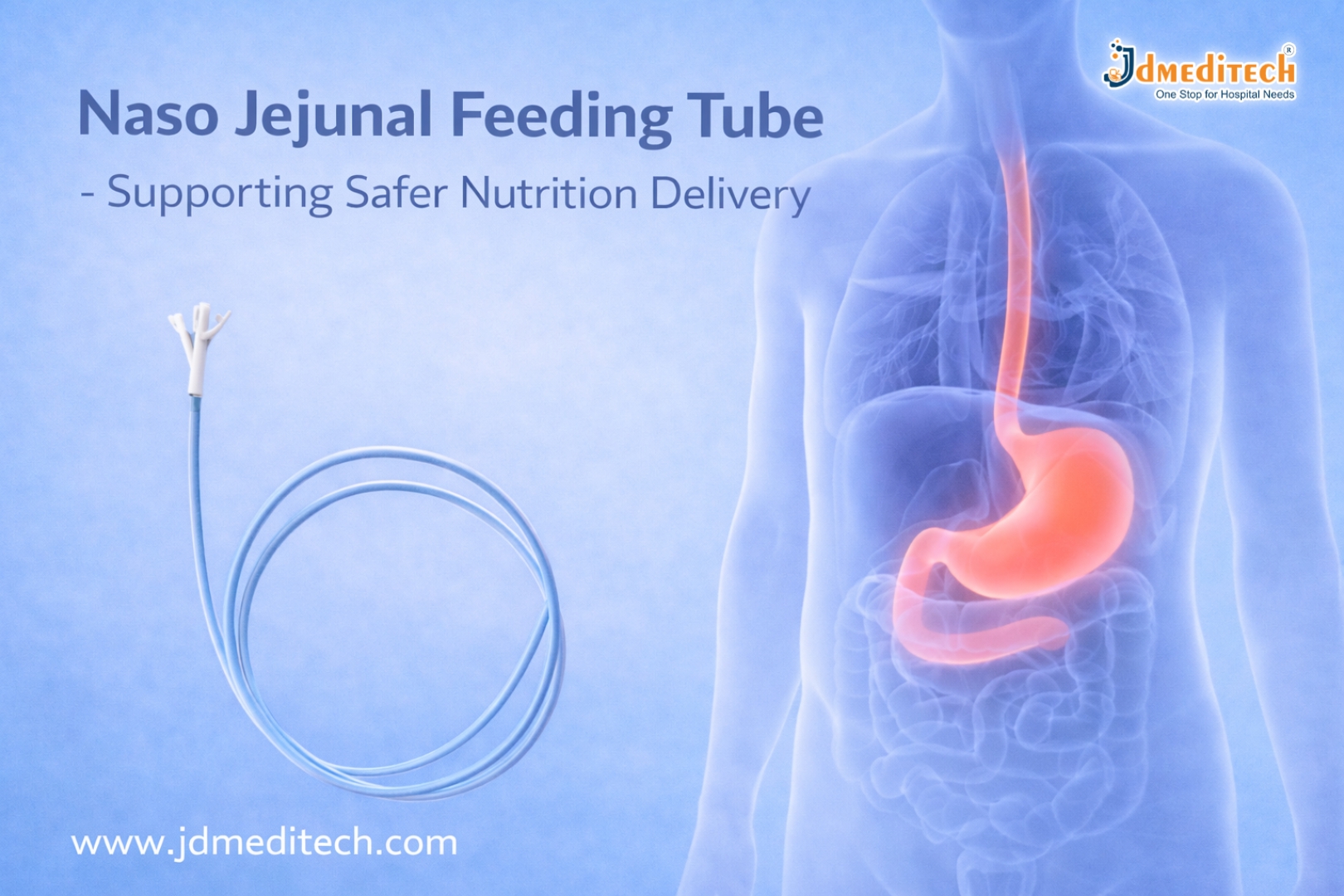
What is a Naso Jejunal Feeding Tube?
A naso jejunal feeding tube is a thin, flexible medical device inserted through the nose and guided into the jejunum (the middle section of the small intestine). Unlike nasogastric tubes, which end in the stomach, this tube bypasses the stomach entirely.
As a result, it is ideal for patients who cannot tolerate gastric feeding due to medical conditions such as severe reflux, pancreatitis, or gastric dysfunction.
Why is a Naso Jejunal Feeding Tube Used?
Doctors recommend a naso jejunal feeding tube when patients need long-term or specialized nutritional support. It is commonly used in the following situations:
- Severe gastrointestinal disorders
- Pancreatitis requiring minimal pancreatic stimulation
- High risk of aspiration
- Delayed gastric emptying (gastroparesis)
- Post-surgical recovery
- Critical care and ICU patients
Because it delivers nutrients directly to the intestine, it reduces the risk of vomiting and aspiration.
Key Benefits of Naso Jejunal Feeding Tube
Using a naso jejunal feeding tube offers several clinical advantages:
1. Safe Nutrition Delivery
It significantly reduces the risk of aspiration pneumonia by bypassing the stomach.
2. Improved Tolerance
Patients who cannot tolerate gastric feeding often respond better to jejunal feeding.
3. Effective Nutrient Absorption
The jejunum allows efficient absorption of nutrients, ensuring optimal patient recovery.
4. Minimally Invasive Procedure
The tube placement is non-surgical and can be performed with imaging guidance.
5. Reliable for Critical Care
It provides consistent and controlled nutrition for ICU and high-risk patients.
Procedure for Naso Jejunal Feeding Tube Placement
The placement of a naso jejunal feeding tube is a carefully monitored medical procedure:
- The tube is inserted through the patient’s nose
- It passes through the esophagus and stomach
- It is guided into the jejunum using fluoroscopy or endoscopy
- Proper placement is confirmed using imaging techniques
This procedure ensures accurate positioning for safe and effective feeding.
Care and Maintenance Tips
Proper care is essential to ensure the effectiveness of a naso jejunal feeding tube:
- Flush the tube regularly to prevent blockages
- Maintain hygiene around the nasal area
- Monitor for signs of displacement
- Use prescribed feeding formulas only
- Follow healthcare provider instructions strictly
Good maintenance helps avoid complications and prolongs the usability of the tube.
Potential Risks and Complications
Although a naso jejunal feeding tube is generally safe, some risks may occur:
- Tube displacement
- Blockage or clogging
- Nasal irritation
- Diarrhea or intolerance to feeding formula
However, proper monitoring and care can significantly reduce these risks.
Naso Jejunal Feeding Tube vs Nasogastric Tube
Understanding the difference helps in choosing the right feeding method:
| Feature | Naso Jejunal Feeding Tube | Nasogastric Tube |
| Placement | Jejunum (small intestine) | Stomach |
| Aspiration Risk | Low | Higher |
| Feeding Tolerance | Better | Moderate |
| Use Case | Critical patients | General feeding |
Conclusion
The naso jejunal feeding tube is a vital medical device that ensures safe, effective, and reliable nutrition delivery for patients who cannot eat normally. Its ability to bypass the stomach makes it particularly useful in critical care and complex medical conditions.
With proper placement, care, and monitoring, this feeding solution significantly improves patient outcomes and recovery.
+91 79909 93062 | +91 63513 72032 | exports@jdmeditech.com