Cardiology Guiding Catheter: Precision Tool for Safe & Effective Coronary Interventions
Introduction
A Cardiology Guiding Catheter is a vital medical device used in interventional cardiology procedures such as angioplasty and stent placement. It provides a stable pathway for delivering guidewires, balloons, and stents into the coronary arteries.
With the increasing demand for minimally invasive cardiac procedures, the importance of a high-quality cardiology guiding catheter has grown significantly. It ensures precision, safety, and efficiency during complex cardiovascular interventions.
What is a Cardiology Guiding Catheter?
A cardiology guiding catheter is a specially designed hollow tube inserted into the vascular system to guide interventional devices to the heart. It is commonly used during:
- Percutaneous Coronary Intervention (PCI)
- Coronary Angiography
- Balloon Angioplasty
- Stent Placement Procedures
The catheter acts as a conduit, enabling smooth device delivery while maintaining optimal control and support.
Key Features of Cardiology Guiding Catheter
1. Excellent Torque Control (High Torque Response)
A high-quality cardiology guiding catheter offers excellent torque control, allowing precise navigation through complex vascular pathways.
2. Optimal Backup Support
It provides strong backup support, which is essential for advancing devices in challenging coronary anatomies.
3. Smooth Inner Lumen
The catheter features a smooth inner surface for frictionless device movement.
4. Soft Atraumatic Tip
Designed to minimize vessel trauma, ensuring patient safety.
5. Kink Resistance
Prevents bending or kinking during procedures, maintaining consistent performance.
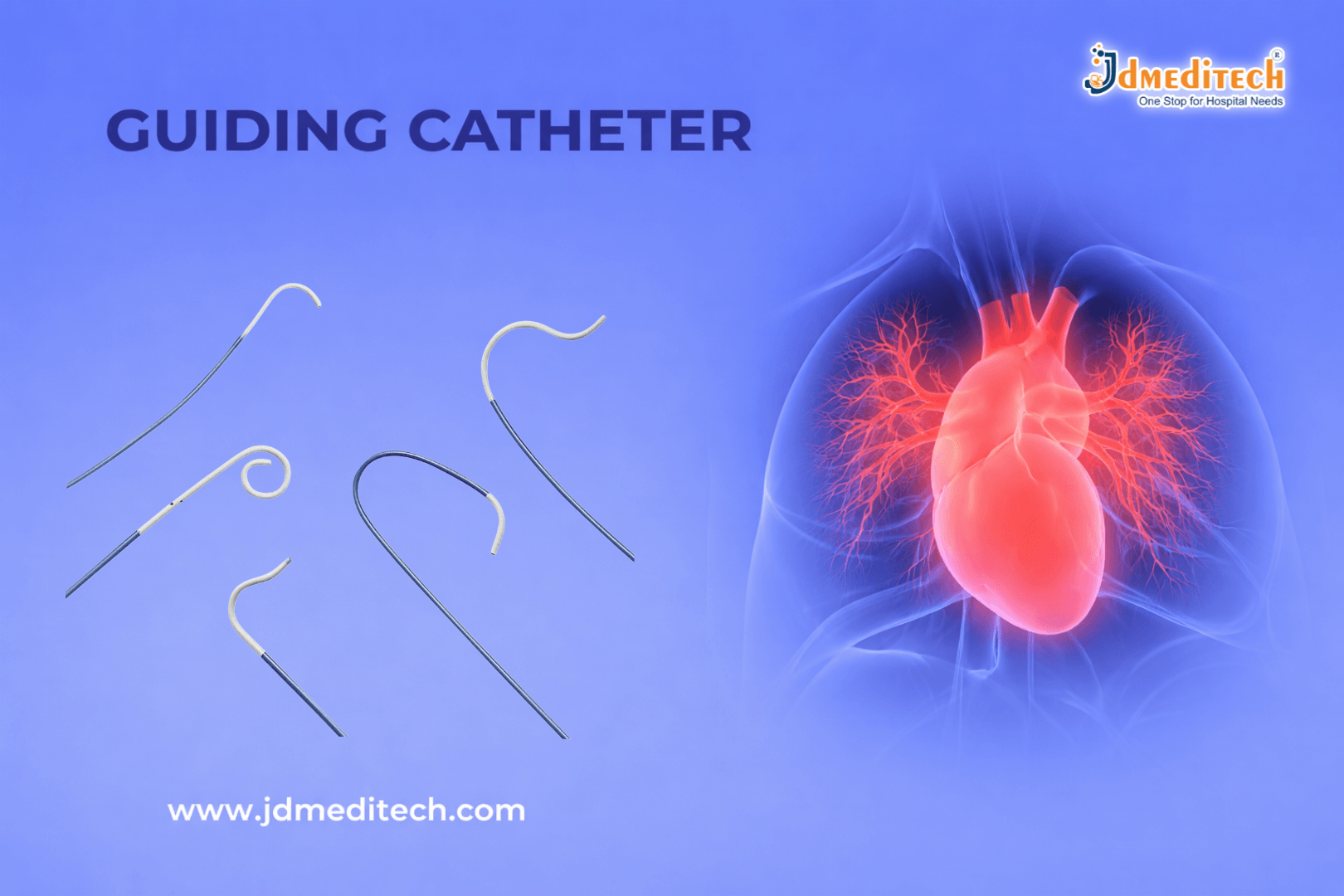
Types of Cardiology Guiding Catheters
Different procedures require different catheter shapes and designs:
- Judkins Left (JL) Guiding Catheter
- Judkins Right (JR) Guiding Catheter
- Amplatz Left (AL) Guiding Catheter
- Amplatz Right (AR) Guiding Catheter
- Extra Backup (EBU) Catheter
Each type of cardiology guiding catheter is tailored for specific coronary artery access and support.
Applications in Cardiology Procedures
The cardiology guiding catheter plays a crucial role in:
- Coronary Angioplasty (PCI)
- Chronic Total Occlusion (CTO) Procedures
- Bifurcation Lesion Treatment
- Drug-Eluting Stent Placement
- Diagnostic and Interventional Cardiology
Benefits of Using Cardiology Guiding Catheter
✔ Enhanced Procedural Accuracy
Improves precision during device delivery.
✔ Reduced Procedure Time
Efficient navigation reduces overall operation time.
✔ Improved Patient Safety
Minimizes trauma and complications.
✔ Versatility
Suitable for a wide range of cardiac procedures.
Material & Design Considerations
A high-performance cardiology guiding catheter is made from advanced medical-grade materials such as:
- Polyurethane or Nylon blends
- Stainless steel braid reinforcement
- Hydrophilic coating for smooth insertion
These materials ensure durability, flexibility, and optimal performance.
How to Choose the Right Cardiology Guiding Catheter
Selecting the right cardiology guiding catheter depends on:
- Patient anatomy
- Type of procedure
- Required support level
- Operator preference
Choosing the correct catheter enhances procedural success and reduces risks.
Why Quality Matters in Cardiology Guiding Catheter
Using a premium cardiology guiding catheter ensures:
- Better control during procedures
- Reduced complications
- Higher success rates in interventions
Inferior-quality catheters can compromise both performance and patient safety.
Conclusion
The Cardiology Guiding Catheter is an indispensable tool in modern interventional cardiology. Its role in ensuring precision, safety, and efficiency makes it a cornerstone of successful cardiac procedures.
As cardiovascular diseases continue to rise, investing in high-quality cardiology guiding catheters is essential for delivering optimal patient outcomes.
Get Connected:
+91 79909 93062 | +91 63513 72032 | exports@jdmeditech.com