



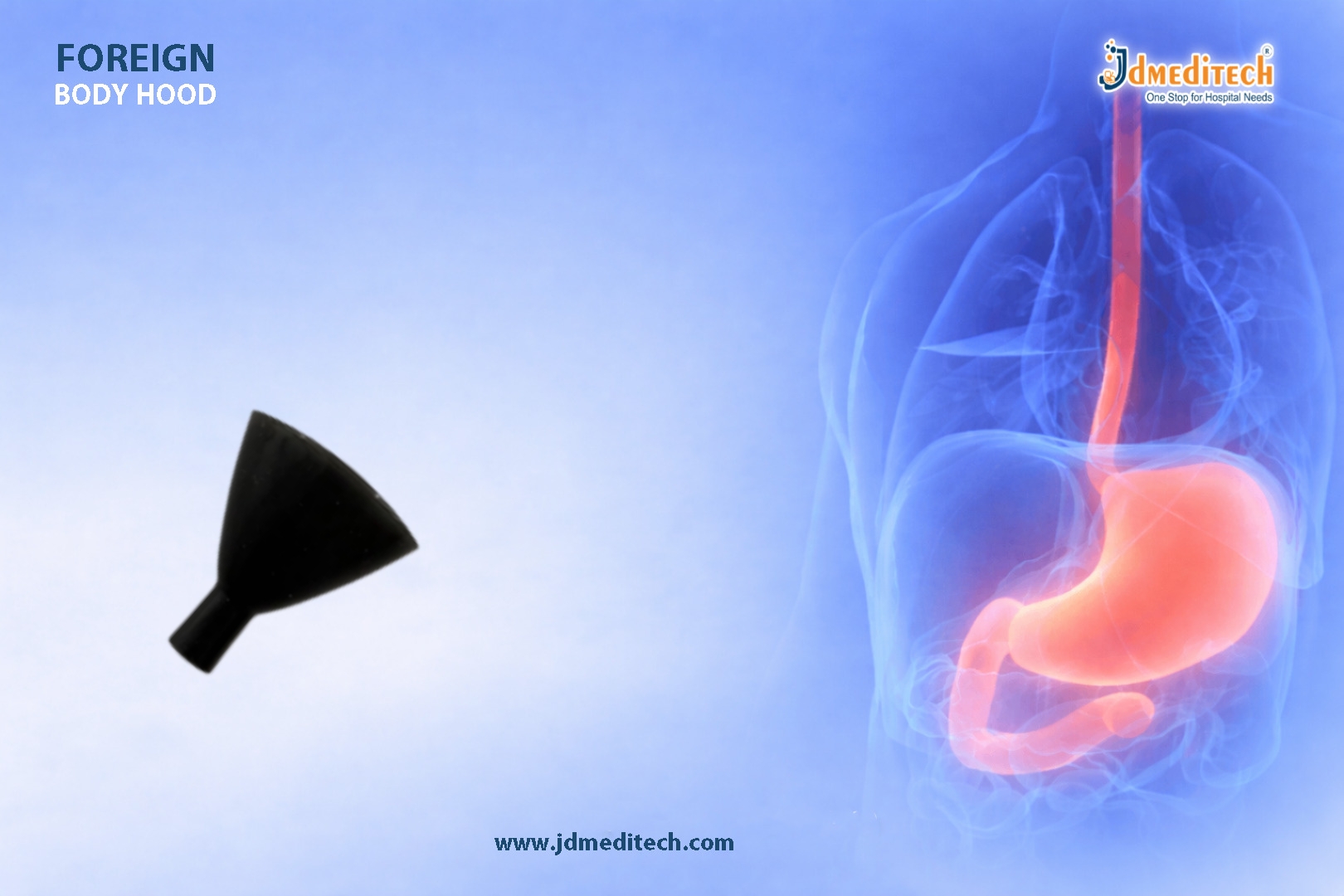
Endoscopic procedures play a vital role in diagnosing and treating gastrointestinal (GI) conditions. However, foreign body retrieval remains one of the most delicate and risk-prone tasks in endoscopy. This is where the Foreign Body Hood in Endoscopic Procedures becomes an essential accessory, ensuring safe, controlled, and efficient removal of ingested or impacted objects.
In modern GI practice, a foreign body hood enhances visualization, protects mucosal surfaces, and significantly reduces procedural complications. As a result, it has become a must-have tool for gastroenterologists performing therapeutic endoscopy.
What is a Foreign Body Hood in Endoscopic Procedures?
A Foreign Body Hood in Endoscopic Procedures is a transparent distal attachment (cap) fitted onto the tip of an endoscope. It is specifically designed to facilitate the safe retrieval of foreign objects such as coins, bones, food boluses, dentures, or sharp items from the gastrointestinal tract.
Because of its clear and ergonomic design, the hood improves visibility while creating a protective barrier between the foreign object and the mucosal lining.
Why is a Foreign Body Hood Important?
Foreign body removal can lead to complications like mucosal tears, bleeding, or perforation if not handled properly. Therefore, using a foreign body hood in endoscopic procedures offers several clinical advantages:
- Enhanced Safety : Protects the GI mucosa during extraction
- Improved Visualization : Transparent design allows clear endoscopic view
- Better Control : Helps stabilize and guide the foreign object
- Reduced Trauma : Minimizes injury caused by sharp or irregular objects
- Efficient Retrieval : Speeds up the procedure and improves success rates
Key Features of Foreign Body Hood in Endoscopic Procedures
1. Transparent Medical-Grade Material
The hood is made from high-quality, clear material that ensures unobstructed visualization during the procedure.
2. Smooth Edges for Safety
Rounded and polished edges help prevent mucosal injury, even during complex retrieval cases.
3. Secure Fit on Endoscope Tip
Designed to fit snugly on various endoscopes, ensuring stable attachment without slipping.
4. Multiple Size Options
Available in different diameters to accommodate various endoscope models and clinical needs.
5. Disposable or Reusable Variants
Depending on the clinical setup, both single-use and reusable options are available.
Applications in Endoscopic Procedures
The foreign body hood in endoscopic procedures is widely used across multiple clinical scenarios:
- Esophageal Foreign Body Removal
- Gastric Object Retrieval
- Food Bolus Impaction Management
- Sharp Object Extraction (bones, pins, needles)
- Pediatric Endoscopy Cases
Because of its versatility, it is commonly used in emergency endoscopy as well as planned therapeutic procedures.
How Does a Foreign Body Hood Work?
The working mechanism of a foreign body hood in endoscopic procedures is simple yet highly effective:
- The hood is attached to the distal end of the endoscope.
- The endoscope is inserted into the GI tract to locate the foreign object.
- The hood helps enclose or stabilize the object.
- Retrieval tools such as forceps, baskets, or snares are used.
- The hood protects surrounding tissues during extraction.
As a result, the procedure becomes safer, smoother, and more controlled.
Benefits of Using Foreign Body Hood in Endoscopic Procedures
Using a foreign body hood in endoscopic procedures provides multiple advantages:
- Minimizes risk of perforation
- Reduces procedure time
- Enhances endoscopic precision
- Improves patient safety and comfort
- Supports successful retrieval in difficult cases
Moreover, it significantly improves outcomes in complex and high-risk retrieval procedures.
Choosing the Right Foreign Body Hood
When selecting a foreign body hood in endoscopic procedures, consider the following factors:
- Compatibility with endoscope size
- Type of foreign body (sharp, blunt, large)
- Procedure type (emergency or elective)
- Material quality and transparency
- Sterility and disposability
Choosing the right hood ensures optimal performance and safety.
Best Practices for Safe Use
To maximize the effectiveness of a foreign body hood in endoscopic procedures, follow these best practices:
- Always ensure proper attachment before insertion
- Select the appropriate hood size
- Combine with suitable retrieval devices
- Maintain clear visualization throughout the procedure
- Follow sterilization protocols (if reusable)
These steps help achieve safe and complication-free outcomes.
Conclusion
The Foreign Body Hood in Endoscopic Procedures is a simple yet powerful tool that transforms the safety and efficiency of foreign body retrieval. By improving visualization, reducing trauma, and enhancing control, it plays a crucial role in modern GI endoscopy.
For healthcare providers aiming to deliver high-quality patient care, incorporating a reliable foreign body hood is essential. It not only ensures safer procedures but also boosts clinical confidence and success rates.
Get Connected:
+91 79909 93062 | +91 63513 72032 | exports@jdmeditech.com




