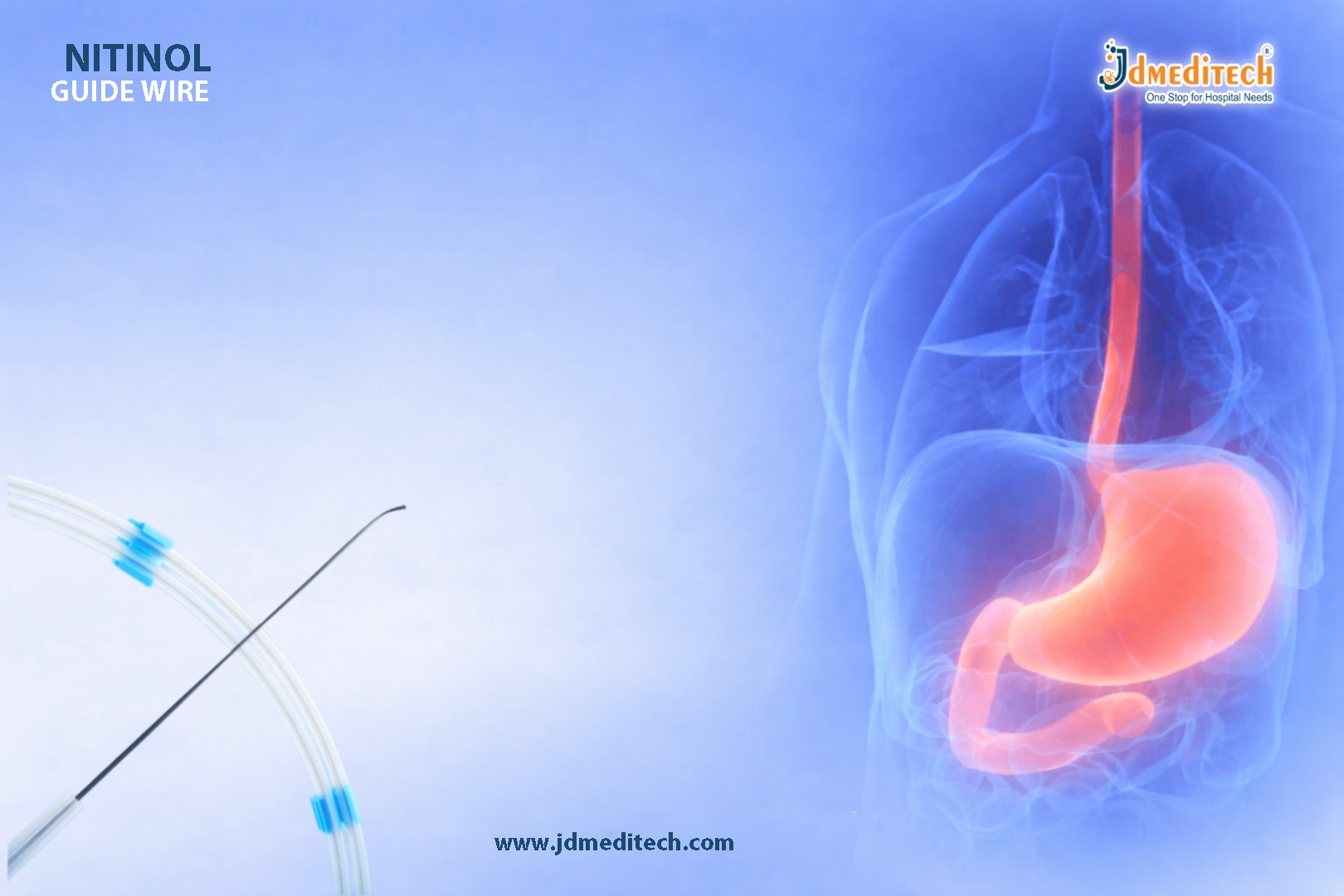
In modern gastrointestinal procedures, precision and control are essential for successful outcomes. Among the most critical tools that support these goals are Nitinol Guide Wires in Endoscopy. These advanced devices provide exceptional flexibility, strength, and navigation capabilities.
Moreover, as endoscopic techniques continue to evolve, the demand for high-performance guide wires has increased significantly. Therefore, Nitinol guide wires have become the preferred choice for gastroenterologists worldwide.
What Are Nitinol Guide Wires?
Nitinol guide wires are specialized medical devices made from a unique alloy of nickel and titanium. This material, known as Nitinol, offers remarkable properties such as shape memory and superelasticity.
As a result, these guide wires can easily navigate through complex anatomical pathways while maintaining their original shape. In addition, their flexibility ensures minimal trauma during insertion.
Key Features of Nitinol Guide Wires in Endoscopy
1. Superior Flexibility and Elasticity
Nitinol guide wires can bend significantly without breaking. Consequently, they are ideal for navigating tortuous GI tracts.
2. Shape Memory Effect
Even after deformation, the wire returns to its original shape. Therefore, it ensures consistent performance during procedures.
3. High Torque Control
Physicians can precisely control the wire’s movement. As a result, this improves procedural accuracy.
4. Kink Resistance
Unlike traditional wires, Nitinol guide wires resist kinking. This ensures uninterrupted access and smooth device delivery.
5. Hydrophilic Coating Options
Many Nitinol guide wires come with hydrophilic coatings. Thus, they reduce friction and enhance maneuverability.
Applications in Endoscopic Procedures
1. ERCP (Endoscopic Retrograde Cholangiopancreatography)
Nitinol guide wires are widely used for biliary and pancreatic duct access. They help in accurate cannulation and stent placement.
2. Esophageal Dilation
These wires guide dilation devices safely through strictures. Consequently, they reduce procedural complications.
3. Gastrointestinal Stenting
Nitinol guide wires support precise placement of self-expanding stents in the GI tract.
4. Foreign Body Removal
They assist in guiding retrieval tools during complex endoscopic interventions.
Advantages Over Conventional Guide Wires
Compared to stainless steel guide wires, Nitinol Guide Wires in Endoscopy offer several advantages:
- Greater flexibility for complex anatomy
- Reduced risk of perforation
- Enhanced durability and longevity
- Improved patient safety
- Better procedural success rates
Furthermore, these benefits contribute to shorter procedure times and improved patient outcomes.
Why Nitinol Guide Wires Improve GI Access
Efficient GI access is critical in endoscopy. Nitinol guide wires play a vital role by:
- Providing smooth navigation through narrow pathways
- Maintaining stability during device exchange
- Enhancing control for precise interventions
Therefore, they significantly improve both clinical efficiency and safety.
Choosing the Right Nitinol Guide Wire
When selecting a guide wire, consider the following factors:
- Diameter and length based on procedure type
- Tip configuration (straight, angled, or J-tip)
- Coating type (hydrophilic or PTFE)
- Stiffness level for support vs flexibility
By choosing the correct specifications, clinicians can achieve optimal results.
Safety Considerations
Although Nitinol guide wires are highly reliable, proper handling is essential. For instance:
- Avoid excessive force during insertion
- Use fluoroscopic guidance when necessary
- Ensure compatibility with other devices
Thus, adherence to best practices ensures maximum safety.
Future Trends in Guide Wire Technology
The future of Nitinol Guide Wires in Endoscopy looks promising. Innovations include:
- Enhanced coating technologies
- Improved tip designs for atraumatic access
- Integration with advanced imaging systems
As a result, these advancements will further improve procedural precision.
Conclusion
In conclusion, Nitinol Guide Wires in Endoscopy have revolutionized gastrointestinal procedures by offering unmatched flexibility, durability, and control. Moreover, they enable safe and efficient GI access, which is essential for successful outcomes.
Therefore, investing in high-quality Nitinol guide wires is crucial for modern endoscopy practices.
Get Connected:
+91 79909 93062 | +91 63513 72032 | exports@jdmeditech.com