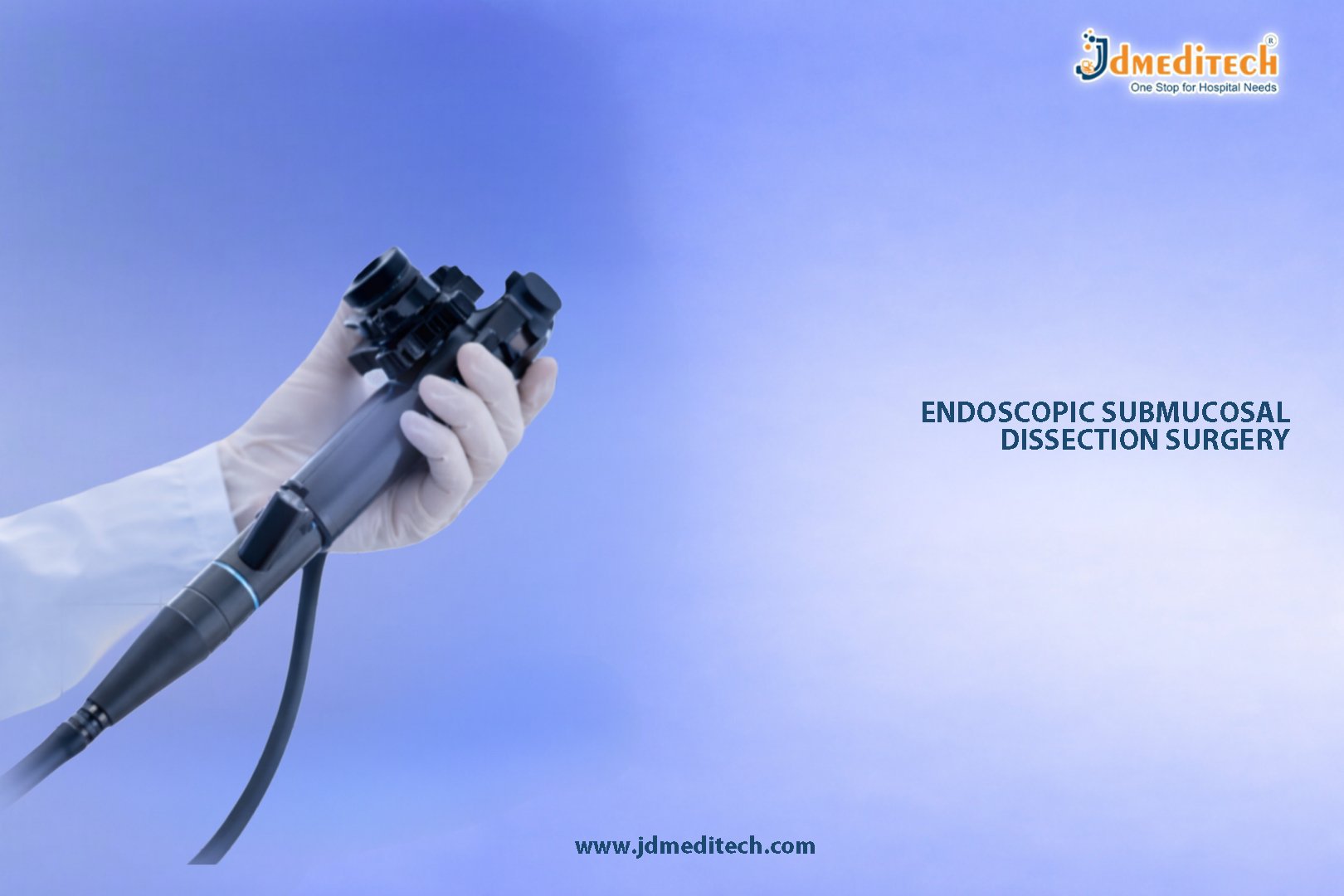
Endoscopic Submucosal Dissection is transforming how doctors treat early-stage gastrointestinal cancers. Unlike traditional surgery, Endoscopic Submucosal Dissection allows precise removal of cancerous tissue without major incisions. As a result, patients experience faster recovery, minimal pain, and improved outcomes.
Today, Endoscopic Submucosal Dissection is widely used in advanced gastroenterology centers for treating early cancers of the esophagus, stomach, and colon.
What is Endoscopic Submucosal Dissection?
Endoscopic Submucosal Dissection is a minimally invasive endoscopic procedure used to remove early-stage tumors from the gastrointestinal (GI) tract. During Endoscopic Submucosal Dissection, a flexible endoscope equipped with specialized instruments is inserted through the mouth or rectum.
Then, the surgeon carefully dissects the submucosal layer to remove the lesion in one piece (en bloc resection). Because of this precision, Endoscopic Submucosal Dissection ensures accurate diagnosis and reduces recurrence risk.
Why Endoscopic Submucosal Dissection is Important
There are several reasons why Endoscopic Submucosal Dissection is considered a breakthrough:
- Enables early cancer removal without open surgery
- Preserves healthy surrounding tissue
- Provides higher curative rates
- Reduces hospital stay and recovery time
- Minimizes complications compared to traditional surgery
Therefore, Endoscopic Submucosal Dissection plays a crucial role in improving survival rates in GI cancer patients.
Indications for Endoscopic Submucosal Dissection
Doctors recommend Endoscopic Submucosal Dissection for:
- Early gastric cancer
- Esophageal cancer (superficial lesions)
- Colorectal tumors and polyps
- Precancerous lesions (dysplasia)
- Large or flat lesions unsuitable for conventional removal
In these cases, Endoscopic Submucosal Dissection offers a safe and effective treatment alternative.
Procedure of Endoscopic Submucosal Dissection
The Endoscopic Submucosal Dissection procedure involves several key steps:
1. Lesion Marking
First, the doctor marks the boundaries of the lesion.
2. Injection
A solution is injected beneath the lesion to lift it away from deeper layers.
3. Incision
Next, a precise incision is made around the lesion.
4. Submucosal Dissection
The lesion is carefully dissected and removed in one piece.
5. Hemostasis
Finally, bleeding is controlled using advanced endoscopic tools.
Because of these steps, Endoscopic Submucosal Dissection ensures precise and complete tumor removal.
Advantages of Endoscopic Submucosal Dissection
Compared to traditional methods, Endoscopic Submucosal Dissection offers:
- Minimally invasive approach
- No external scars
- Shorter hospital stay
- Faster recovery time
- Lower recurrence rates
- Accurate pathological evaluation
Thus, Endoscopic Submucosal Dissection significantly improves patient quality of life.
Risks and Complications
Although Endoscopic Submucosal Dissection is safe, some risks may include:
- Bleeding
- Perforation of the GI tract
- Infection
- Stricture formation
However, with experienced specialists, Endoscopic Submucosal Dissection complications are rare and manageable.
Recovery After Endoscopic Submucosal Dissection
Recovery after Endoscopic Submucosal Dissection is usually quick. Patients may:
- Resume normal activities within a few days
- Follow a soft or liquid diet initially
- Attend regular follow-ups
Because it is minimally invasive, Endoscopic Submucosal Dissection ensures faster healing compared to conventional surgery.
Future of Endoscopic Submucosal Dissection
The future of Endoscopic Submucosal Dissection is promising. With continuous advancements in endoscopic tools and techniques, Endoscopic Submucosal Dissection is becoming more accessible worldwide.
Moreover, innovations in imaging and AI-assisted diagnosis are enhancing the accuracy and safety of Endoscopic Submucosal Dissection procedures.
Conclusion
In conclusion, Endoscopic Submucosal Dissection is a revolutionary technique in the treatment of early GI cancers. By combining precision, safety, and effectiveness, Endoscopic Submucosal Dissection has become a preferred choice for both patients and healthcare professionals.
If detected early, GI cancers can be successfully treated using Endoscopic Submucosal Dissection, making it a true breakthrough in modern medicine.
Get Connected:
+91 79909 93062 | +91 63513 72032 | exports@jdmeditech.com