Endoscopic Mucosal Resection (EMR) Surgery is a minimally invasive procedure used to remove early-stage lesions from the gastrointestinal tract. In modern gastroenterology, Endoscopic Mucosal Resection (EMR) Surgery helps doctors treat abnormal tissues without open surgery. As a result, patients benefit from quicker recovery and fewer complications.
Moreover, Endoscopic Mucosal Resection (EMR) Surgery allows both diagnosis and treatment in a single session. Therefore, it has become a preferred choice for managing early GI cancers and precancerous lesions.
What is Endoscopic Mucosal Resection (EMR) Surgery?
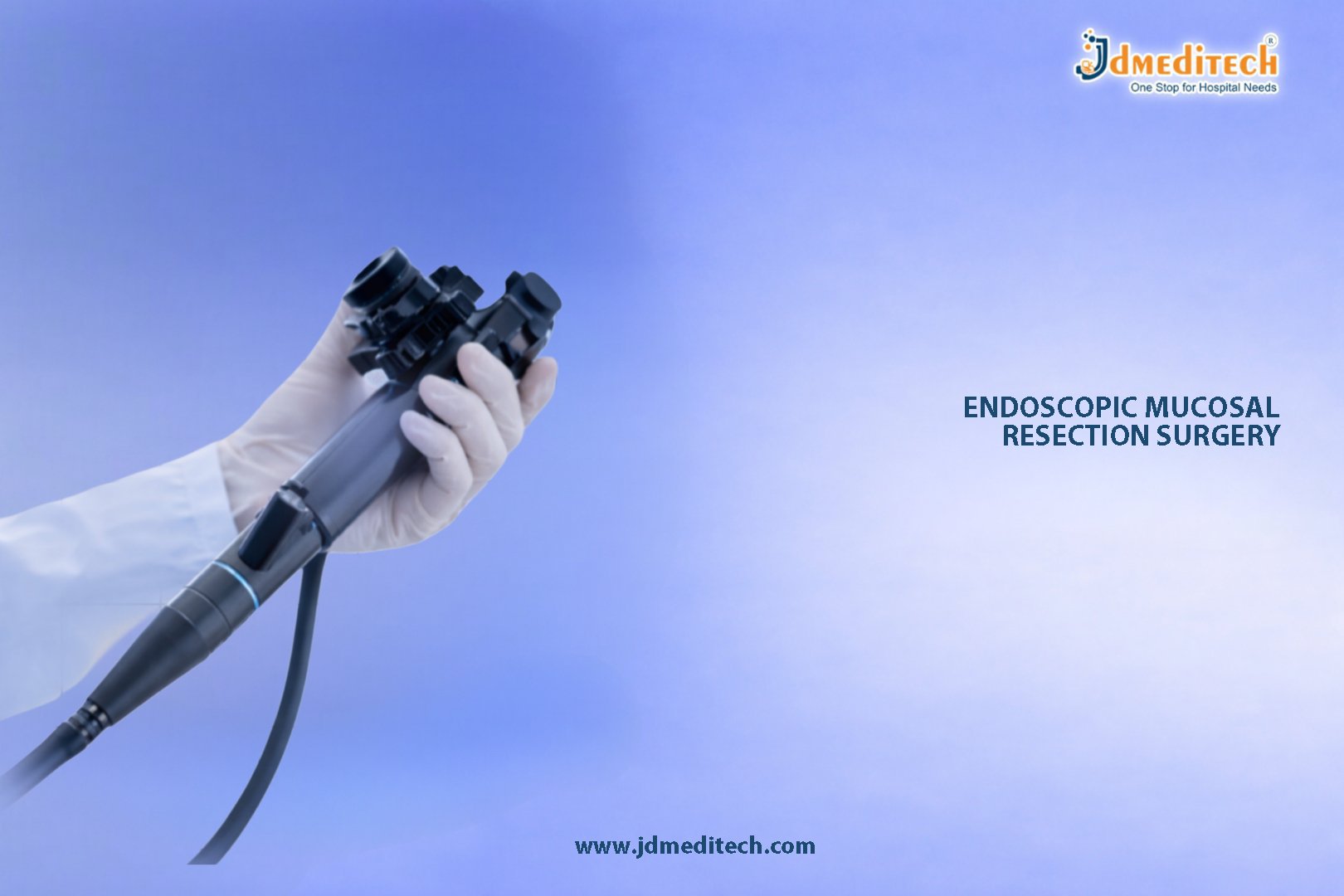
Endoscopic Mucosal Resection (EMR) Surgery is an advanced endoscopic technique designed to remove superficial lesions from the mucosal layer. During Endoscopic Mucosal Resection (EMR) Surgery, a flexible endoscope is inserted through the mouth or rectum to reach the target area.
After that, a special fluid is injected beneath the lesion to lift it safely. Then, the lesion is captured and removed using a snare. Because Endoscopic Mucosal Resection (EMR) Surgery targets only the surface layer, it reduces damage to deeper tissues.
Indications for Endoscopic Mucosal Resection (EMR) Surgery
Doctors recommend Endoscopic Mucosal Resection (EMR) Surgery for several conditions. These include:
- Early esophageal cancer
- Gastric polyps and early stomach tumors
- Colorectal adenomas and polyps
- Barrett’s esophagus with dysplasia
- Other superficial GI lesions
In such cases, Endoscopic Mucosal Resection (EMR) Surgery provides an effective and organ-preserving solution.
Procedure Steps
The process of Endoscopic Mucosal Resection (EMR) Surgery involves multiple stages. First, the patient receives sedation for comfort. Then, the endoscope is guided carefully to the lesion site.
Next, a lifting solution is injected beneath the lesion. This step is essential because it separates the lesion from deeper layers. Afterward, a snare is used to remove the targeted tissue precisely.
Finally, the extracted sample is sent for laboratory analysis. In this way, Endoscopic Mucosal Resection (EMR) Surgery ensures both accurate diagnosis and treatment.
Benefits of Endoscopic Mucosal Resection (EMR) Surgery
There are several advantages of Endoscopic Mucosal Resection (EMR) Surgery. For example:
- Minimally invasive technique
- Faster recovery time
- Short hospital stay
- Lower complication risk
- Preservation of GI organs
- Precise tissue removal
Because of these benefits, Endoscopic Mucosal Resection (EMR) Surgery is widely used across hospitals and endoscopy centers.
Risks and Safety Considerations
Although Endoscopic Mucosal Resection (EMR) Surgery is considered safe, some risks may occur. These include bleeding, perforation, or infection. However, skilled specialists can manage such complications effectively.
In addition, proper patient selection further improves the success rate of Endoscopic Mucosal Resection (EMR) Surgery.
Recovery and Aftercare
After Endoscopic Mucosal Resection (EMR) Surgery, patients are observed for a short time. Most patients can return home within a day. However, doctors usually recommend a soft diet initially.
Furthermore, follow-up endoscopy may be required to monitor healing. With proper care, recovery after Endoscopic Mucosal Resection (EMR) Surgery is smooth and quick.
Importance of Quality Endoscopic Equipment
High-quality instruments are essential for successful Endoscopic Mucosal Resection (EMR) Surgery. Devices such as endoscopes, snares, and electrosurgical units ensure precision and safety.
Conclusion
Endoscopic Mucosal Resection (EMR) Surgery is a reliable and effective method for removing early GI lesions. It combines diagnosis and treatment in a single minimally invasive procedure.
As technology continues to evolve, Endoscopic Mucosal Resection (EMR) Surgery will play an even greater role in improving patient outcomes. Therefore, it remains a key technique in modern gastrointestinal care.
Get Connected:
+91 79909 93062 | +91 63513 72032 | exports@jdmeditech.com