Biliary obstruction can lead to serious complications such as jaundice, cholangitis, biliary sepsis, and liver dysfunction if not treated promptly. In many cases, temporary drainage of the biliary system is necessary to relieve pressure, restore bile flow, and improve patient outcomes. A Naso Biliary Drainage Set provides a reliable and minimally invasive solution for short-term biliary decompression and monitoring.
Widely used during endoscopic procedures, particularly Endoscopic Retrograde Cholangiopancreatography (ERCP), nasobiliary drainage systems allow physicians to effectively manage biliary obstruction while monitoring bile output and assessing treatment progress.
What Is a Naso Biliary Drainage Set?
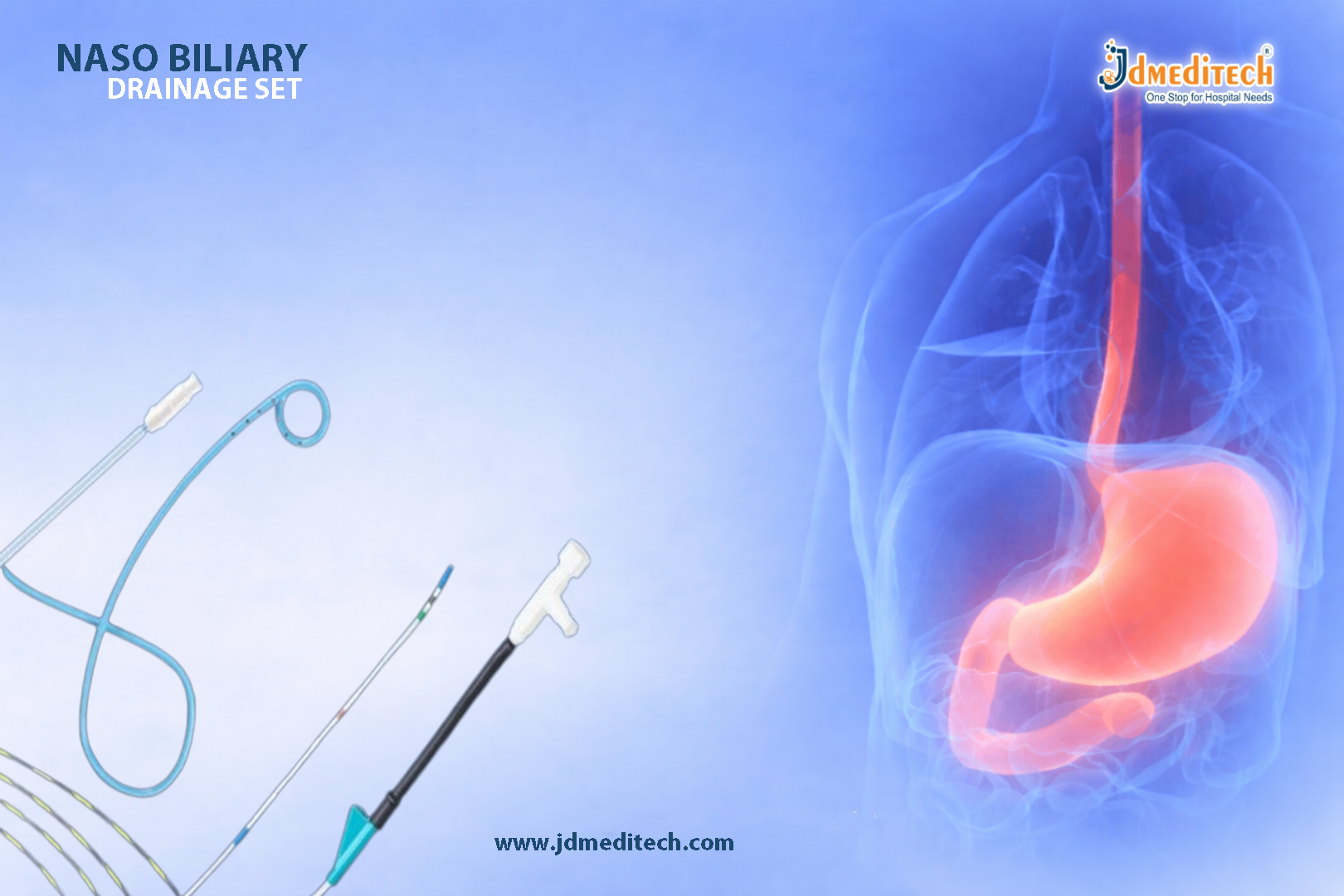
A Naso Biliary Drainage Set is a specialized medical device designed to provide temporary external drainage of bile from the biliary tract through the nose. The drainage catheter is positioned within the bile duct and exits through the nasal passage, allowing continuous bile drainage and monitoring.
The system is commonly utilized following ERCP procedures or in patients requiring temporary biliary decompression before definitive treatment.
Purpose of a Naso Biliary Drainage Set
The primary purpose of the drainage set is to:
- Relieve biliary obstruction
- Decompress the biliary system
- Drain infected bile
- Monitor bile output
- Facilitate cholangiographic evaluation
- Reduce the risk of biliary infection and complications
Why Temporary Biliary Drainage Is Important
Biliary obstruction can occur due to various benign and malignant conditions affecting normal bile flow from the liver to the intestine.
Common Causes of Biliary Obstruction
- Common bile duct stones
- Cholangiocarcinoma
- Pancreatic cancer
- Biliary strictures
- Post-surgical complications
- Biliary infections
- Hepatobiliary malignancies
Temporary drainage helps stabilize patients and improves liver function before additional interventions are performed.
Components of a Naso Biliary Drainage Set
A complete Naso Biliary Drainage Set contains several components that work together to provide effective drainage and patient comfort.
Naso Biliary Drainage Catheter
The drainage catheter serves as the primary conduit for bile drainage.
Key features include:
- Soft, flexible construction
- Multiple side holes for efficient drainage
- Kink-resistant design
- Radiopaque markers for fluoroscopic visualization
Guidewire
The guidewire assists in accurate placement of the drainage catheter within the biliary system.
Benefits include:
- Smooth navigation
- Enhanced procedural control
- Improved placement accuracy
Connecting Tube
The connecting tube links the drainage catheter to the external collection system.
Features include:
- Secure connections
- Leak-resistant design
- Flexible tubing for patient comfort
Drainage Collection Bag
The collection bag allows healthcare providers to monitor bile output and assess drainage effectiveness.
Advantages include:
- Easy volume measurement
- Secure fluid containment
- Reduced contamination risk
Fixation Accessories
Fixation devices help secure the catheter and prevent accidental displacement during patient movement.
Clinical Applications of Naso Biliary Drainage Sets
Naso biliary drainage systems are used in a variety of diagnostic and therapeutic procedures.
Acute Cholangitis Management
The drainage set helps remove infected bile and relieve obstruction, reducing the risk of severe infection.
Common Bile Duct Stones
Temporary drainage may be required when complete stone removal cannot be achieved during the initial ERCP procedure.
Malignant Biliary Obstruction
Patients with pancreatic cancer, cholangiocarcinoma, or other hepatobiliary malignancies may require temporary biliary decompression.
Post-ERCP Biliary Drainage
The device is often placed after ERCP to ensure adequate bile flow and monitor recovery.
Biliary Leak Management
External drainage can help manage postoperative biliary leaks and reduce complications.
Benefits of Using a Naso Biliary Drainage Set
Healthcare professionals prefer nasobiliary drainage systems because they offer several clinical advantages.
Effective Temporary Decompression
The system rapidly relieves pressure within the biliary tract and restores bile drainage.
Continuous Monitoring
External drainage allows clinicians to evaluate bile output, color, and quality in real time.
Easy Cholangiography Access
Contrast studies can be performed through the catheter without requiring repeat biliary access procedures.
Reduced Infection Risk
Prompt drainage of infected bile helps lower the risk of sepsis and other complications.
Minimally Invasive Approach
The procedure avoids the need for more invasive surgical interventions in many patients.
Features to Consider When Selecting a Naso Biliary Drainage Set
Choosing a high-quality drainage system is essential for procedural success and patient comfort.
Flexible Catheter Design
Soft and atraumatic materials improve patient tolerance and reduce discomfort.
Multiple Drainage Side Holes
Multiple side holes help maximize drainage efficiency and prevent blockage.
Radiopaque Markers
Markers improve visibility under fluoroscopy and assist with accurate placement.
Secure Connection System
Reliable connectors minimize leakage and maintain effective drainage.
Sterile Packaging
Single-use sterile packaging supports infection control protocols and patient safety.
Best Practices for Naso Biliary Drainage Procedures
Proper technique and patient management contribute to successful outcomes.
Accurate Catheter Placement
Fluoroscopic guidance helps ensure proper positioning within the biliary tree.
Regular Drainage Monitoring
Routine assessment of bile output helps identify potential complications early.
Catheter Care and Maintenance
Proper flushing and handling reduce the risk of catheter occlusion.
Patient Education
Patients should be instructed on catheter care and precautions to prevent accidental displacement.
Growing Demand for Naso Biliary Drainage Solutions
The increasing prevalence of biliary diseases, gastrointestinal disorders, and hepatobiliary cancers has contributed to growing demand for minimally invasive drainage technologies. Hospitals, gastroenterology centers, and endoscopy units continue to adopt advanced Naso Biliary Drainage Sets that improve procedural efficiency and patient outcomes.
Manufacturers are increasingly focusing on catheter flexibility, drainage efficiency, and patient comfort to meet evolving clinical requirements.
Conclusion
A Naso Biliary Drainage Set is an effective temporary biliary decompression solution that plays a crucial role in the management of biliary obstruction, cholangitis, bile duct stones, and post-ERCP care. By providing reliable drainage, continuous monitoring, and minimally invasive treatment, these systems help healthcare professionals improve patient outcomes while reducing procedure-related complications.
For hospitals, endoscopy centers, and gastroenterology specialists, investing in high-quality Naso Biliary Drainage Sets ensures safer procedures, greater clinical efficiency, and enhanced patient care.
Get Connected:
+91 79909 93062 | +91 63513 72032 | exports@jdmeditech.com