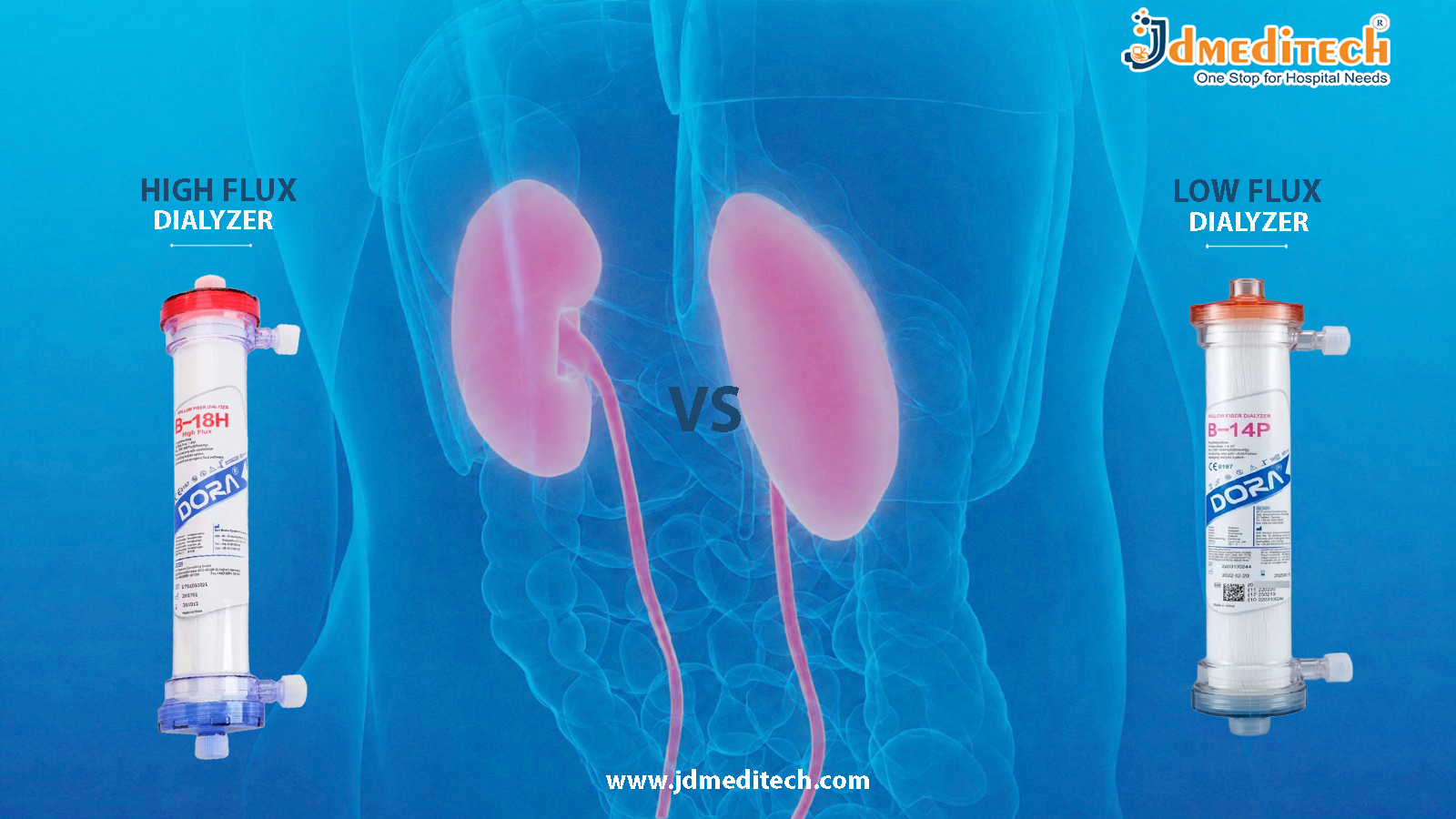
What is a High-Flux Dialyzer?
A High-Flux Dialyzer is designed with a highly permeable membrane that removes both small and middle-molecular-weight toxins more efficiently. As a result, it provides enhanced blood purification during hemodialysis. Moreover, it supports better fluid management and improved dialysis performance. Therefore, High-Flux Dialyzers are widely used for long-term dialysis treatment.
What is a Low-Flux Dialyzer?
A Low-Flux Dialyzer uses a membrane with lower permeability. Although it effectively removes small waste molecules such as urea and creatinine, it limits the clearance of larger toxins. Nevertheless, it remains a reliable option for routine dialysis treatments. Consequently, many dialysis centers continue to use Low-Flux Dialyzers for stable patients.
Key Benefits of a High-Flux Dialyzer
High-Flux Dialyzers offer several clinical advantages. Furthermore, they improve the removal of middle molecules that may accumulate over time. In addition, they support better fluid control and treatment efficiency. As a result, they are often preferred for patients receiving long-term hemodialysis.
Advantages
- Efficient middle-molecule removal
- Better dialysis efficiency
- Improved fluid management
- Enhanced patient comfort
- Suitable for long-term treatment
Key Benefits of a Low-Flux Dialyzer
Low-Flux Dialyzers continue to play an important role in routine dialysis care. Likewise, they provide reliable removal of small waste molecules while supporting standard treatment protocols. Moreover, they are cost-effective and widely available. Therefore, they remain an excellent option for many dialysis patients.
Advantages
- Effective removal of urea and creatinine
- Reliable dialysis performance
- Cost-effective solution
- Suitable for routine treatments
- Widely available
How to Choose the Right Dialyzer
Choosing the correct dialyzer depends on the patient’s clinical condition and treatment goals. First, healthcare professionals evaluate kidney function and dialysis requirements. Next, they consider toxin clearance and fluid removal needs. Finally, they select the dialyzer that best supports the patient’s treatment plan. Ultimately, the right choice improves dialysis efficiency and patient outcomes.
Choose a High-Flux Dialyzer if:
- Enhanced toxin removal is required.
- Long-term hemodialysis is planned.
- Better middle-molecule clearance is needed.
- High-efficiency dialysis is preferred.
Choose a Low-Flux Dialyzer if:
- Routine dialysis treatment is sufficient.
- Standard toxin removal meets clinical needs.
- Cost-effective dialysis is preferred.
- The patient has stable dialysis requirements.
Applications
Both High-Flux and Low-Flux Dialyzers are widely used in dialysis centers. However, each type serves different treatment goals. For example, High-Flux Dialyzers are commonly selected for advanced dialysis therapy. In contrast, Low-Flux Dialyzers are frequently used for standard hemodialysis. Therefore, selecting the appropriate dialyzer depends on the patient’s medical condition.
Conclusion
Both High-Flux Dialyzers and Low-Flux Dialyzers are essential for effective hemodialysis. However, they differ in membrane permeability and toxin removal capabilities. While High-Flux Dialyzers provide superior clearance of larger molecules, Low-Flux Dialyzers continue to deliver reliable routine dialysis treatment. Therefore, understanding these differences helps healthcare professionals make informed decisions. Ultimately, choosing the right dialyzer improves treatment efficiency, enhances patient safety, and supports better long-term outcomes.
Get Connected:
+91 79909 93062 | +91 63513 72032 | exports@jdmeditech.com