Biliary stents are essential devices used to treat blocked bile ducts. They restore the normal flow of bile from the liver to the small intestine, helping relieve jaundice, reduce infection risk, and improve liver function.
Today, physicians primarily choose between biliary plastic stents and biliary metal stents. Although both are designed to maintain bile duct patency, they differ in material, durability, cost, and clinical application.
Therefore, selecting the right stent depends on the patient’s condition, expected treatment duration, and long-term management plan.
What Is a Biliary Stent?
A biliary stent is a small hollow tube that is inserted into the bile duct during an ERCP procedure or through a percutaneous approach. Once in place, it keeps the blocked duct open and allows bile to flow freely into the intestine.
As a result, biliary stents help relieve symptoms and prevent complications caused by bile duct obstruction.
Common conditions treated with biliary stents
- Malignant biliary obstruction
- Benign biliary strictures
- Common bile duct stones
- Cholangitis
- Bile leaks after surgery
- Pancreatic cancer
- Cholangiocarcinoma
- Chronic pancreatitis
Types of Biliary Stents
There are two primary types of biliary stents used in modern gastroenterology.
Biliary Plastic Stents
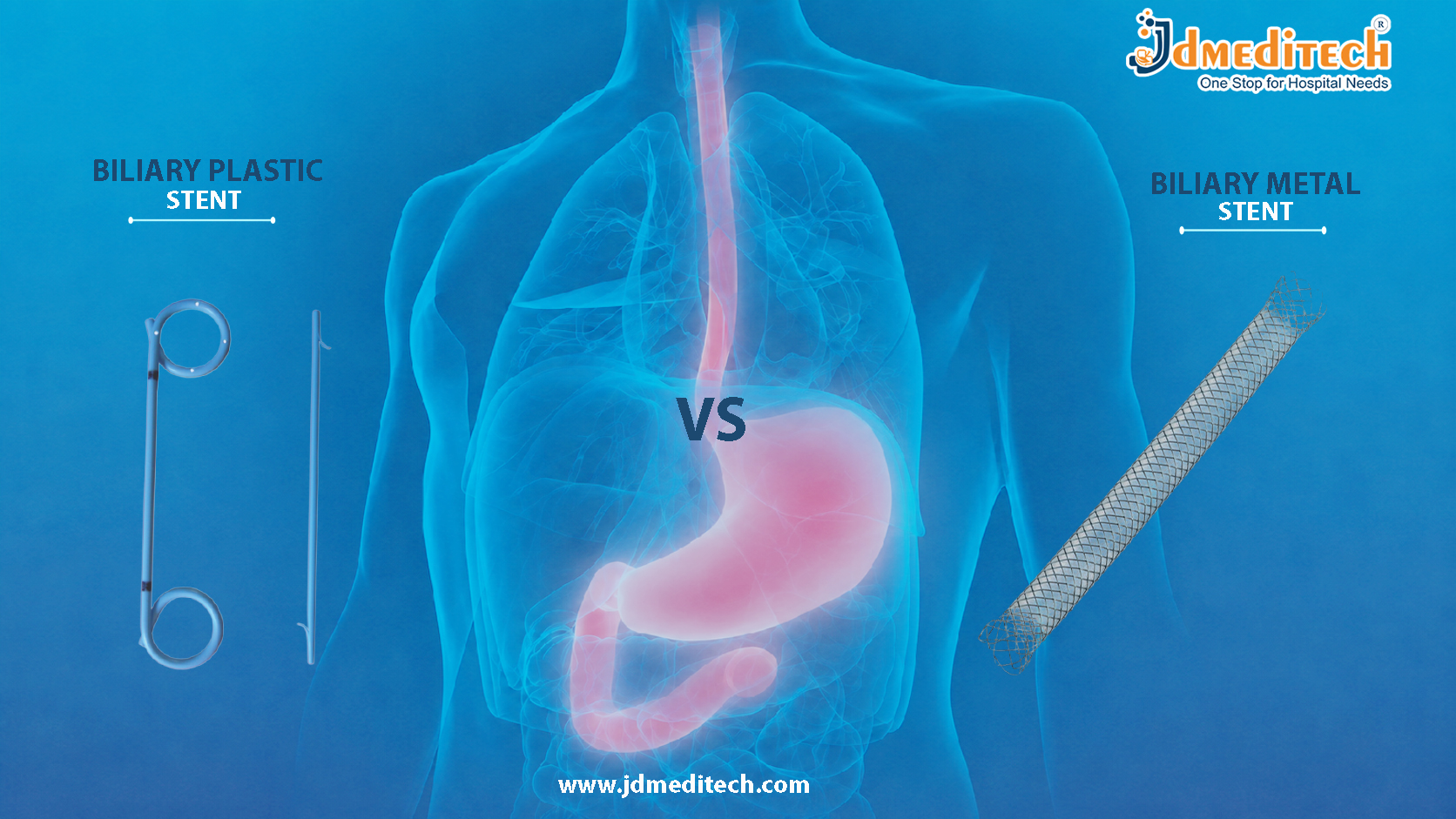
Plastic stents are made from medical-grade polyethylene or polyurethane. They are available in different diameters and lengths, making them suitable for a wide range of clinical situations.
Biliary Metal Stents
Metal stents are usually self-expanding devices manufactured from nitinol or stainless steel. After deployment, they expand automatically to provide a wider drainage channel.
Biliary Plastic Stent vs Biliary Metal Stent
| Feature | Plastic Stent | Metal Stent |
| Material | Polyethylene or Polyurethane | Nitinol or Stainless Steel |
| Diameter | Small | Large after expansion |
| Patency | 3–6 months | 6–12 months or longer |
| Cost | Lower | Higher |
| Replacement | Frequent | Less frequent |
| Removal | Easy | Covered stents removable; uncovered usually permanent |
| Occlusion Risk | Higher | Lower |
| Best Application | Benign disease | Malignant obstruction |
Understanding Biliary Plastic Stents
Plastic biliary stents have been used successfully for many years. They are often selected for temporary drainage because they are economical and easy to replace.
Advantages of plastic biliary stents
- Lower initial treatment cost
- Easy placement during ERCP
- Simple removal and replacement
- Suitable for temporary drainage
- Available in multiple sizes
- Ideal for benign biliary disease
Because they are affordable, plastic stents remain widely used in hospitals around the world.
Limitations of plastic biliary stents
Despite their advantages, plastic stents also have certain limitations.
- Shorter lifespan
- Higher risk of blockage
- More biofilm formation
- Increased sludge accumulation
- Frequent replacement procedures
Consequently, patients often require repeat ERCP procedures every three to six months.
Understanding Biliary Metal Stents
Metal biliary stents are designed for long-term drainage. Their self-expanding design provides a much larger internal diameter than plastic stents.
Therefore, they are commonly used in patients with malignant biliary obstruction.
Advantages of biliary metal stents
- Longer stent patency
- Better bile drainage
- Lower blockage rate
- Reduced hospital visits
- Fewer repeat ERCP procedures
- Improved patient comfort
Since these stents remain functional for a longer period, they reduce the need for repeated interventions.
Limitations of biliary metal stents
Although metal stents offer many benefits, they also have some disadvantages.
- Higher initial cost
- Uncovered stents are difficult to remove
- Not always suitable for benign disease
- Possible tissue ingrowth in uncovered models
Therefore, physicians carefully evaluate each patient’s condition before selecting a metal stent.
When Should You Choose a Plastic Biliary Stent?
Plastic stents are generally recommended when temporary drainage is required.
Common indications
- Benign biliary strictures
- Common bile duct stones
- Acute cholangitis
- Bile leaks
- Patients awaiting surgery
- Short-term biliary drainage
In these situations, easy removal becomes a significant advantage.
When Should You Choose a Metal Biliary Stent?
Metal stents are usually selected for patients who require durable and long-lasting biliary drainage.
Common indications
- Pancreatic cancer
- Cholangiocarcinoma
- Malignant biliary obstruction
- Unresectable tumors
- Long-term palliative treatment
Because they remain patent for a longer period, metal stents significantly reduce the number of repeat procedures.
Covered vs Uncovered Metal Stents
Metal stents are available in two different designs.
Covered metal stents
Covered stents prevent tissue from growing into the mesh.
Advantages include:
- Easier removal
- Less tissue ingrowth
- Better for selected benign strictures
However, they have a slightly higher migration rate.
Uncovered metal stents
Uncovered stents allow tissue to grow into the mesh, improving fixation.
Advantages include:
- Excellent stability
- Lower migration risk
- Long-term placement
However, they are generally considered permanent.
Possible Complications of Biliary Stents
Although biliary stents are highly effective, complications can occasionally occur.
Common complications
- Stent blockage
- Cholangitis
- Pancreatitis
- Stent migration
- Bleeding
- Perforation
- Bile leakage
- Biofilm formation
Fortunately, regular follow-up and timely stent replacement greatly reduce these risks.
Factors That Influence Stent Selection
Several important factors determine which biliary stent should be used.
Physicians consider
- Benign or malignant disease
- Expected patient survival
- Cost considerations
- Planned surgery
- Need for future ERCP procedures
- Risk of recurrent obstruction
As a result, treatment decisions are always individualized.
Plastic Stent vs Metal Stent: Which Offers Better Long-Term Value?
Plastic stents cost less initially. However, they require more frequent replacements.
Metal stents are more expensive at first. Nevertheless, they usually provide longer patency, fewer hospital visits, and fewer ERCP procedures.
Therefore, metal stents often become the more cost-effective option for patients with malignant biliary obstruction.
Future Developments in Biliary Stent Technology
Biliary drainage technology continues to improve every year.
New innovations include
- Drug-eluting biliary stents
- Anti-biofilm coatings
- Anti-migration designs
- Fully covered removable SEMS
- Biodegradable biliary stents
- Improved delivery systems
These advancements aim to improve patient outcomes while reducing complications.
Conclusion
Both biliary plastic stents and biliary metal stents play an important role in treating biliary obstruction.
Plastic stents are ideal for temporary drainage, benign strictures, and patients who may require future interventions. In contrast, metal stents provide superior long-term drainage, lower occlusion rates, and fewer replacement procedures for malignant disease.
Ultimately, the best choice depends on the patient’s diagnosis, treatment goals, and expected duration of biliary drainage. Careful evaluation helps physicians select the most effective stent for each clinical situation.
+91 79909 93062 | +91 63513 72032 | exports@jdmeditech.com