



Introduction
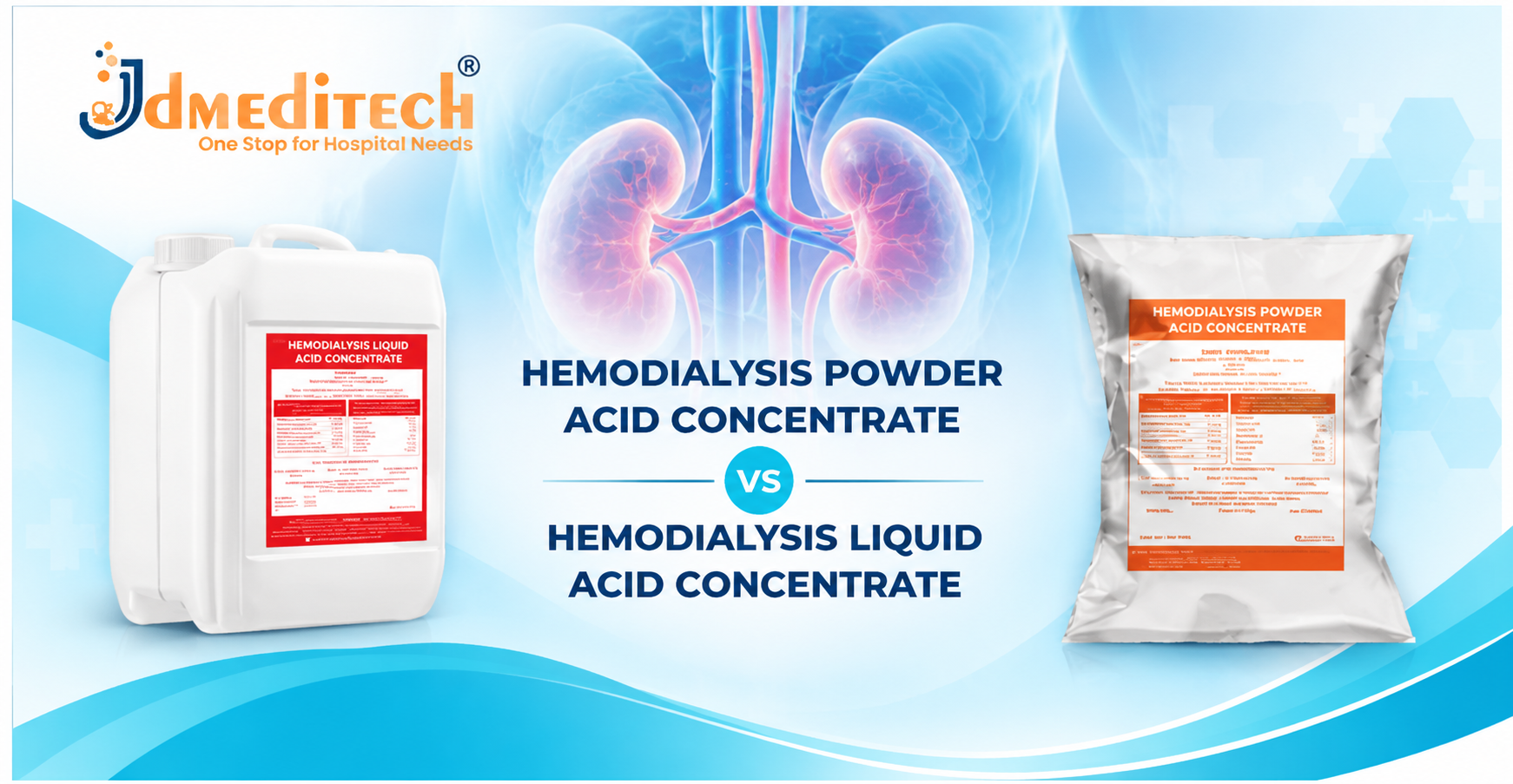
The Hemodialysis Powder Acid Concentrate vs Liquid Acid Concentrate comparison helps dialysis centers, hospitals, and medical distributors select suitable dialysis supplies. Both types provide the acid component needed to prepare dialysate. However, they differ in form, preparation, packaging, storage, and transport.
Therefore, healthcare teams should compare their needs before choosing a product. At JDMeditech, we offer dialysis products and supplies for hospitals, healthcare institutions, and international distributors.
What Is Hemodialysis Powder Acid Concentrate?
Hemodialysis Powder Acid Concentrate comes in dry form. It supplies ingredients for the acid component of dialysis fluid. Before use, trained staff must dissolve the powder in suitably treated dialysis water. They must also follow the manufacturer’s instructions.
After correct preparation and quality checks, staff can use the resulting acid concentrate with compatible dialysis systems and the prescribed bicarbonate concentrate.
Key Features of Powder Acid Concentrate
- Comes in dry form for preparation before use
- May reduce shipping weight compared with equivalent liquid volumes
- Needs suitable mixing equipment
- Requires verified water quality and mixing steps
- Offers packaging options based on the formulation
- Suits facilities with safe concentrate preparation systems
Applications of Powder Acid Concentrate
For example, facilities may use powder acid concentrate in:
- Hospital dialysis departments
- Hemodialysis centers
- Renal care facilities
- Dialysis concentrate preparation systems
- Compatible hemodialysis treatment equipment
However, the exact preparation method depends on the approved formulation and product instructions.
What Is Hemodialysis Liquid Acid Concentrate?
Hemodialysis Liquid Acid Concentrate comes as a concentrated liquid solution. It contains specified electrolytes and acid components for dialysis fluid preparation.
During treatment, compatible dialysis equipment combines the prescribed acid concentrate, bicarbonate concentrate, and treated water in the required proportions. Therefore, staff do not need to dissolve dry acid powder on site. Nevertheless, they must still check the mixing ratio and system settings.
Key Features of Liquid Acid Concentrate
- Comes in concentrated liquid form
- Does not require dry-powder dissolution
- Offers containers suited to specific formulations
- Works with compatible hemodialysis machines
- Supports established dialysis fluid preparation routines
- Needs proper storage and handling
Applications of Liquid Acid Concentrate
Similarly, healthcare teams use compatible liquid acid concentrate in:
- Hemodialysis centers
- Hospitals and renal departments
- Dialysis treatment facilities
- Compatible dialysate proportioning systems
- Routine hemodialysis operations
Hemodialysis Powder Acid Concentrate vs Liquid Acid Concentrate: Key Differences
Both types support dialysate preparation. However, their handling and preparation needs differ. The table below shows the main differences.
| Feature | Powder Acid Concentrate | Liquid Acid Concentrate |
|---|---|---|
| Physical form | Dry powder or dry components | Concentrated liquid |
| Preparation | Needs reconstitution | Comes in liquid concentrate form |
| Transportation | May reduce shipping weight | Includes liquid weight |
| Storage | Needs protection from moisture | Needs suitable liquid storage |
| Mixing equipment | Needs a suitable reconstitution system | Needs a compatible proportioning system |
| Handling | Requires preparation and mixing | Requires liquid container handling |
| Quality checks | Staff check the prepared concentrate | Staff check the product and system before use |
| Clinical purpose | Dialysate preparation | Dialysate preparation |
In either case, healthcare teams must confirm product specifications and machine compatibility.
How Do Hemodialysis Acid Concentrates Work?
Hemodialysis acid concentrate forms one part of dialysate preparation. First, staff select the correct acid and bicarbonate concentrates. Next, they confirm the dialysis system settings and treated water quality. Then, a compatible dialysis system combines the components in prescribed proportions.
As a result, the system prepares dialysate with the required electrolyte composition. However, the final composition depends on the selected formulation and clinical prescription.
Important: Never infuse acid concentrate directly. Staff must follow the full dialysis fluid preparation process and approved safety checks.
Benefits of Hemodialysis Powder Acid Concentrate
1. Transportation Efficiency
First, dry concentrate may reduce shipping weight and volume compared with an equivalent amount of prepared liquid concentrate. Therefore, it may offer transport benefits.
2. Storage Considerations
In addition, powder packaging may simplify storage planning at facilities with suitable dry storage conditions. However, staff must protect the product from moisture.
3. Bulk Procurement
For example, facilities that prepare large quantities of dialysis concentrate may consider powder formulations. Nevertheless, they must have suitable equipment and procedures.
4. Operational Flexibility
Finally, facilities with approved preparation equipment can consider powder concentrate within their established dialysis workflows.
Benefits of Hemodialysis Liquid Acid Concentrate
1. Convenient Preparation
First, liquid concentrate removes the extra step of dissolving dry acid powder. As a result, staff can avoid powder reconstitution.
2. Established Workflow
Also, dialysis centers can use compatible liquid concentrates within their approved fluid preparation routines.
3. Reduced On-Site Mixing
Furthermore, liquid concentrate already comes in liquid form. Therefore, staff do not need to prepare it from dry powder.
4. Suitable Packaging Options
Finally, manufacturers may offer liquid concentrate in containers that suit compatible dialysis handling systems.
How to Choose the Right Hemodialysis Acid Concentrate
Choosing between powder and liquid acid concentrate depends on each facility’s clinical and daily needs. First, confirm the prescribed electrolyte formula. Next, check dialysis machine compatibility and the approved mixing ratio.
In addition, review these points:
- Water treatment system availability
- On-site mixing equipment and staff training
- Storage and transport needs
- Product shelf life and label information
- Applicable quality and regulatory documents
Ultimately, neither type is always better. Instead, select the product that matches the prescribed dialysate and approved equipment setup.
Safety and Quality Considerations
Above all, staff must follow the manufacturer’s instructions and facility safety procedures. Before use, they should check the formula, product identity, water quality, mixing ratio, and final dialysate values.
Otherwise, an incorrect product or mixing process may cause serious electrolyte and acid-base problems. In addition, ISO 23500-4 addresses concentrates for hemodialysis and related therapies.
JDMeditech Dialysis Products
JDMeditech offers dialysis medical devices and supplies for hospitals, renal care centers, healthcare institutions, and international distributors. Furthermore, our team supports product inquiries and international supply requests.
For available formulations, packaging details, product specifications, and quotations, contact our team. Visit www.jdmeditech.com.
Frequently Asked Questions
1. What is the difference between powder and liquid acid concentrate?
Powder acid concentrate needs reconstitution before use. In contrast, liquid acid concentrate comes in concentrated liquid form. However, both require correct preparation and proportioning to produce prescribed dialysate.
2. Is powder acid concentrate more economical?
It may reduce shipping costs. However, total costs also depend on storage, mixing equipment, treated water, labor, and product price.
3. Can powder and liquid acid concentrates be used interchangeably?
Not automatically. Instead, staff must confirm the formula, equipment compatibility, and approved preparation instructions for each product.
4. Does liquid acid concentrate require dilution?
Yes. A compatible dialysis system generally proportions liquid acid concentrate with bicarbonate concentrate and treated water. Therefore, staff must not use it directly as final dialysate.
5. Which type suits large dialysis centers?
Either type may suit a large center. However, the best option depends on its equipment, preparation capacity, storage space, and daily workflow.
6. Where can I inquire about JDMeditech dialysis products?
Hospitals and international medical distributors can visit www.jdmeditech.com for product information and quotations.
Conclusion
The Hemodialysis Powder Acid Concentrate vs Liquid Acid Concentrate comparison shows key differences in preparation, transport, storage, and handling. On one hand, powder concentrate may offer shipping benefits for facilities with suitable mixing systems. On the other hand, liquid concentrate avoids dry-powder dissolution.
Therefore, healthcare teams should choose based on the prescribed formula, equipment compatibility, and approved product instructions. Contact JDMeditech for dialysis supplies, concentrate information, and international business inquiries.
Medical Disclaimer: This article provides general educational and product information. Always follow approved product labeling, dialysis facility procedures, and qualified medical guidance.




