



Introduction
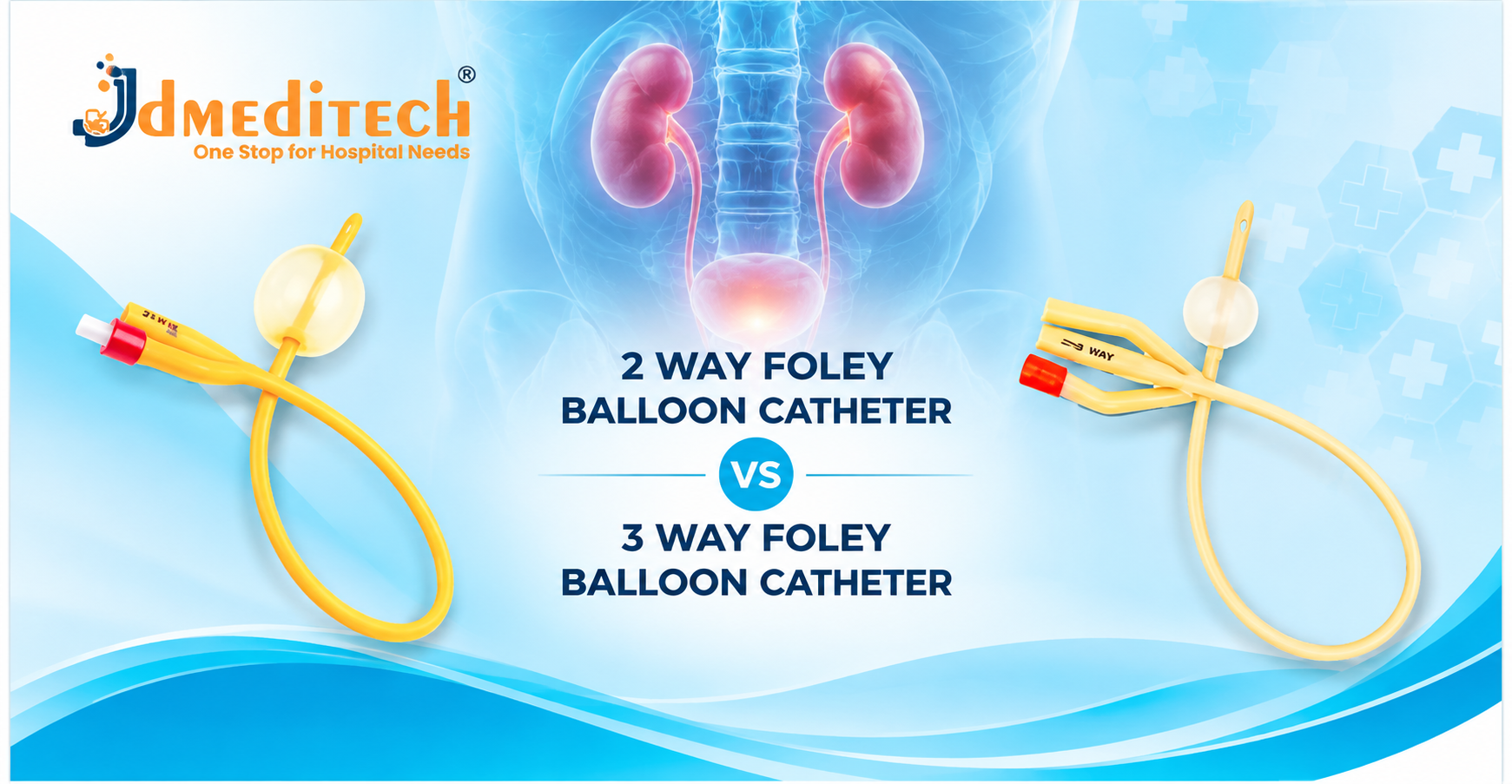
The 2 Way vs 3 Way Foley Balloon Catheter comparison helps healthcare professionals understand two common urinary drainage devices.
Both catheters drain urine from the bladder. However, they have different numbers of channels and serve different clinical needs.
A 2 Way Foley Catheter supports routine urinary drainage. In contrast, a 3 Way Foley Catheter provides an additional channel for bladder irrigation.
Therefore, choosing the right catheter depends on the patient’s condition and treatment requirements.
JDMeditech offers urology medical devices and accessories for hospitals, healthcare institutions, and international medical distributors.
What Is a 2 Way Foley Balloon Catheter?
A 2 Way Foley Balloon Catheter is a flexible urinary catheter with two separate channels, also called lumens.
The first channel drains urine from the bladder. Meanwhile, the second channel allows a healthcare professional to inflate or deflate the retention balloon.
The balloon helps keep the catheter in position after correct placement.
Key Features of a 2 Way Foley Catheter
- Two separate channels
- One channel for urine drainage
- One channel for balloon inflation
- Flexible catheter construction
- Different sizes and material options
- Suitable for prescribed urinary drainage
Applications of a 2 Way Foley Catheter
Healthcare professionals may use a 2 Way Foley Catheter for:
- Urinary retention management
- Routine bladder drainage
- Selected postoperative care
- Urine output monitoring
- Short-term or long-term catheterization when clinically indicated
In addition, healthcare teams may select different catheter materials based on patient needs.
What Is a 3 Way Foley Balloon Catheter?
A 3 Way Foley Balloon Catheter includes three separate channels.
The first channel drains urine. The second channel controls balloon inflation. Finally, the third channel allows irrigation fluid to enter the bladder.
As a result, healthcare professionals can manage bladder drainage and irrigation through the same catheter system.
Key Features of a 3 Way Foley Catheter
- Three separate channels
- Dedicated urine drainage channel
- Balloon inflation channel
- Additional irrigation channel
- Compatible with suitable bladder irrigation systems
- Available in different clinical configurations
Applications of a 3 Way Foley Catheter
Doctors may select a 3 Way Foley Catheter for:
- Continuous bladder irrigation
- Selected postoperative urology procedures
- Management of significant blood in the urine
- Bladder clot management
- Care after certain prostate or bladder surgeries
For example, healthcare professionals may use a suitable 3 Way Foley Catheter after transurethral resection of the prostate (TURP).
2 Way vs 3 Way Foley Balloon Catheter: Key Differences
| Feature | 2 Way Foley Catheter | 3 Way Foley Catheter |
|---|---|---|
| Number of channels | Two | Three |
| Urine drainage | Yes | Yes |
| Balloon inflation | Yes | Yes |
| Dedicated irrigation channel | No | Yes |
| Common application | Routine urinary drainage | Drainage with bladder irrigation |
| Postoperative use | Selected procedures | Procedures requiring irrigation |
| Design | Two-lumen catheter | Three-lumen catheter |
| Selection | Based on drainage needs | Based on drainage and irrigation needs |
Both types support urinary drainage. However, the third channel makes the 3 Way Foley Catheter suitable for additional irrigation requirements.
How Does a 2 Way Foley Catheter Work?
A 2 Way Foley Catheter drains urine through its drainage channel.
First, a trained healthcare professional inserts the catheter using an appropriate sterile or aseptic technique.
Next, the professional confirms correct placement and inflates the retention balloon according to the device instructions.
The catheter then allows urine to drain into a connected collection system.
However, healthcare professionals must follow the prescribed catheter care and monitoring procedures.
How Does a 3 Way Foley Catheter Work?
A 3 Way Foley Catheter supports both urine drainage and bladder irrigation.
First, a healthcare professional places the catheter using the approved technique.
Next, the professional connects the drainage system and, when prescribed, the appropriate irrigation system.
The third channel allows irrigation fluid to enter the bladder. Meanwhile, the drainage channel carries fluid and urine out.
As a result, the system can support continuous bladder irrigation under clinical supervision.
Benefits of a 2 Way Foley Balloon Catheter
1. Simple Design
The two-channel design supports routine urinary drainage.
2. Wide Clinical Use
Healthcare professionals commonly use these catheters for urinary retention and other prescribed drainage needs.
3. Different Size Options
Different catheter sizes help clinicians select an appropriate device.
4. Material Choices
Depending on the manufacturer, options may include silicone, latex, or coated materials.
Benefits of a 3 Way Foley Balloon Catheter
1. Additional Irrigation Channel
The third channel supports bladder irrigation without requiring a separate irrigation catheter.
2. Postoperative Applications
Doctors may use this catheter after selected prostate or bladder procedures.
3. Support for Clot Management
Bladder irrigation can help manage blood clots in appropriate clinical situations.
4. Combined Drainage and Irrigation
The catheter allows irrigation fluid to enter while the drainage channel carries fluid out.
How to Choose the Right Foley Balloon Catheter
Healthcare professionals should consider several factors before selecting a catheter.
First, they should identify the patient’s drainage requirements. Next, they should determine whether bladder irrigation is necessary.
Important factors include:
- Clinical indication
- Number of catheter channels
- Catheter size in French (Fr)
- Catheter material
- Balloon capacity
- Tip design
- Expected catheter duration
- Patient allergies
- Manufacturer’s instructions for use
Therefore, the clinician should choose the appropriate catheter according to the patient’s condition and the approved product specifications.
Safety and Quality Considerations
Urinary catheters require proper handling and care.
Healthcare professionals should use appropriate insertion techniques and maintain a closed drainage system whenever possible.
In addition, they should monitor drainage, catheter position, and signs of complications.
Catheter use may increase the risk of urinary tract infection, trauma, or blockage. Therefore, clinicians should reassess the need for catheterization regularly.
Balloon inflation volume must follow the specific catheter’s instructions and clinical requirements.
JDMeditech Urology Products
JDMeditech offers urology medical devices and accessories for hospitals, surgical centers, healthcare institutions, and medical distributors.
Our product range includes Foley catheters and other products used in urological care.
Furthermore, our team supports product inquiries, technical specification requests, and international business requirements.
For available 2 Way and 3 Way Foley Balloon Catheter configurations, please contact JDMeditech.
Website: https://www.jdmeditech.com/
Frequently Asked Questions
1. What is the difference between a 2 Way and 3 Way Foley Catheter?
A 2 Way Foley Catheter has two channels for urine drainage and balloon inflation. In contrast, a 3 Way Foley Catheter has an additional channel for bladder irrigation.
2. Which Foley Catheter is used for continuous bladder irrigation?
Healthcare professionals generally use a suitable 3 Way Foley Catheter because it has a dedicated irrigation channel.
3. Can a 2 Way Foley Catheter be used after surgery?
Yes. Doctors may use a 2 Way Foley Catheter after selected surgical procedures when routine urinary drainage is required.
4. Is a 3 Way Foley Catheter used after TURP surgery?
Yes. Clinicians commonly use 3 Way Foley Catheters when postoperative bladder irrigation is necessary after TURP.
5. Are 2 Way and 3 Way Foley Catheters available in different sizes?
Yes. Manufacturers offer different sizes and configurations. However, availability depends on the specific product range.
6. Which Foley Catheter is better?
Neither type is automatically better. A 2 Way Foley Catheter supports routine drainage, while a 3 Way Foley Catheter provides an additional irrigation channel.
7. Where can I inquire about JDMeditech Foley Catheters?
Visit www.jdmeditech.com to contact the JDMeditech team for product details, available configurations, and quotations.
Conclusion
The 2 Way vs 3 Way Foley Balloon Catheter comparison highlights the importance of choosing the correct catheter for different urinary drainage needs.
A 2 Way Foley Catheter provides urine drainage and balloon retention. Meanwhile, a 3 Way Foley Catheter adds a separate channel for bladder irrigation.
Both types play important roles in urology. Therefore, healthcare professionals should select the appropriate catheter based on clinical requirements and product specifications.
Contact JDMeditech for urology medical devices, Foley Catheter information, and international business inquiries.
Medical Disclaimer: This article provides general educational information. It does not replace clinical judgment, professional training, or approved manufacturer instructions.




