



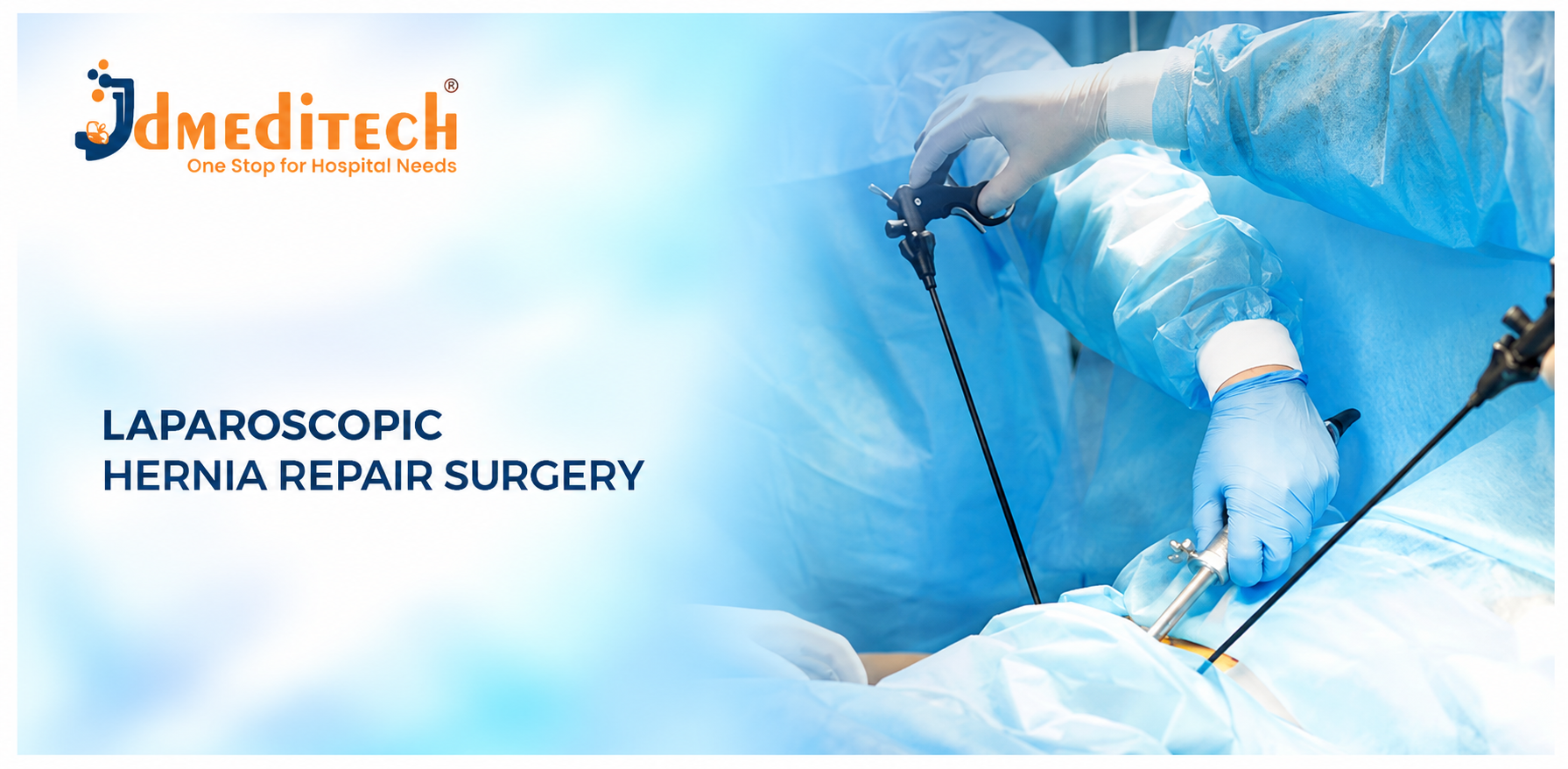
Introduction to Laparoscopic Hernia Repair Surgery
Laparoscopic Hernia Repair Surgery is a minimally invasive procedure used to repair selected hernias through small abdominal incisions. A hernia occurs when tissue or an organ pushes through a weakened area of the surrounding muscle or connective tissue.
Hernias commonly develop in the groin, abdominal wall, or near previous surgical incisions. Although some hernias cause few symptoms, others may produce pain, swelling, or complications.
During laparoscopic hernia repair, surgeons use a laparoscope, camera system, and specialized instruments to examine and repair the affected area. In many cases, surgical mesh is used to reinforce the weakened tissue.
Compared with some conventional open procedures, minimally invasive hernia repair may offer smaller incisions, reduced postoperative discomfort, and faster early recovery.
However, treatment selection depends on the type of hernia, patient health, surgical history, and surgeon expertise.
In this guide, JDMeditech explains laparoscopic hernia repair surgery, its techniques, instruments, benefits, risks, recovery, and frequently asked questions.
What Is Laparoscopic Hernia Repair Surgery?
Laparoscopic hernia repair is a minimally invasive surgical approach used to repair a defect or weakness in the abdominal wall or groin.
During the procedure, a surgeon introduces a laparoscope and compatible surgical instruments through small access openings.
The camera provides magnified images of the operative field, allowing the surgeon to assess the hernia and surrounding anatomy.
Depending on the technique, the surgeon reduces the hernia contents, prepares the repair area, and reinforces the defect using an appropriate method.
In many inguinal and ventral hernia repairs, a surgical mesh is used to reduce the risk of recurrence.
What Is a Hernia?
A hernia develops when tissue protrudes through a weak area of muscle or connective tissue.
For example, an inguinal hernia occurs in the groin region, while an umbilical hernia develops near the navel.
Some hernias are reducible, meaning the protruding tissue can return to its normal position.
However, other hernias may become trapped or develop impaired blood supply.
Therefore, hernia symptoms should be evaluated by a qualified healthcare professional.
Common Types of Hernias
1. Inguinal Hernia
An inguinal hernia occurs when tissue protrudes through a weakness in the groin region.
It is one of the most common types of abdominal wall hernias.
2. Femoral Hernia
A femoral hernia develops through the femoral canal, below the inguinal ligament.
Because femoral hernias have a greater risk of complications, timely surgical assessment is important.
3. Umbilical Hernia
An umbilical hernia occurs near the belly button.
Repair may be recommended depending on symptoms, defect size, and patient factors.
4. Incisional Hernia
An incisional hernia develops at or near a previous surgical incision.
It may occur when the abdominal wall does not regain sufficient strength after an operation.
5. Ventral Hernia
A ventral hernia is a general term for a hernia involving the anterior abdominal wall.
Ventral hernias include several types, such as epigastric and incisional hernias.
6. Recurrent Hernia
A recurrent hernia develops after a previous hernia repair.
Its management depends on the original repair technique, anatomy, and current symptoms.
What Causes Hernias?
Hernias can develop because of congenital tissue weaknesses, acquired changes in connective tissue, or increased pressure on the abdominal wall.
Possible contributing factors include:
- Age-related tissue changes
- Family history
- Previous abdominal surgery
- Obesity
- Chronic coughing
- Persistent constipation and straining
- Pregnancy-related abdominal wall changes
- Connective tissue disorders
- Other conditions affecting abdominal wall strength
However, hernias may also develop without an identifiable contributing factor.
Common Symptoms of a Hernia
- A visible or palpable bulge
- Groin or abdominal discomfort
- Pain during selected physical activities
- A feeling of heaviness or pressure
- Swelling that becomes more noticeable when standing
- Discomfort during coughing or straining
- Occasional burning or aching sensations
However, some hernias cause few or no symptoms.
Severe pain, vomiting, abdominal distension, or a tender irreducible bulge may indicate a complication requiring emergency assessment.
How Is a Hernia Diagnosed?
Diagnosis usually begins with medical history and physical examination.
First, the surgeon reviews the location and duration of symptoms.
Next, the affected area is examined for a bulge or weakness.
In many cases, clinical examination is sufficient to diagnose an obvious hernia.
However, ultrasound, CT, or MRI may be recommended when the diagnosis is uncertain or when complex surgical planning is required.
When Is Hernia Repair Surgery Recommended?
Hernia repair may be recommended when a hernia causes pain, increases in size, affects daily activities, or presents a risk of complications.
Furthermore, femoral hernias often warrant timely surgical assessment because of their complication risk.
However, watchful waiting may be appropriate for selected adults with minimally symptomatic inguinal hernias.
Therefore, treatment decisions depend on the type of hernia, symptoms, clinical risks, and patient preferences.
What Are TAPP and TEP Hernia Repair Techniques?
Two established minimally invasive approaches for groin hernia repair are TAPP and TEP.
1. TAPP – Transabdominal Preperitoneal Repair
TAPP stands for Transabdominal Preperitoneal repair.
In this approach, the surgeon enters the abdominal cavity and accesses the preperitoneal space to repair the groin hernia.
A suitable mesh is generally positioned to reinforce the weakened area.
After mesh placement, the peritoneum is closed according to the selected technique.
2. TEP – Totally Extraperitoneal Repair
TEP stands for Totally Extraperitoneal repair.
This technique accesses the preperitoneal space without intentionally entering the main abdominal cavity.
The surgeon prepares the groin repair area and places a suitable mesh.
However, TEP requires specific training and familiarity with the extraperitoneal anatomy.
TAPP vs TEP Hernia Repair
| Feature | TAPP Repair | TEP Repair |
|---|---|---|
| Full Form | Transabdominal Preperitoneal | Totally Extraperitoneal |
| Access | Through the abdominal cavity | Through the extraperitoneal space |
| Mesh Position | Preperitoneal | Preperitoneal |
| Peritoneal Entry | Yes | Not intended |
| Typical Application | Selected groin hernias | Selected groin hernias |
| Technical Requirements | Advanced laparoscopic expertise | Advanced extraperitoneal laparoscopic expertise |
Other Laparoscopic Hernia Repair Techniques
1. Laparoscopic Ventral Hernia Repair
Laparoscopic ventral hernia repair is used for selected abdominal wall hernias.
However, the operative approach and mesh position differ from TAPP and TEP groin hernia repairs.
2. Laparoscopic Incisional Hernia Repair
This technique repairs selected hernias arising near previous abdominal surgical incisions.
3. Laparoscopic Umbilical Hernia Repair
Selected umbilical hernias may be repaired laparoscopically depending on defect size, patient characteristics, and surgical expertise.
4. Robot-Assisted Hernia Repair
Robot-assisted hernia repair uses a surgeon-controlled robotic system.
However, robotic techniques are not automatically superior to conventional laparoscopic or open surgery.
How Should Patients Prepare for Laparoscopic Hernia Repair?
Preparation begins with evaluation of the hernia and the patient’s general health.
First, the surgeon assesses the hernia type, symptoms, and previous surgical history.
Next, the anesthesia team reviews relevant medical conditions and medications.
Additionally, patients may receive advice about smoking cessation, weight management, and optimization of chronic medical conditions.
Furthermore, the surgeon explains whether mesh is recommended and discusses potential complications.
Finally, patients receive fasting instructions and provide informed consent.
How Is Laparoscopic Hernia Repair Surgery Performed?
Laparoscopic hernia repair is performed by a qualified surgical team, generally under general anesthesia.
First, the surgeon establishes appropriate laparoscopic access using small incisions.
Next, a laparoscope provides visualization of the operative area.
Subsequently, the surgeon identifies the hernia defect and assesses the surrounding structures.
The hernia contents are managed according to the operative findings.
When indicated, an appropriately selected surgical mesh is positioned to reinforce the repair.
Depending on the technique, mesh fixation or closure of tissue layers may also be required.
Finally, the surgical team checks the operative field and closes the incisions.
However, the exact operation varies considerably between inguinal, ventral, umbilical, and incisional hernia repair.
What Is the Role of Surgical Mesh in Hernia Repair?
Surgical mesh is a medical implant used to reinforce weakened tissue during many hernia repair procedures.
It may be manufactured from permanent synthetic, absorbable, or other specialized materials.
However, mesh products differ in material, structure, intended placement, and approved applications.
Therefore, surgeons must select a mesh appropriate for the hernia type and planned surgical technique.
Furthermore, mesh-related complications can include infection, chronic pain, migration, erosion, or recurrence.
Consequently, patients should receive appropriate information about the planned implant and alternatives.
Essential Instruments Used in Laparoscopic Hernia Repair Surgery
Laparoscopic hernia repair instruments support visualization, tissue dissection, hernia reduction, mesh placement, and selected fixation tasks.
The following equipment categories are examples of commonly used instruments rather than a verified JDMeditech hernia repair surgical kit.
1. Laparoscope Telescope
A laparoscope provides visualization of the operative area.
2. Laparoscopic Camera System
A compatible camera system transfers images to a surgical monitor.
3. Medical Light Source
A medical light source provides illumination during surgery.
4. Fiber-Optic Light Cable
A compatible light cable transfers illumination to the laparoscope.
5. Laparoscopic Trocar and Cannula
Trocars and cannulas provide access for compatible laparoscopic instruments.
6. Veress Needle
A Veress needle may be used during selected laparoscopic access techniques.
7. Laparoscopic Grasping Forceps
Grasping forceps support controlled tissue handling.
8. Atraumatic Laparoscopic Grasper
An atraumatic grasper supports delicate manipulation of suitable tissues.
9. Laparoscopic Maryland Dissector
A Maryland dissector supports fine dissection and anatomical exposure.
10. Laparoscopic Scissors
Laparoscopic scissors support selected tissue cutting tasks.
11. Laparoscopic Electrosurgical Hook
A compatible electrosurgical hook may support selected dissection and coagulation tasks.
12. Laparoscopic Bipolar Forceps
Bipolar forceps may support selected hemostasis tasks.
13. Laparoscopic Needle Holder
A needle holder supports laparoscopic suturing when required.
14. Laparoscopic Suction and Irrigation Instrument
A suction and irrigation instrument helps manage fluid and maintain visualization.
15. CO2 Insufflator
A carbon dioxide insufflator creates a working space for laparoscopic surgery.
16. Insufflation Tubing
Compatible tubing connects the insufflator to the laparoscopic access system.
17. Surgical Hernia Mesh
A suitable surgical mesh may be used to reinforce the hernia repair.
18. Laparoscopic Mesh Fixation Device
A compatible fixation device may be used when fixation is indicated by the selected technique.
19. Laparoscopic Tacker
A laparoscopic tacker may be used for selected mesh fixation tasks.
However, fixation near nerves, blood vessels, or other vulnerable structures requires particular caution.
20. Laparoscopic Suture Passer
A compatible suture passer supports selected abdominal wall closure or fixation tasks.
21. Laparoscopic Clip Applicator
A compatible clip applicator may support selected vessel or tissue ligation tasks.
22. Electrosurgical Generator
An electrosurgical generator supplies energy to compatible instruments.
23. Surgical Monitor
A medical-grade monitor displays laparoscopic images during the procedure.
24. Surgical Sutures
Suitable sutures support selected tissue closure and reconstructive tasks.
25. Sterile Surgical Drapes
Sterile drapes support preparation of the operative field.
26. Sterile Surgical Accessories
Compatible gloves, tubing, dressings, and other accessories support the surgical setup.
Laparoscopic Hernia Repair Instruments and Their Functions
| Instrument | Primary Function |
|---|---|
| Laparoscope Telescope | Provides operative visualization |
| Camera System | Displays laparoscopic images |
| Light Source | Illuminates the operative field |
| Trocar and Cannula | Provide laparoscopic access |
| Veress Needle | Supports selected access techniques |
| Grasping Forceps | Support tissue handling |
| Maryland Dissector | Supports fine dissection |
| Laparoscopic Scissors | Support tissue cutting |
| Electrosurgical Hook | Supports selected dissection tasks |
| Bipolar Forceps | Support selected hemostasis tasks |
| Needle Holder | Supports suturing |
| Suction and Irrigation Instrument | Helps maintain visualization |
| CO2 Insufflator | Creates the laparoscopic working space |
| Surgical Hernia Mesh | Reinforces selected hernia repairs |
| Mesh Fixation Device | Supports selected mesh fixation techniques |
| Suture Passer | Supports selected closure or fixation tasks |
| Electrosurgical Generator | Supplies compatible surgical energy |
Why Is Safe Mesh Fixation Important?
Mesh fixation must account for nearby nerves, blood vessels, and other anatomical structures.
For example, inappropriate fixation in certain groin regions can cause nerve injury or chronic postoperative pain.
Furthermore, some hernia repair techniques do not require routine mesh fixation.
Therefore, fixation decisions should follow the selected technique, implant instructions, and established surgical guidance.
Potential Benefits of Laparoscopic Hernia Repair Surgery
1. Smaller Surgical Incisions
Laparoscopic hernia repair generally uses smaller access incisions than conventional open surgery.
2. Reduced Postoperative Pain
For many suitable inguinal hernias, laparo-endoscopic repair is associated with lower postoperative and chronic pain compared with certain open techniques.
3. Faster Early Recovery
Patients may return to normal activities sooner after an uncomplicated minimally invasive repair.
4. Magnified Visualization
The laparoscope provides magnified images of the operative anatomy.
5. Bilateral Groin Hernia Repair
Selected patients with hernias on both sides of the groin may benefit from a minimally invasive approach.
6. Reinforcement of Weakened Tissue
Appropriate mesh reinforcement can reduce the risk of recurrence in many hernia repairs.
7. Reduced Wound Complications in Selected Cases
Some laparoscopic ventral hernia approaches may reduce surgical-site infection compared with open repair.
Risks and Complications of Laparoscopic Hernia Repair
Although laparoscopic hernia repair is widely performed, complications remain possible.
- Bleeding
- Wound infection
- Mesh infection
- Chronic groin or abdominal pain
- Nerve injury
- Injury to bowel or bladder
- Injury to blood vessels
- Seroma or hematoma formation
- Urinary retention
- Hernia recurrence
- Mesh-related complications
- Blood clots
- Conversion to open surgery
- Anesthesia-related complications
- Need for additional surgery
Importantly, the risk profile varies according to the hernia type, surgical approach, patient health, and implant selection.
Laparoscopic vs Open Hernia Repair
| Feature | Laparoscopic Repair | Open Repair |
|---|---|---|
| Access | Small incisions | Conventional incision |
| Visualization | Camera-based magnification | Direct surgical exposure |
| Anesthesia | Usually general anesthesia | May use local, regional, or general anesthesia |
| Recovery | Often faster for suitable groin hernias | Depends on technique and patient |
| Chronic Pain | Often lower with experienced laparo-endoscopic groin repair | Varies by technique |
| Recurrence | Depends on repair quality and patient factors | Depends on repair quality and patient factors |
| Suitability | Selected cases with appropriate expertise | Suitable for a broad range of cases |
Recovery After Laparoscopic Hernia Repair Surgery
Recovery depends on the hernia type, surgical technique, and patient health.
Initially, patients may experience abdominal discomfort, groin swelling, bruising, or temporary shoulder pain associated with laparoscopic gas.
Many patients undergoing uncomplicated groin hernia repair can gradually resume light daily activities within several days.
However, recovery after complex ventral or incisional hernia repair may take considerably longer.
Therefore, patients should follow the surgical team’s individualized instructions regarding lifting, exercise, and return to work.
Postoperative Care After Hernia Repair
- Take prescribed medicines as directed
- Follow wound-care instructions
- Gradually resume walking
- Maintain hydration as advised
- Avoid constipation and excessive straining
- Follow individualized lifting restrictions
- Attend scheduled follow-up appointments
- Monitor swelling and wound healing
- Report persistent or worsening pain
- Discuss return to work and exercise with the surgeon
Warning Signs After Laparoscopic Hernia Repair
Patients should seek prompt medical assessment if concerning symptoms develop.
- Severe or worsening abdominal pain
- Persistent fever
- Persistent vomiting
- Increasing abdominal swelling
- Heavy bleeding
- Increasing wound redness or discharge
- Difficulty passing urine
- A painful new bulge
- Chest pain or breathing difficulty
- Other unexpected or serious symptoms
Chest pain, severe breathing difficulty, collapse, or major bleeding requires emergency medical care.
Can a Hernia Return After Surgery?
Yes. A hernia can recur after either laparoscopic or open repair.
Recurrence risk depends on several factors, including hernia type, repair technique, tissue characteristics, patient health, and surgical experience.
Furthermore, mesh selection and appropriate placement can influence long-term outcomes.
Therefore, patients should attend follow-up appointments and report any new bulge or persistent symptoms.
How to Choose Laparoscopic Hernia Repair Instruments
Hospitals and surgical departments should carefully assess their procedural requirements before purchasing laparoscopic hernia repair instruments.
First, purchasing teams should identify whether the department performs TAPP, TEP, ventral, or incisional hernia repair.
Next, they should review laparoscope diameter, trocar compatibility, and instrument working lengths.
Furthermore, hospitals should assess graspers, dissectors, scissors, needle holders, and compatible mesh placement accessories.
Additionally, surgical teams should evaluate mesh specifications, intended placement, and approved fixation methods.
Finally, purchasing departments should confirm cleaning and sterilization instructions, technical documentation, and applicable regulatory requirements.
Important Equipment Selection Factors
- Approved intended use
- Planned hernia repair technique
- Laparoscope diameter and viewing angle
- Trocar and cannula dimensions
- Instrument working length
- Grasper and dissector design
- Needle holder compatibility
- Mesh material and construction
- Mesh size and intended anatomical placement
- Mesh fixation requirements
- Compatibility with fixation devices
- Camera system specifications
- Light source compatibility
- CO2 insufflator capabilities
- Reusable or single-use classification
- Cleaning and sterilization instructions
- Manufacturer technical documentation
- Applicable regulatory documentation
Laparoscopic Hernia Repair Instruments – JDMeditech
JDMeditech welcomes inquiries from hospitals, general surgery departments, surgical centers, healthcare institutions, and international medical distributors regarding laparoscopic surgical instruments and related accessories.
For example, customers can inquire about available laparoscopic grasping forceps, scissors, trocars, needle holders, dissectors, and compatible surgical equipment.
Furthermore, the JDMeditech team can discuss available product configurations, technical specifications, intended uses, and applicable documentation.
Therefore, hospitals and medical distributors can contact JDMeditech to discuss their laparoscopic surgery equipment requirements.
For product information and international business inquiries, visit www.jdmeditech.com.
Frequently Asked Questions About Laparoscopic Hernia Repair Surgery
1. What is laparoscopic hernia repair surgery?
It is a minimally invasive procedure used to repair selected hernias through small incisions.
2. What is a hernia?
A hernia occurs when tissue protrudes through a weak area of muscle or connective tissue.
3. What types of hernias can be repaired laparoscopically?
Selected inguinal, femoral, umbilical, ventral, and incisional hernias may be suitable for laparoscopic repair.
4. What is TAPP hernia repair?
TAPP stands for Transabdominal Preperitoneal repair, a minimally invasive technique used mainly for groin hernias.
5. What is TEP hernia repair?
TEP stands for Totally Extraperitoneal repair, a technique that accesses the groin repair space without intentionally entering the abdominal cavity.
6. Is laparoscopic hernia repair minimally invasive?
Yes. It uses small incisions and specialized laparoscopic instruments.
7. Is surgical mesh always used?
Mesh is commonly used in adult hernia repairs, but the approach depends on the type of hernia and clinical circumstances.
8. What instruments are used in laparoscopic hernia repair?
Common instruments include laparoscopes, trocars, graspers, dissectors, scissors, needle holders, and selected mesh placement accessories.
9. What is a laparoscopic hernia repair set?
It is a collection of compatible instruments and accessories used for selected laparoscopic hernia repair procedures.
10. Is general anesthesia required?
Laparoscopic hernia repair is generally performed under general anesthesia.
11. How long does laparoscopic hernia repair take?
Operation time varies according to hernia type, size, previous surgery, and procedural complexity.
12. Is laparoscopic hernia repair painful?
Anesthesia prevents pain during surgery. Temporary discomfort or swelling may occur afterward.
13. What is the difference between laparoscopic and open hernia repair?
Laparoscopic repair uses small access incisions, while open repair uses a conventional incision over or near the repair area.
14. Can a hernia return after surgery?
Yes. Hernia recurrence is possible after any repair technique.
15. What are the risks of laparoscopic hernia repair?
Risks include bleeding, infection, chronic pain, organ injury, mesh-related complications, and recurrence.
16. How long is recovery after laparoscopic hernia repair?
Recovery varies. Many patients undergoing uncomplicated groin hernia repair resume light activities within several days, while complex repairs may require longer recovery.
17. Can patients return to work after hernia repair?
Many patients return to work after recovery, but timing depends on job demands, surgical technique, and medical advice.
18. Can all hernias be treated laparoscopically?
No. Some hernias are better treated using open or other surgical approaches.
19. Is laparoscopic hernia repair safe?
It is an established surgical option for suitable patients, but complications remain possible. Appropriate patient selection and surgeon expertise are essential.
20. Where can hospitals inquire about JDMeditech laparoscopic instruments?
Hospitals and medical distributors can visit JDMeditech to inquire about available laparoscopic instruments and accessories.
Conclusion
Laparoscopic Hernia Repair Surgery is an established minimally invasive treatment option for selected groin and abdominal wall hernias.
Furthermore, TAPP and TEP techniques are commonly used for suitable inguinal and femoral hernias.
However, the appropriate surgical approach depends on the hernia type, anatomy, patient health, and available surgical expertise.
Therefore, hospitals should select compatible instruments and appropriate implant systems while following established clinical safety guidance.
For laparoscopic hernia repair instrument inquiries and international business requirements, contact JDMeditech – One Stop for Hospital Needs.
Website: www.jdmeditech.com
Medical Disclaimer: This article provides general educational information only. It does not replace professional medical advice, diagnosis, or surgical training. Qualified healthcare professionals must make treatment and equipment decisions according to current clinical guidance, applicable regulations, and approved manufacturer instructions.




