



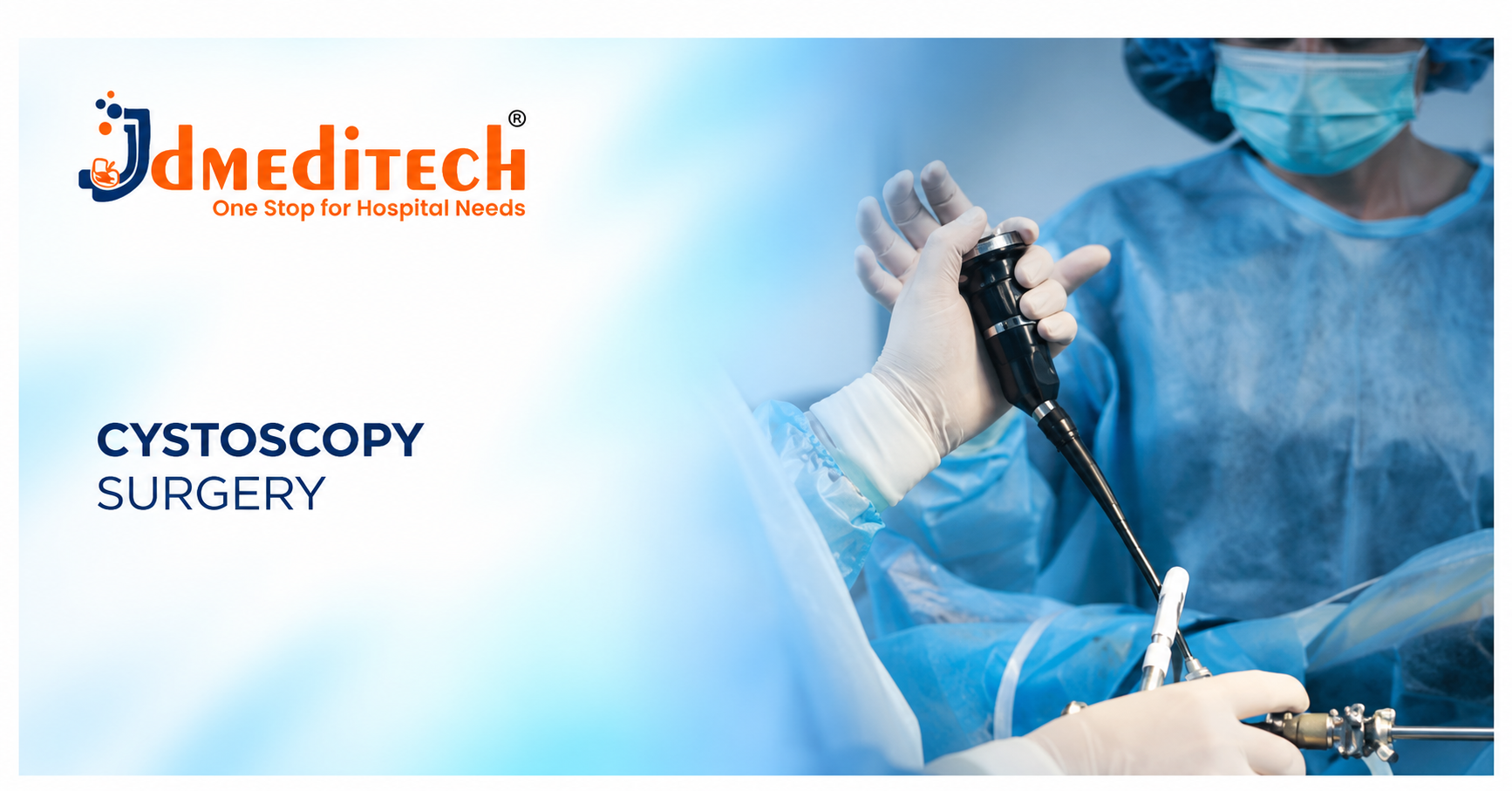
Cystoscopy Surgery: Procedure, Instruments, Uses, Benefits and Recovery
Cystoscopy Surgery is a urological procedure that allows doctors to examine the urethra and urinary bladder using a specialized instrument called a cystoscope. Urologists commonly perform cystoscopy to investigate urinary symptoms, identify bladder abnormalities and carry out selected treatments.
Furthermore, cystoscopy provides direct visualization of the lower urinary tract. Therefore, healthcare professionals can examine internal structures and make informed clinical decisions.
In addition, doctors may use cystoscopy to collect tissue samples, remove selected bladder stones or assist with ureteral stent procedures. However, the exact procedure depends on the patient’s condition and treatment requirements.
JDMeditech supplies urology instruments, cystoscopy equipment and medical accessories for hospitals, healthcare professionals and medical distributors.
What Is Cystoscopy Surgery?
Cystoscopy is an endoscopic procedure that helps urologists examine the inside of the urethra and bladder. The doctor introduces a cystoscope through the urethra to visualize the urinary tract.
A cystoscope contains an optical viewing system and an illumination source. Additionally, compatible models may support camera systems and working instruments.
During the examination, the urologist uses sterile irrigation fluid to expand the bladder and improve visibility. As a result, the doctor can inspect the bladder lining and identify abnormalities.
Although people often call the procedure cystoscopy surgery, diagnostic cystoscopy does not always involve an operation. In contrast, therapeutic cystoscopy may include additional surgical treatment.
What Is a Cystoscope?
A cystoscope is a specialized medical instrument that allows healthcare professionals to examine the lower urinary tract.
It generally includes an optical system, illumination and a shaft or flexible insertion tube. Furthermore, some models provide working channels for compatible accessories.
Doctors choose between rigid and flexible cystoscopes according to the examination and treatment requirements.
Types of Cystoscopy Procedures
Urologists commonly use two types of cystoscopes. However, their construction and applications differ.
1. Rigid Cystoscopy
Rigid cystoscopy uses a straight, nonflexible instrument. The design supports direct visualization and the use of compatible surgical accessories.
Furthermore, doctors commonly choose rigid cystoscopy for procedures that require particular working instruments or operative access.
2. Flexible Cystoscopy
Flexible cystoscopy uses a bendable insertion tube. Consequently, the instrument can follow the natural curvature of the urethra.
Additionally, doctors frequently perform flexible cystoscopy in outpatient settings using local anesthetic gel.
3. Diagnostic Cystoscopy
Diagnostic cystoscopy helps doctors investigate urinary symptoms and examine bladder abnormalities. For example, a urologist may recommend it for unexplained blood in the urine.
4. Therapeutic Cystoscopy
Therapeutic cystoscopy allows doctors to perform selected treatments. These may include tissue biopsy, small stone removal or ureteral stent removal.
Why Is Cystoscopy Surgery Performed?
Doctors recommend cystoscopy to investigate several urinary conditions. Moreover, the procedure provides information that other examinations may not reveal.
- Blood in Urine: Helps investigate possible causes of hematuria.
- Recurrent Urinary Tract Infections: Supports evaluation when clinicians suspect structural abnormalities.
- Bladder Stones: Helps identify stones inside the urinary bladder.
- Bladder Tumors: Allows direct examination of suspicious bladder tissue.
- Urinary Retention: Helps investigate selected causes of difficulty emptying the bladder.
- Urethral Stricture: Allows assessment of narrowing within the urethra.
- Urinary Incontinence: May support evaluation in selected cases.
- Bladder Pain: Helps investigate certain persistent urinary symptoms.
- Ureteral Stent Removal: Provides access for removal of suitable ureteral stents.
- Bladder Biopsy: Allows collection of tissue samples for laboratory examination.
However, cystoscopy does not replace every urinary diagnostic test. Therefore, doctors may recommend additional investigations when necessary.
Key Features of Cystoscopy Instruments
Cystoscopy instruments provide several functions that support urological examinations and procedures. Nevertheless, exact features vary between models.
- Optical visualization of the urethra and bladder
- Compatibility with suitable illumination systems
- Rigid or flexible configurations
- Working channels in compatible models
- Support for sterile irrigation
- Compatibility with selected endoscopic accessories
- Camera connectivity in suitable systems
- Different sizes for specific clinical applications
- Support for diagnostic and selected therapeutic procedures
Furthermore, healthcare professionals should confirm compatibility before combining instruments from different systems.
Instruments Used in Cystoscopy Surgery
Urologists use different instruments according to the procedure. Additionally, the required equipment depends on whether the examination involves diagnosis or treatment.
1. Rigid Cystoscope
A rigid cystoscope allows direct examination of the bladder and urethra. Moreover, compatible instruments may support therapeutic procedures.
2. Flexible Cystoscope
A flexible cystoscope helps doctors examine the lower urinary tract through a bendable insertion tube.
3. Cystoscopy Sheath
A compatible sheath supports insertion and access during rigid cystoscopy. Furthermore, some sheath systems provide irrigation connections.
4. Obturator
An obturator works with a compatible sheath during instrument introduction. However, the exact design depends on the system.
5. Telescope and Optical System
A telescope provides internal visualization during rigid cystoscopy. Additionally, compatible optical systems connect to appropriate light sources.
6. Camera and Light Source
The camera system displays internal images on a monitor. Meanwhile, the light source illuminates the examination area.
7. Irrigation System
The irrigation system supplies sterile fluid to improve bladder visualization. Therefore, doctors can examine the bladder lining more clearly.
8. Biopsy Forceps
Compatible biopsy forceps allow doctors to collect selected tissue samples for laboratory analysis.
9. Stone Retrieval Forceps
Stone retrieval instruments may help remove suitable small bladder stones or fragments.
10. Ureteral Stent Grasping Forceps
Compatible grasping forceps may assist with ureteral stent removal during cystoscopy.
How Is Cystoscopy Surgery Performed?
Cystoscopy involves several clinical stages. However, the exact process depends on the patient’s condition and the procedure type.
Step 1: Patient Evaluation
First, the urologist reviews the patient’s medical history and urinary symptoms. The doctor may also request urine testing to check for infection.
Step 2: Preparation and Anesthesia
Next, the healthcare team prepares the patient. Doctors may use local anesthetic gel, sedation or general anesthesia according to the procedure.
Step 3: Cystoscope Introduction
The urologist carefully introduces the cystoscope through the urethra. Then, the doctor advances the instrument toward the bladder.
Step 4: Bladder Visualization
The clinician introduces sterile irrigation fluid to improve visibility. As a result, the bladder expands enough for an appropriate examination.
Step 5: Examination
The doctor examines the urethra and bladder lining. Furthermore, the clinician looks for stones, abnormal tissue, narrowing or other findings.
Step 6: Additional Treatment
When necessary, the doctor may collect a biopsy or perform another compatible intervention. However, additional treatment depends on the patient’s clinical requirements.
Step 7: Completion and Recovery
Finally, the doctor removes the cystoscope and monitors the patient. The healthcare team then provides appropriate recovery instructions.
Important: Only trained healthcare professionals should perform cystoscopy using suitable medical equipment and established clinical protocols.
Technical Specifications of Cystoscopy Instruments
Healthcare facilities should evaluate instrument specifications before purchasing a cystoscopy system. In particular, they should confirm dimensions, optical compatibility, sterilization requirements and available accessories.
| Parameter | Specification |
|---|---|
| Procedure Name | Cystoscopy |
| Category | Urology / Endoscopic Instruments |
| Instrument Type | Rigid or flexible cystoscope |
| Primary Application | Visualization of the urethra and bladder |
| Instrument Diameter | According to available model |
| Working Length | Confirm with JDMeditech |
| Viewing Angle | According to telescope configuration |
| Optical System | Model-specific |
| Working Channel | According to available configuration |
| Light Source Compatibility | Confirm before use |
| Camera Compatibility | According to product specifications |
| Sterilization or Reprocessing | Follow manufacturer instructions |
| Available Accessories | According to product catalogue |
| Brand | JDMeditech |
Benefits of Cystoscopy Surgery
Cystoscopy provides several clinical advantages when doctors select the procedure appropriately.
- Allows direct examination of the urinary bladder.
- Helps investigate unexplained urinary symptoms.
- Supports detection of suspicious bladder tissue.
- Allows collection of biopsy samples.
- May support selected minimally invasive treatments.
- Provides access for suitable ureteral stent procedures.
- Helps doctors evaluate certain urethral abnormalities.
- May reduce the need for more invasive diagnostic approaches.
- Supports follow-up monitoring for selected bladder conditions.
Furthermore, many diagnostic cystoscopy procedures take place in outpatient settings. However, recovery and treatment requirements vary between patients.
Rigid Cystoscopy vs. Flexible Cystoscopy
Both instruments allow examination of the lower urinary tract. Nevertheless, they differ in design and clinical applications.
| Feature | Rigid Cystoscopy | Flexible Cystoscopy |
|---|---|---|
| Instrument Design | Nonflexible shaft | Bendable insertion tube |
| Common Application | Diagnostic and operative procedures | Commonly used for diagnostic examination and surveillance |
| Anesthesia | Often regional or general anesthesia for operative procedures | Often local anesthetic gel for routine examination |
| Working Instruments | Supports compatible surgical accessories | Supports accessories according to model |
| Clinical Setting | Hospital or operating room, depending on procedure | Often outpatient clinic |
| Instrument Selection | Depends on treatment requirements | Depends on examination requirements |
Cystoscopy vs. Ureteroscopy
Cystoscopy and ureteroscopy are both endoscopic urological procedures. However, doctors use them to examine different parts of the urinary tract.
Cystoscopy primarily examines the urethra and bladder. In contrast, ureteroscopy allows doctors to inspect the ureters and, with suitable instruments, the kidney’s collecting system.
Furthermore, ureteroscopy often supports the diagnosis and treatment of ureteral or kidney stones. Therefore, the urologist chooses the procedure according to the suspected problem.
Risks and Possible Complications of Cystoscopy
Cystoscopy is a commonly performed procedure. However, complications may occur during or after the examination.
- Temporary burning during urination
- Mild blood in the urine
- Increased urinary frequency
- Urinary tract infection
- Temporary urinary retention
- Urethral irritation or injury
- Bladder injury
- Bleeding after biopsy or treatment
- Anesthesia-related complications when applicable
Therefore, healthcare professionals should evaluate the patient’s condition and follow appropriate safety protocols.
Additionally, patients should seek medical attention for fever, severe pain, inability to urinate or significant bleeding.
Recovery After Cystoscopy Surgery
Recovery depends on the procedure type and anesthesia. Many patients return home on the same day after routine diagnostic cystoscopy.
However, patients who undergo additional surgical treatment may need more recovery time.
General recovery recommendations include:
- Follow the urologist’s postoperative instructions.
- Drink fluids according to medical advice.
- Take prescribed medications as directed.
- Monitor urinary symptoms.
- Avoid strenuous activity when the doctor recommends it.
- Follow anesthesia-related driving restrictions.
- Attend scheduled follow-up appointments.
- Report persistent bleeding, fever or increasing pain.
Furthermore, mild discomfort may occur temporarily after the examination. Nevertheless, symptoms that persist or worsen require medical assessment.
How to Select the Right Cystoscopy Instruments
Healthcare professionals should consider several factors when selecting a cystoscopy system.
- Rigid or flexible instrument requirement
- Patient anatomy and clinical application
- Instrument diameter and working length
- Optical clarity and viewing configuration
- Camera and light source compatibility
- Irrigation connections
- Working channel and accessory compatibility
- Cleaning and sterilization requirements
- Product documentation and instructions for use
- Availability of replacement accessories
Moreover, hospitals should confirm that all selected components work together safely. Therefore, reviewing the manufacturer’s technical documentation remains essential.
Applications of Cystoscopy in Urology
Cystoscopy supports different diagnostic and therapeutic procedures. Furthermore, it helps clinicians investigate several urinary conditions.
1. Bladder Examination
Doctors inspect the bladder lining to identify abnormalities and investigate urinary symptoms.
2. Bladder Tumor Evaluation
Cystoscopy helps doctors identify suspicious tissue. Additionally, a biopsy may provide samples for pathological analysis.
3. Bladder Stone Management
Compatible instruments may help doctors identify or remove suitable bladder stones.
4. Urethral Stricture Assessment
Doctors may use cystoscopy to examine narrowing within the urethra.
5. Ureteral Stent Removal
Urologists commonly use cystoscopy with suitable grasping instruments to remove ureteral stents.
6. Urinary Symptom Investigation
The examination may help identify causes of blood in the urine, urinary obstruction or persistent bladder symptoms.
Why Choose JDMeditech for Cystoscopy Instruments?
JDMeditech supplies urology surgical instruments and medical devices for hospitals, healthcare professionals and medical distributors.
Our urology product portfolio covers diagnostic and therapeutic applications. Furthermore, customers can contact our team for available cystoscopy equipment and compatible accessories.
- Range of urology surgical instruments
- Cystoscopy equipment inquiries
- Endoscopic instruments and accessories
- Medical device solutions for healthcare facilities
- Support for medical distributors
- International export inquiries
- Product information and technical specifications upon request
Additionally, customers can request details about instrument configurations, compatible accessories and available product documentation.
Frequently Asked Questions About Cystoscopy Surgery
1. What is cystoscopy surgery?
Cystoscopy is a procedure that allows doctors to examine the urethra and urinary bladder using a cystoscope. Additionally, some cystoscopy procedures include treatment.
2. Why do doctors perform cystoscopy?
Doctors use cystoscopy to investigate urinary symptoms, examine bladder abnormalities and perform selected treatments.
3. What is the difference between rigid and flexible cystoscopy?
Rigid cystoscopy uses a nonflexible instrument. In contrast, flexible cystoscopy uses a bendable instrument that follows the urethra’s natural curvature.
4. Is cystoscopy painful?
Patients may experience discomfort or pressure. However, doctors use appropriate anesthesia or anesthetic gel to help manage pain.
5. How long does cystoscopy take?
A routine diagnostic examination may take approximately 10 to 30 minutes, depending on the technique and preparation. However, therapeutic procedures can take longer.
6. Can cystoscopy detect bladder cancer?
Yes. Cystoscopy helps doctors identify suspicious bladder tissue. Furthermore, biopsy and laboratory examination can help confirm a diagnosis.
7. What instruments do doctors use during cystoscopy?
Doctors may use rigid or flexible cystoscopes, optical systems, irrigation equipment and compatible endoscopic accessories.
8. Is cystoscopy an outpatient procedure?
Many diagnostic cystoscopy examinations take place in outpatient settings. However, some patients require hospital-based treatment.
9. What happens after cystoscopy?
Patients may experience mild burning or temporary blood in the urine. Nevertheless, persistent symptoms require medical assessment.
10. Can doctors remove a Double J stent through cystoscopy?
Yes. Urologists commonly use cystoscopy with suitable grasping instruments to remove certain ureteral stents.
11. Can cystoscopy identify bladder stones?
Yes. Doctors can visualize bladder stones during cystoscopy. Additionally, suitable instruments may support stone removal.
12. Where can I inquire about cystoscopy instruments?
Hospitals, urologists and medical distributors can contact JDMeditech for information about available cystoscopy instruments and accessories.
Conclusion
Cystoscopy Surgery plays an important role in modern urology. The procedure allows doctors to examine the urethra and bladder, investigate urinary symptoms and perform selected treatments.
Furthermore, rigid and flexible cystoscopes support different clinical applications. Therefore, healthcare professionals should choose suitable instruments according to patient requirements and procedure objectives.
JDMeditech supplies urology instruments and medical accessories for healthcare facilities and medical distributors.
JDMeditech – One Stop for Hospital Needs
Explore our range of cystoscopy instruments, urology surgical equipment and medical devices.
Website:
www.jdmeditech.com
Medical References
Medical Disclaimer: This article provides general educational information only. It does not replace medical advice, clinical training or the manufacturer’s instructions for use. Healthcare professionals must select instruments and treatment techniques according to clinical requirements.




