



Fallopian Tube Recanalization Kit – Features, Uses and Benefits
A Fallopian Tube Recanalization Kit is a specialized medical device kit used during selected procedures to assess and treat proximal fallopian tube obstruction. This type of intervention may help restore tubal patency in appropriately selected patients.
Furthermore, clinicians may use compatible catheters and guidewires to access the proximal portion of a fallopian tube. However, successful recanalization does not guarantee pregnancy, and the procedure is not suitable for every cause of tubal blockage.
JDMeditech supplies gynecology and reproductive health instruments for hospitals, healthcare facilities and medical distributors. Additionally, our team can assist with available configurations, product specifications and quotation inquiries.
What Is a Fallopian Tube Recanalization Kit?
A tubal recanalization kit contains specialized devices intended for use during selected fallopian tube catheterization procedures.
In particular, clinicians may consider recanalization when diagnostic evaluation suggests proximal tubal obstruction.
However, the treating specialist must first evaluate the cause and location of the blockage. Therefore, proper patient selection is essential.
Understanding Fallopian Tube Obstruction
The fallopian tubes connect the uterine cavity with the region near the ovaries. They play an important role in transporting the egg and supporting the early stages of natural conception.
When a tube becomes obstructed, sperm and egg transport may be affected. Consequently, tubal blockage can contribute to infertility.
However, some apparent blockages result from temporary tubal spasm or technical factors during diagnostic testing rather than permanent obstruction.
Types of Fallopian Tube Blockage
Clinicians generally describe tubal obstruction according to its location.
- Proximal Obstruction: Blockage near the junction between the uterus and fallopian tube.
- Distal Obstruction: Blockage near the outer end of the fallopian tube.
- Segmental Obstruction: Blockage involving another portion of the tube.
- Unilateral Obstruction: Obstruction affecting one tube.
- Bilateral Obstruction: Obstruction affecting both tubes.
Importantly, catheter-based recanalization primarily targets selected proximal obstructions. Distal disease usually requires a different management approach.
Common Causes of Tubal Obstruction
Several conditions may affect fallopian tube patency.
- Previous pelvic infection
- Pelvic inflammatory disease
- Endometriosis-related tubal damage
- Previous pelvic or abdominal surgery
- Scar tissue or adhesions
- Intraluminal debris or mucus plugs
- Previous inflammatory conditions
- Temporary tubal spasm during diagnostic testing
However, not every cause responds to recanalization. Therefore, a specialist should determine the most appropriate treatment.
Purpose of Tubal Recanalization
The procedure aims to restore passage through an obstructed proximal tubal segment when clinically appropriate.
Additionally, selective catheterization can help clarify whether an apparent proximal blockage is genuine.
Nevertheless, restoring patency does not necessarily restore normal tubal function. Other fertility factors may also affect the outcome.
Key Features of a Tubal Recanalization System
Device features depend on the manufacturer and selected configuration. Common design considerations may include:
- Catheter-based tubal access
- Compatibility with selected guidewires
- Controlled access to the proximal tubal opening
- Components suitable for the specified imaging technique
- Model-specific catheter dimensions
- Compatible connection components
- Manufacturer-defined sterile packaging, where applicable
- Designated single-use or reusable status
- Instructions for professional clinical use
Furthermore, customers should verify all device claims against the official technical datasheet.
Components of the Fallopian Tube Recanalization Kit
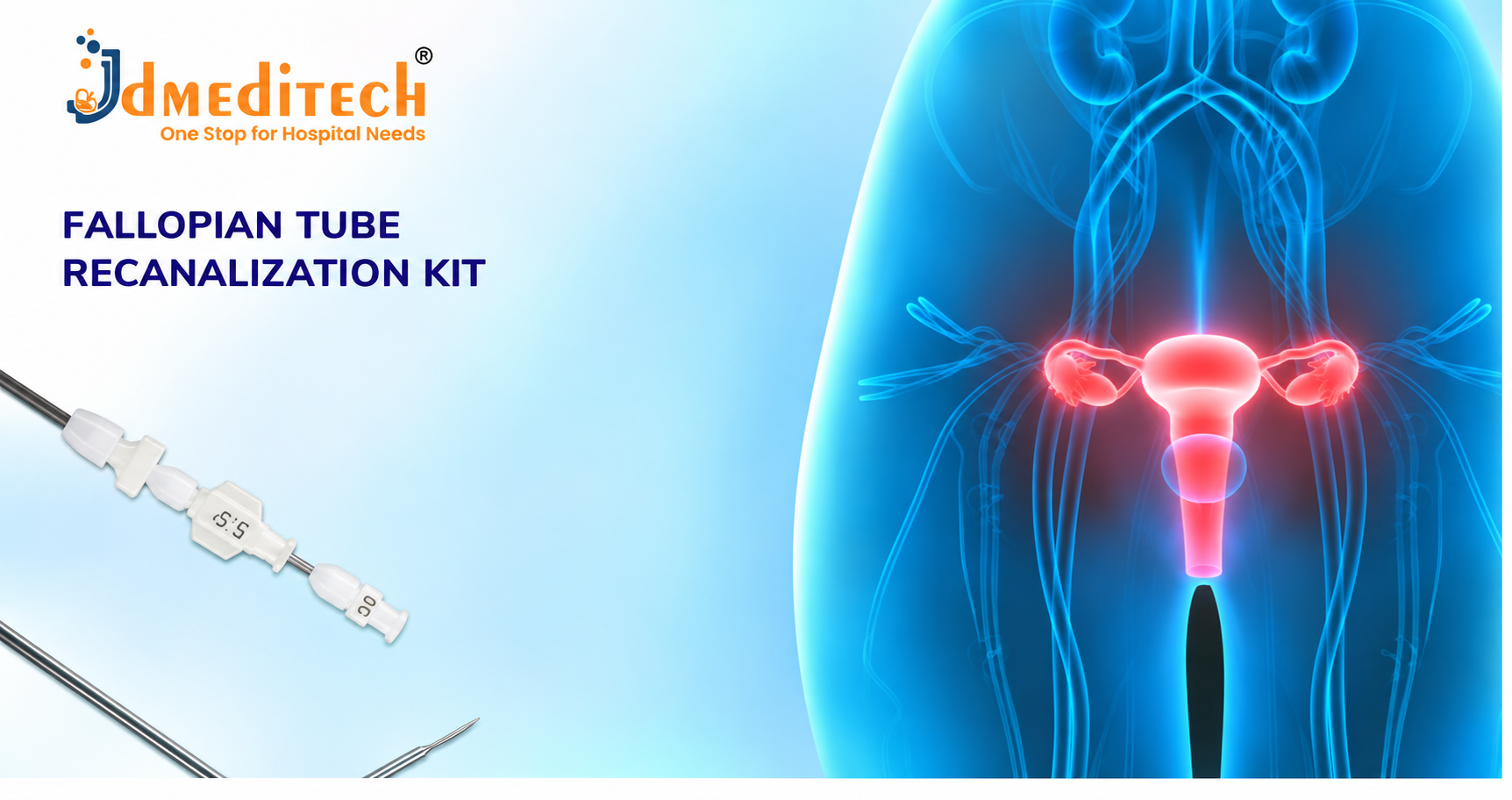
The reference image shows slender catheter-like instruments and connector components. However, the image does not establish the complete packing configuration.
Depending on the selected product, a recanalization system may include:
- Selective Tubal Catheter
- Compatible Microcatheter
- Guidewire
- Connector or Hub Components
- Other Manufacturer-Specified Accessories
Some procedures also require separately supplied imaging equipment, contrast media or hysteroscopic accessories. Therefore, customers should confirm the official kit contents before ordering.
Selective Tubal Catheter
A selective catheter may help clinicians access the tubal opening from the uterine cavity.
Furthermore, compatible designs may support selective contrast injection or guidewire passage.
However, the exact catheter dimensions and intended use depend on the device.
Microcatheter
Some recanalization systems include a small catheter designed for selected tubal access.
Additionally, a compatible microcatheter may support controlled navigation under appropriate imaging guidance.
Nevertheless, clinicians must follow the manufacturer’s instructions and avoid excessive force.
Guidewire
A compatible guidewire may assist catheter-based passage through a selected proximal obstruction.
However, guidewire diameter, construction, flexibility and compatibility vary by product.
Therefore, hospitals should confirm the exact specifications before clinical use.
Connector and Hub Components
Some systems include connectors or hubs that support compatible device connections.
Additionally, these components may assist with the intended catheter setup.
However, their exact functions depend on the supplied configuration.
Technical Specifications
Technical details vary by manufacturer. Consequently, procurement teams should verify the official product documentation before purchasing.
| Parameter | Product Details |
|---|---|
| Product Name | Fallopian Tube Recanalization Kit |
| Product Category | Gynecology and Reproductive Health Instruments |
| Primary Intended Application | Selected Proximal Tubal Recanalization Procedures |
| Procedure Type | Catheter-Based Intervention |
| Catheter Diameter | Confirm manufacturer datasheet |
| Catheter Length | Confirm manufacturer datasheet |
| Guidewire Diameter | Confirm manufacturer datasheet |
| Guidewire Length | Confirm manufacturer datasheet |
| Catheter Material | Confirm manufacturer datasheet |
| Guidewire Material | Confirm manufacturer datasheet |
| Imaging Compatibility | Confirm approved technique |
| Connector Type | Confirm supplied configuration |
| Sterility | Confirm product labeling |
| Single-Use or Reusable | Confirm manufacturer instructions |
| Kit Contents | Confirm official packing list |
| Packaging | Confirm manufacturer specifications |
| Shelf Life | Confirm product labeling |
Clinical Applications
Specialists may consider compatible devices for selected diagnostic and therapeutic procedures.
- Evaluation of suspected proximal tubal obstruction
- Selective fallopian tube catheterization
- Selected proximal tubal recanalization
- Assessment of tubal patency during an appropriate procedure
- Other manufacturer-approved clinical applications
However, clinical suitability depends on patient assessment, imaging findings and the device’s intended use.
How Does Fallopian Tube Recanalization Work?
First, a specialist reviews the patient’s history and diagnostic findings.
Next, the clinical team selects an appropriate image-guided or hysteroscopic approach, depending on the case and available expertise.
During the procedure, the specialist may use compatible catheter-based instruments to assess and attempt passage through a proximal obstruction.
Afterward, the team evaluates the result and provides follow-up recommendations.
Importantly, only appropriately trained healthcare professionals should perform the procedure using the relevant imaging, aseptic and safety protocols.
Role of Imaging Guidance
Imaging can help clinicians assess tubal anatomy and catheter position.
For example, fluoroscopic techniques may support selective tubal catheterization.
Alternatively, selected procedures may use hysteroscopic guidance.
However, the choice of technique depends on the clinical situation and specialist expertise.
Patient Evaluation Before Recanalization
Careful evaluation helps clinicians identify suitable candidates.
For example, the specialist may review previous fertility investigations and tubal imaging.
Additionally, assessment may include other fertility factors, such as ovulation and semen analysis.
Therefore, recanalization should form part of an individualized fertility management plan.
Potential Benefits of Tubal Recanalization
In selected patients, catheter-based recanalization may offer several clinical advantages.
- May restore patency in selected proximal obstructions
- May clarify an apparent proximal blockage
- Provides a catheter-based alternative to some surgical approaches
- May support subsequent fertility planning
- Can form part of a broader infertility evaluation
However, clinical success varies. Furthermore, successful tubal opening does not guarantee conception or a live birth.
Limitations of the Procedure
Recanalization cannot treat every form of tubal disease.
For example, severe distal tubal damage may require another management strategy.
Additionally, extensive scarring or other pelvic conditions may reduce the likelihood of success.
Therefore, clinicians must consider the location and cause of obstruction.
Potential Risks and Complications
As with other invasive procedures, tubal recanalization carries potential risks.
- Pelvic discomfort or cramping
- Minor bleeding
- Infection
- Contrast-related reactions when contrast is used
- Radiation exposure when fluoroscopy is used
- Tubal perforation or injury
- Failure to restore tubal patency
- Recurrent tubal obstruction
- Ectopic pregnancy after subsequent conception
Therefore, patients should discuss potential risks, alternatives and expected outcomes with their treating specialist.
Fallopian Tube Recanalization Versus Tubal Surgery
Catheter-based recanalization and tubal surgery address different clinical situations.
For example, selected proximal obstructions may be suitable for catheter-based treatment.
In contrast, other tubal abnormalities may require surgical evaluation or assisted reproductive treatment.
| Feature | Catheter-Based Recanalization | Tubal Surgery |
|---|---|---|
| Approach | Catheter-Based Intervention | Surgical Intervention |
| Typical Target | Selected Proximal Obstruction | Selected Structural Tubal Conditions |
| Imaging or Visualization | Technique-Dependent | Technique-Dependent |
| Patient Selection | Specialist Assessment Required | Specialist Assessment Required |
| Outcome | Varies by Cause and Tubal Condition | Varies by Cause and Tubal Condition |
Recanalization and Fertility Outcomes
Restoring tubal patency may improve the possibility of natural conception for some patients.
However, pregnancy depends on several factors beyond tubal patency.
For example, age, ovulatory function, sperm quality and other pelvic conditions may influence fertility.
Therefore, specialists should discuss realistic expectations and alternative treatment options.
Importance of Correct Device Selection
Appropriate device selection supports safe clinical use.
For example, catheter and guidewire compatibility must match the intended procedure.
Furthermore, clinicians should verify dimensions and the approved clinical application.
Therefore, hospitals should review the manufacturer’s instructions for use.
Importance of Aseptic Technique
Invasive gynecology procedures require appropriate infection prevention practices.
Additionally, clinical teams must follow facility protocols for sterile instruments and patient preparation.
Therefore, users should confirm the device’s sterile status and handling requirements.
Handling and Storage
Correct handling helps protect device integrity.
For example, staff should inspect packaging before use and check the labeled expiry date when applicable.
Additionally, facilities should follow manufacturer storage conditions.
Consequently, damaged or expired products should not enter clinical use.
Safety Precautions
Qualified healthcare professionals must use recanalization devices only for approved clinical indications.
Furthermore, the treating specialist should review contraindications, potential complications and imaging requirements.
Therefore, clinicians should never attempt catheter advancement against unexpected resistance without appropriate assessment.
How to Choose a Fallopian Tube Recanalization System
Hospitals and procurement teams should review several factors before purchasing.
- Manufacturer’s intended use
- Catheter dimensions
- Guidewire compatibility
- Approved imaging technique
- Material specifications
- Connector compatibility
- Sterility and packaging
- Single-use or reusable designation
- Official kit contents
- Manufacturer instructions
- Applicable regulatory documentation
Additionally, procurement teams should consult the gynecology or fertility specialist who will use the equipment.
Applications in Gynecology and Fertility Centers
Specialist gynecology and fertility centers may use compatible devices during selected tubal procedures.
Furthermore, proper equipment selection supports procedural planning.
However, clinicians must evaluate each patient’s anatomy and fertility history.
Applications for Medical Distributors
Medical distributors should verify the complete product configuration before supplying recanalization devices.
For example, buyers may require specific catheter dimensions or guidewire compatibility.
Consequently, distributors should request the official datasheet and packing list.
Why Choose JDMeditech?
JDMeditech supplies gynecology instruments and medical devices for hospitals, specialist centers and healthcare distributors.
Furthermore, our team can assist customers with available product information, technical specifications and quotation requests.
- Gynecology Instrument Inquiries
- Available Kit Configuration Requests
- Technical Specification Support
- Product Documentation Inquiries
- Medical Distributor Requirements
- International Export Inquiries
However, product availability, specifications and regulatory status require confirmation for the selected model and destination market.
Frequently Asked Questions
1. What Is a Fallopian Tube Recanalization Kit?
It is a specialized device kit intended for selected catheter-based fallopian tube procedures.
2. What Is the Main Purpose of Tubal Recanalization?
The procedure aims to restore passage through selected proximal tubal obstructions. Additionally, it may help clarify suspected blockage.
3. Can Recanalization Treat Every Tubal Blockage?
No. It primarily targets selected proximal obstructions. Therefore, patients require specialist evaluation.
4. What Devices May Be Included?
Depending on the model, the system may include catheters, a guidewire and connector components. However, customers should confirm the official packing list.
5. Is Imaging Guidance Required?
Specialists may use fluoroscopic or hysteroscopic guidance, depending on the technique. Therefore, clinical teams should follow the approved procedure.
6. Does Recanalization Guarantee Pregnancy?
No. Restoring tubal patency does not guarantee conception or a live birth. Other fertility factors remain important.
7. Is the Procedure Suitable for Distal Tubal Obstruction?
Catheter-based recanalization generally targets proximal obstruction. Consequently, distal disease often requires a different approach.
8. What Are the Main Risks?
Potential complications include infection, bleeding, tubal injury and treatment failure. Additionally, ectopic pregnancy remains a concern after tubal disease.
9. Can Tubal Blockage Return?
Yes. Recurrent obstruction may occur. Therefore, follow-up recommendations depend on the patient’s clinical situation.
10. Is the Device Sterile?
Sterility depends on the selected product. Therefore, customers should check the official labeling.
11. Is the Kit Reusable?
Single-use or reusable status depends on the manufacturer. Consequently, users must follow the device instructions.
12. What Catheter Sizes Are Available?
Available sizes vary by product. Therefore, buyers should request the official technical datasheet.
13. Who Performs Tubal Recanalization?
Appropriately trained specialists perform the procedure using the relevant equipment and clinical protocols.
14. What Should Hospitals Check Before Ordering?
Hospitals should verify device dimensions, compatibility, intended use, sterility, packing configuration and regulatory documentation.
15. Where Can Customers Request Product Information?
Hospitals and medical distributors can contact JDMeditech for available product information and quotations.
Conclusion
In conclusion, the Fallopian Tube Recanalization Kit supports selected catheter-based procedures for proximal tubal obstruction.
Furthermore, appropriate patient selection and compatible instruments play important roles in procedural planning.
However, treatment outcomes vary, and successful recanalization does not guarantee pregnancy.
Therefore, healthcare professionals should follow clinical guidance and the manufacturer’s instructions when selecting and using these devices.
JDMeditech – One Stop for Hospital Needs
Website:
www.jdmeditech.com
Related Gynecology Instruments
- Fallopian Ring Applicator
- Hysteroscope
- Hysteroscopy Diagnostic Sheath
- Hysteroscopy Operative Sheath
- Gynecology Aspiration Kit
- Uterine Manipulator
- Gynecology Surgical Instruments
Medical Disclaimer
This article provides general educational and product information only. It does not replace clinical assessment, manufacturer instructions, specialist training or professional medical advice. Qualified healthcare professionals must select and use recanalization devices according to the patient’s condition, the device’s intended use and applicable safety requirements.




