



Female Incontinence Mesh – Features, Uses and Surgical Considerations
Female Incontinence Mesh is an implantable surgical device category used in selected procedures for female stress urinary incontinence. A compatible mesh sling can provide support beneath the urethra when a specialist determines that this treatment is appropriate.
Furthermore, mesh-based sling procedures represent one of several treatment options for stress-related urine leakage. However, they carry specific risks, and not every patient is a suitable candidate.
JDMeditech provides information about gynecology and urogynecology medical devices for hospitals, specialist centers and healthcare distributors. Additionally, customers can inquire about available product configurations and supporting documentation.
What Is Female Incontinence Mesh?
Female incontinence mesh generally refers to surgical mesh used in certain sling procedures for stress urinary incontinence.
Typically, a midurethral sling provides support beneath the middle portion of the urethra. Consequently, the sling may help reduce leakage during activities that increase abdominal pressure.
However, different sling designs have different indications, risks and regulatory requirements. Therefore, clinicians must confirm the exact device type before use.
Understanding Female Stress Urinary Incontinence
Stress urinary incontinence occurs when urine leaks during physical activities that increase pressure inside the abdomen.
For example, leakage may occur during coughing, sneezing, laughing, exercise or lifting.
Additionally, weakened pelvic support and changes in urethral function may contribute to symptoms.
However, other types of urinary incontinence require different treatment approaches.
Common Symptoms of Stress Urinary Incontinence
Patients may experience several symptoms.
- Urine leakage during coughing
- Leakage while sneezing
- Urinary leakage during exercise
- Leakage when lifting heavy objects
- Urine loss during sudden physical movements
- Reduced confidence during daily activities
Nevertheless, symptoms alone do not establish the diagnosis. Therefore, patients should receive an appropriate clinical assessment.
Common Factors Associated With Stress Urinary Incontinence
Several factors may contribute to stress urinary leakage.
- Pregnancy and childbirth history
- Age-related pelvic tissue changes
- Pelvic floor weakness
- Previous pelvic surgery
- Obesity
- Chronic coughing
- Conditions that increase abdominal pressure
- Changes in urethral support
However, each patient’s symptoms and risk factors differ. Consequently, treatment decisions require individualized evaluation.
Purpose of an Incontinence Mesh Sling
The main purpose of a suitable mesh sling is to provide additional support beneath the urethra during selected stress incontinence procedures.
For example, this support may help reduce leakage during coughing or physical activity.
However, a mesh sling does not treat every form of urinary incontinence.
How Does a Midurethral Sling Work?
A midurethral sling provides a supportive structure beneath the urethra.
During activities that increase abdominal pressure, the sling may help support urethral closure.
As a result, selected patients may experience improvement in stress-related urinary leakage.
Nevertheless, outcomes vary according to patient factors, surgical technique and device characteristics.
Key Features of Female Incontinence Mesh
Features vary by manufacturer and implant design. Depending on the selected model, relevant characteristics may include:
- Mesh-based sling construction
- Flexible implant configuration
- Model-specific mesh width and length
- Defined pore structure
- Manufacturer-specified material
- Compatibility with a designated surgical technique
- Specified implant handling requirements
- Manufacturer-defined sterile packaging
- Device identification and traceability information
- Instructions for professional surgical use
Furthermore, hospitals should confirm every feature against the official device documentation.
Mesh Material and Construction
Many synthetic midurethral slings use polypropylene mesh. However, the reference image alone cannot confirm the material of the illustrated product.
Additionally, mesh construction may influence handling and tissue response.
Therefore, buyers should verify the material, pore structure and intended implantation method.
Flexible Sling Design
Some sling implants use a flexible strip-like structure.
For example, the design may allow the surgeon to position the implant according to the approved technique.
However, implant dimensions and handling characteristics vary between models.
Mesh Pore Structure
The mesh pore structure is an important design characteristic.
Additionally, pore size and material properties may influence tissue interaction.
However, clinical performance depends on more than pore structure alone.
Implant Configuration
Different sling systems may use different implant lengths, widths and attachment arrangements.
For example, some systems include separate delivery instruments.
Therefore, the complete surgical system must match the selected procedure.
Components of an Incontinence Sling System
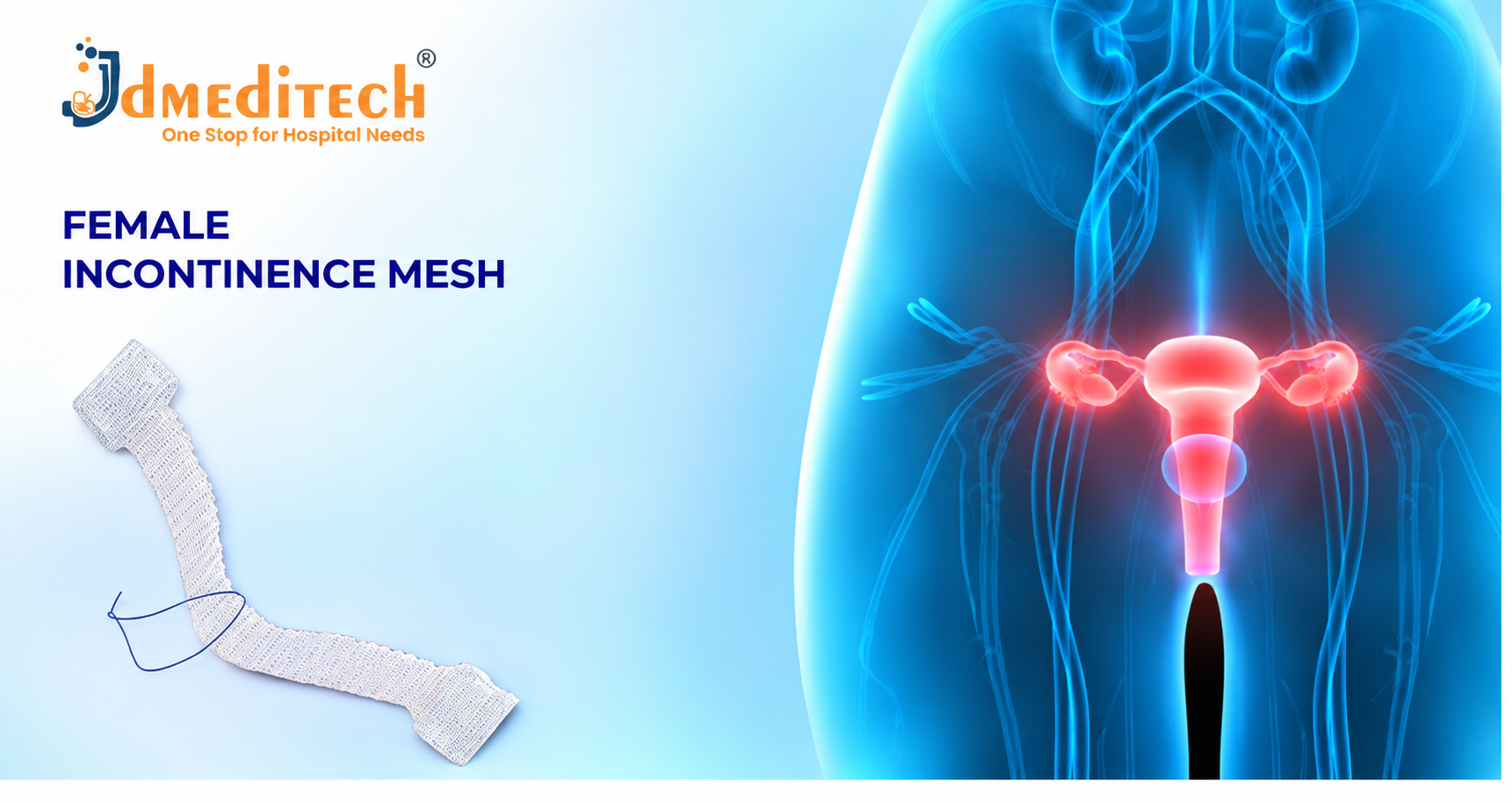
The reference image shows a strip-like mesh device with visible end sections. However, it does not establish the complete commercial kit contents.
Depending on the manufacturer, a sling system may include:
- Implantable Mesh Sling
- Protective Sleeve, if applicable
- Delivery Instruments, if supplied
- Connectors or Attachment Components
- Manufacturer-Specified Accessories
- Device Identification Labels
- Instructions for Use
Consequently, customers should request the official packing list.
Technical Specifications
Exact specifications vary by product. Therefore, the following table identifies the information hospitals should confirm before purchasing.
| Parameter | Product Details |
|---|---|
| Product Name | Female Incontinence Mesh |
| Product Category | Urogynecology Implantable Device |
| Potential Application | Selected Stress Urinary Incontinence Surgery |
| Implant Type | Confirm manufacturer classification |
| Mesh Material | Confirm manufacturer datasheet |
| Mesh Width | Confirm manufacturer datasheet |
| Mesh Length | Confirm manufacturer datasheet |
| Mesh Pore Structure | Confirm manufacturer specifications |
| Implant Configuration | Confirm selected model |
| Delivery Technique | Confirm approved surgical approach |
| Delivery Instruments | Confirm kit contents |
| Sterility | Confirm product labeling |
| Single-Use Status | Confirm instructions for use |
| Packaging | Confirm manufacturer documentation |
| Shelf Life | Confirm product labeling |
| Regulatory Status | Verify for the destination market |
Clinical Applications of Incontinence Mesh
Appropriately approved mesh sling systems may support selected surgical treatments for female stress urinary incontinence.
- Selected stress urinary incontinence procedures
- Midurethral sling surgery, where approved
- Specialist urogynecology treatment
- Other indications explicitly approved for the specific device
However, the manufacturer’s intended use and local regulatory rules determine permitted applications.
Types of Midurethral Sling Procedures
Specialists may use different sling approaches for selected patients.
For example, retropubic and transobturator approaches have different anatomical paths and risk profiles.
Additionally, some regions permit certain single-incision sling systems under specific regulatory conditions.
Therefore, surgeons must consider the approved device, patient anatomy and clinical evidence.
Retropubic Midurethral Sling
A retropubic sling follows a route behind the pubic bone.
Furthermore, this approach has an established role in selected stress incontinence procedures.
However, risks may include bladder injury, bleeding and voiding difficulties.
Transobturator Midurethral Sling
A transobturator sling follows a different anatomical route through the obturator region.
Additionally, its risk profile differs from that of retropubic surgery.
For example, groin pain may occur after some transobturator procedures.
Therefore, surgeons should discuss the comparative risks and benefits.
Single-Incision Sling Systems
Some sling systems use a shorter implant and a different placement approach.
However, available evidence, approved indications and regulatory requirements vary by product and country.
Consequently, clinicians must review the specific device documentation.
Patient Evaluation Before Sling Surgery
Appropriate assessment helps determine whether surgery is suitable.
For example, a specialist may review the patient’s symptoms, medical history and previous treatments.
Additionally, evaluation may include examination, urinalysis and other tests when clinically indicated.
Therefore, treatment selection should reflect the patient’s preferences and clinical findings.
Non-Surgical Treatment Options
Many patients can consider conservative treatments before surgery.
- Supervised pelvic floor muscle training
- Weight management when appropriate
- Management of chronic cough
- Selected continence support devices
- Other clinician-recommended treatments
Furthermore, shared decision-making helps patients understand available options.
Mesh Sling Surgery Overview
During a mesh sling procedure, a qualified surgeon places an approved implant to provide support beneath the urethra.
Additionally, the clinical team follows the specific device instructions and institutional safety protocols.
After surgery, clinicians assess recovery, urinary function and potential complications.
However, the procedure requires specialized training and must not be attempted outside an appropriate clinical setting.
Potential Benefits of Mesh Sling Surgery
For appropriately selected patients, mesh sling surgery may offer several benefits.
- May reduce stress-related urinary leakage
- May improve continence during daily activities
- May improve patient-reported quality of life
- Provides a surgical treatment option for selected patients
However, outcomes vary, and surgery does not guarantee complete or permanent continence.
Risks and Complications of Incontinence Mesh
Mesh sling surgery carries important short-term and long-term risks.
- Pain or persistent pelvic discomfort
- Bleeding or infection
- Bladder or urethral injury
- Difficulty emptying the bladder
- Urinary urgency or other new symptoms
- Mesh exposure through vaginal tissue
- Mesh erosion into adjacent structures
- Groin pain with certain surgical approaches
- Persistent or recurrent urinary incontinence
- Need for further surgery
Importantly, some complications can be serious and difficult to treat. Therefore, patients should receive detailed counseling before implantation.
Mesh Exposure and Erosion
Mesh exposure occurs when implant material becomes visible through the surrounding tissue.
Additionally, erosion into adjacent organs can cause significant complications.
For example, patients may develop pain, bleeding or urinary symptoms.
Therefore, persistent symptoms require specialist evaluation.
Importance of Informed Consent
Patients should understand the expected benefits, potential complications and available alternatives.
Furthermore, the treating clinician should explain the permanent nature of many synthetic mesh implants.
Importantly, complete mesh removal may be difficult or impossible in some cases.
Therefore, informed consent must address both immediate and long-term considerations.
Mesh Sling Versus Non-Mesh Surgical Options
Several surgical approaches may treat stress urinary incontinence.
For example, an autologous fascial sling uses tissue obtained from the patient’s body.
Additionally, Burch colposuspension and selected urethral bulking treatments may be considered.
However, each option has different indications, benefits and risks.
| Treatment | General Description |
|---|---|
| Synthetic Midurethral Sling | Uses an approved synthetic implant for urethral support |
| Autologous Fascial Sling | Uses the patient’s own tissue for support |
| Burch Colposuspension | Uses surgical sutures to support structures near the bladder neck |
| Urethral Bulking | Uses an injectable bulking agent in selected patients |
| Pelvic Floor Muscle Training | Non-surgical treatment aimed at improving pelvic floor function |
Difference Between Incontinence Mesh and Prolapse Mesh
Mesh used for stress urinary incontinence differs from transvaginal mesh used to repair pelvic organ prolapse.
Furthermore, these devices have different intended uses, evidence bases and regulatory histories.
For example, the United States FDA ordered manufacturers to stop selling transvaginal mesh products intended for pelvic organ prolapse repair in 2019.
However, that action did not impose the same blanket restriction on surgical mesh slings used for stress urinary incontinence.
Therefore, buyers and clinicians must distinguish between these device categories.
Regulatory Considerations
Implantable mesh devices require careful regulatory review.
Additionally, approval, marketing authorization and clinical use restrictions vary by country.
Therefore, distributors should verify the applicable requirements in each destination market.
Furthermore, hospitals should confirm the exact manufacturer’s documentation before procurement.
Importance of Implant Traceability
Implant identification supports patient records and future clinical follow-up.
For example, healthcare facilities should retain available manufacturer, model and lot information.
Additionally, the clinical team should follow applicable implant documentation requirements.
Therefore, hospitals should maintain appropriate traceability records.
Handling and Storage Requirements
Implantable devices require careful handling.
For example, staff should inspect packaging integrity and check the labeled expiry date.
Additionally, facilities must follow manufacturer storage conditions.
Consequently, damaged or expired implants should not enter clinical use.
Safety Precautions
Qualified specialists must use mesh sling systems only for approved indications.
Furthermore, the surgical team should follow the manufacturer’s instructions and institutional safety protocols.
Therefore, clinicians must confirm device compatibility, sterility and patient suitability before implantation.
Postoperative Follow-Up
Follow-up care helps clinicians assess recovery and urinary function.
For example, the specialist may review pain, bladder emptying and changes in leakage symptoms.
Additionally, persistent bleeding, fever, severe pain or urinary retention require prompt medical evaluation.
Therefore, patients should follow the surgeon’s postoperative instructions.
How to Choose a Female Incontinence Sling System
Hospitals and procurement teams should review several factors before purchasing.
- Approved clinical indication
- Manufacturer and device identification
- Mesh material and construction
- Implant dimensions
- Approved surgical approach
- Compatible delivery instruments
- Sterility and packaging
- Shelf life
- Regulatory authorization
- Instructions for use
- Implant traceability documentation
- Clinical evidence for the specific device
Furthermore, procurement teams should consult qualified urogynecology specialists.
Applications for Hospitals and Urogynecology Centers
Specialist centers may use approved sling systems for selected patients with stress urinary incontinence.
Additionally, appropriate equipment selection supports surgical planning.
However, clinicians must evaluate patient-specific risks and treatment alternatives.
Applications for Medical Distributors
Medical distributors should verify the device’s regulatory status and intended use before supply.
For example, customers may require specific implant dimensions or delivery system compatibility.
Consequently, distributors should request complete manufacturer documentation.
Why Choose JDMeditech?
JDMeditech supports hospitals and medical distributors with gynecology and urogynecology product inquiries.
Furthermore, our team can assist customers with available product information, technical specifications and quotation requests.
- Urogynecology Product Inquiries
- Available Implant Configuration Information
- Technical Specification Requests
- Product Documentation Inquiries
- Medical Distributor Requirements
- International Export Inquiries
However, product availability, implant specifications and regulatory authorization require confirmation.
Frequently Asked Questions
1. What Is Female Incontinence Mesh?
It is a category of surgical mesh used in selected sling procedures for female stress urinary incontinence.
2. What Is Stress Urinary Incontinence?
Stress urinary incontinence causes urine leakage during activities such as coughing, sneezing or exercise.
3. How Does a Mesh Sling Work?
A compatible sling provides support beneath the urethra. Consequently, it may help reduce stress-related leakage.
4. Is Mesh Surgery Suitable for Every Patient?
No. Specialists must evaluate symptoms, medical history, risks and treatment alternatives.
5. Is Female Incontinence Mesh Permanent?
Many synthetic sling implants are intended to remain in the body permanently. Therefore, patients need counseling about long-term considerations.
6. Can Mesh Cause Complications?
Yes. Complications may include pain, infection, mesh exposure, erosion and urinary difficulties.
7. Can the Mesh Be Removed?
Specialists may remove some or all of an implant in selected situations. However, complete removal can be difficult and may not resolve every symptom.
8. Does Mesh Surgery Guarantee Continence?
No. Treatment outcomes vary, and urinary leakage may persist or return.
9. What Materials Are Used?
Many synthetic midurethral slings use polypropylene. However, buyers must confirm the exact material of the selected product.
10. Is the Mesh Supplied Sterile?
Sterility must be confirmed from the manufacturer’s labeling and documentation.
11. Can Mesh Be Reused?
Implantable mesh slings are generally single-use devices. Nevertheless, users must follow the specific product labeling.
12. What Are the Alternatives to Mesh Surgery?
Options may include pelvic floor training, autologous fascial slings, colposuspension and urethral bulking treatments.
13. Is Incontinence Mesh the Same as Prolapse Mesh?
No. The devices have different intended uses and regulatory histories.
14. What Should Hospitals Verify Before Purchasing?
Hospitals should confirm intended use, regulatory authorization, implant dimensions, sterility and traceability documentation.
15. Where Can Customers Request Product Information?
Hospitals and medical distributors can contact JDMeditech for available product information and quotations.
Conclusion
In conclusion, Female Incontinence Mesh may provide urethral support during selected surgical treatments for stress urinary incontinence.
Furthermore, appropriate patient selection and specialist expertise play important roles in treatment planning.
However, implant-related complications and long-term risks require careful consideration.
Therefore, clinicians should review the available evidence, alternatives and device-specific instructions before selecting a mesh sling.
JDMeditech – One Stop for Hospital Needs
Website:
www.jdmeditech.com
Related Gynecology and Urogynecology Products
- Gynecology Surgical Instruments
- Vaginal Speculum
- Hysteroscope
- Hysteroscopy Forceps
- Gynecology Operation Table
- Uterine Manipulator
- Other Urogynecology Instruments
Medical Disclaimer
This article provides general educational and product information only. It does not replace medical advice, informed consent, specialist training or manufacturer instructions. Implantable mesh devices carry significant potential risks. Qualified healthcare professionals must evaluate patients and select devices according to approved indications, current clinical guidance and applicable regulatory requirements.




